Secrets to longevity
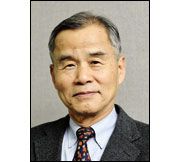
By Lee Sun-ho
Recently, I read an internet article “Advice from a 105-year-old doctor” by Japanese physician Shigeaki Hinohara (born November 4, 1911). Dr. Hinohara is one of the world’s longest-serving physicians and educators. His magic touch is legendary. As the founder of the New Elderly Movement, Hinohara encourages others to live long and happy lives.
I would like to discuss six intriguing points Hinohara gave through a number of interviews and writings based on the assumption that human life is filled with incidental changes, and it is wonderful to live long and moderately.
The first point that impressed me was his assertion that “energy comes from feeling good, not from eating well or sleeping a lot.” It is best not to tire the body with too many restraints such as hectic schedules and burdensome stress.
The second is that “there is no need to ever retire even at 65 and a lot later than that.” Retirement can be a marvelous thing. Indeed, it has many secrets which are important for me to ask about that phase of life.
Thirdly, Hinohara stresses, “always plan ahead.” His schedule is already full for the next couple of years, with daily routines, lectures and hospital work. This way of life must be both for recharging energy and preventing any unexpected life pattern damages.
Fourthly, I agree with Hinohara’s view that “medical doctors cannot cure everyone.” Sometimes a doctor’s recommendation causes unnecessary pain with surgery. As I grow older, my expenditure ratio for medical check-ups and pharmaceuticals intake grows at a higher rate than ever before. He mentions that “when a doctor recommends his patients take a test or have some surgery, ask whether the doctor would suggest that their family members go through such a procedure.” True, pain is mysterious, and so having fun is the best way to forget it. Hospitals or drug stores must accept every patient who appears at their door.
Fifthly, Hinohara insists that “science alone cannot cure or help people.” Science lumps us all together, but illness is individual. Each person is unique, and diseases are connected to their hearts. To know the illness and help people, we need liberal and visual arts, not just medical ones.
Another thing Hinohara advises is, “Do not be crazy about amassing material things. You don’t know when your number is up, and you cannot take it with you to the eternal place.”
All in all, it would be advisable to note a characteristic tendency of average Japanese people who are well known for longevity. Their cultural attitudes to food and general lifestyle promote high energy levels and support health preservation. I understand, “Japanese normally eat a wide range of foods, and spend a lot of time involved in incidental exercise.” Such a lifestyle habit of recharging high energy levels helps Japanese people keep off excess weight and contributes toward their longevity, I am sure. I have to learn such a lifestyle habit from them, in a sense.
The writer is an ombudsman columnist for The Korea Times in Seoul. You can reach him at kexim2@unitel.co.kr.