Highlights of Uzbekistan-Korea relationship
By Sherzod Shadikhodjaev
Uzbekistan will celebrate its 25th independence anniversary on Sept. 1. Within a short period, the country has made tremendous progress in many fields to transform itself into a dynamic economy with huge development potential.
Uzbekistan is one of the world’s fastest-growing countries with an average annual GDP growth of about 8 percent over the last decade, and the happiest nation in the CIS region according to the World Happiness Report (2016). Since 1991, Uzbekistan has established new sectors, such as the automotive industry, home appliance manufacturing, hydrocarbon-chemical production, the pharmaceutical industry, while significantly upgrading existing sectors capable of producing goods of higher value.
In January 1992, Uzbekistan established diplomatic relations with the Republic of Korea. Since then, the leaders of the two countries have met frequently to boost bilateral relations and strengthen strategic their partnership. The latest summit during the state visit of President Islam Karimov to the Republic of Korea in 2015 led to the signing of 60 agreements and contracts (worth $7.7 billion in total) on the promotion of trade, economic and investment projects, as well as financial and technical cooperation.
Uzbekistan offers excellent business opportunities for Korean companies. Fiscal and other incentives for foreign investors are available across the country, as well as within three special economic zones in Navoi, Angren and Jizzakh. Korea’s total direct investment to Uzbekistan exceeded $5 billion. Korean companies operating in Uzbekistan are active in many sectors, including light industry, mining, the chemical and food industries, mechanical engineering and metal processing, housing and utilities, healthcare and others.
This year is notable for the launch of the Ustyurt gas-chemical complex at the Surgil field in Uzbekistan. This multi-billion dollar project of the National Holding Company Uzbekneftegaz and the Consortium of Korean companies led by state-run Korea Gas enables the processing of natural gas into polyethylene, polypropylene and other high value-added products to sell domestically and overseas.
Both the Uzbek and Korean languages share similar grammar and sentence structure. Uzbeks and Koreans are well known for their hospitality. They traditionally esteem community values and respect older people. These similarities can greatly contribute to closer contacts of the two people in areas such as tourism and education that typically involve social interaction.
With a nearly 3000-year history, Uzbekistan was at the intersection of major trading routes along the Silk Road that for centuries connected Asia and Europe and facilitated Eastern and Western cultural exchanges. Uzbekistan is the home of some of the world’s most ancient cities making it an attractive destination for tourists. Samarkand, Bukhara and Khiva always impress visitors with spectacular mosques, minarets, medressas and mausoleums. Samarkand (2750 years old) used to be the capital of the Timurid Empire in the 14-15th centuries. The magnificent square “Registan” is one of the major architectural sights in Central Asia. The “Ichan-Kala” complex in Khiva, and the historical centers of Bukhara, Shakhrisabz and Samarkand are designated as UNESCO World Heritage sites. With a diverse landscape, Uzbekistan appeals to everyone who enjoys hiking, rafting, skiing, trekking and other forms of active tourism.
Finally, education represents an important prerequisite for any society’s development. Tashkent, the Uzbek capital, currently accommodates branches of institutions of higher education from the United Kingdom, Singapore, Italy and Russia. In 2014, Inha University of Korea joined the “club” of prestigious foreign universities in Tashkent. It currently educates Uzbek students in IT-related fields, including computer and information engineering, and logistics. Korean universities could follow suit and share their know-how in other areas as well, such as medicine, science and technology, and public administration as well as others.
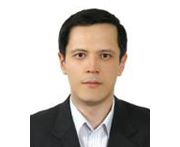
The writer is an associate professor (Ph.D.) at the KDI School of Public Policy and Management, Sejong City. Write to sherzod1@kdischool.ac.kr.