Controversial welfare schemes
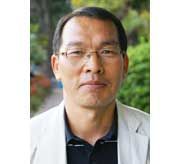
By Kim Jin-hyun
On Nov 25, 2015, the local assembly of Seongnam on the outskirts of Seoul passed three bills: "The Public Postpartum Clinic Bill", "The Fresh Middle School Students' Uniform bill" and "The Youth Allotment Bill."
As soon as the news spread, the Park administration as well as leaders of Saenuri Party said that the bills should be cancelled because of the budgetary deficit. Then, they criticized the city's policy as “welfare service for populism.”
But Mayor Lee Jae-myeong said that the practice of the pledges was proper, citing Article 1 of the Basic Law for Social Welfare, that a country or a local government should improve citizens' welfare.
In fact, Seongnam declared a moratorium because of excessive debt in 2010. That year, Lee was elected as the new mayor. He paid the debt through budget cutbacks and ordered an adjustment of business investment for a few years.
Moreover, in 2014, the city was evaluated as the most financially independent one, at 65.1% of expenditure, compared to the national average of 51.1%. His successful city management led to his re-election.
Before being elected, President Park made promises related to welfare policies such as free daycare for children and a basic old age pension, but she retracted them due to budget shortfalls. On the contrary, the city decided to honor its pledges. To do so is valuable not only to citizens but also to other politicians as a way to gain trust.
The book, "Two Faces of Welfare Politics," published by co-authors including Ahn Sang-hoon maintained that a politically sensitive welfare policy should have social consensus and arrive at a realistic viewpoint.
Thus, it is not desirable for the President to veto the bills unilaterally without compromise because she does not think they are timely.
Starting from the 2010s, Korea has endured a low birthrate, a rapidly aging society, and a lack of purchasing power due to sluggish development. In this situation, deliberate welfare policy may be more urgent.
One of the city's bills, "The Youth Allotment" gives 1 million won annually to young people aged from 19 to 24 living in Seongnam. The policy will helpful to stimulate its economy.
In a democratic society, politicians are elected by their pledges and power of execution. Thus, these are duties that should be practiced. But until now, most Korean politicians have frequently given them up due to their infeasible pledges.
Relatively, the mayor has the will to practice the promises that he made to the citizens. By doing so, he believes that he will be able to govern society more sensibly and improve it positively.
Nevertheless, the progressive mayor's choice seems negative to conservative groups because they consider his behavior to be a political gesture.
But the mayor said, "Seongnam city doesn't demand more of the government's budget and more tax, and it even doesn't try to get more loans in order to practice the welfare policy. Instead, the policy is one way to repay the tax that citizens have paid."
Creative leaders know how to understand their citizens' desires and then implement them. In addition, they provide a more optimistic vision.
The writer is an English teacher at Yeosu High School in South Jeolla Province.