Turning environmental challenge into opportunity
By Chris Khang, president and CEO of GE Korea
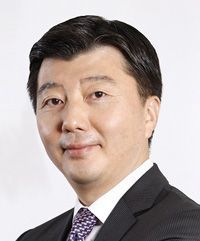
Chris Khang
World leaders from 196 countries recently gathered in Paris to attend the 2015 U.N. Climate Change Conference.
Compared to past efforts, from Kyoto in 1997 to Copenhagen in 2009, the meeting was an important milestone in that it was the first major international negotiation that had the world’s two largest industrial powers -- the United States and China -- at the table.
Also notable were voices from a coalition of developing nations, led by India, which argued that even though they had a right to burn fossil fuels to sustain their economic growth, they were seeking alternative, greener ways to work toward their development.
The global leaders’ consensus on decarbonization efforts is a sign for companies around the world to join and assume responsibility.
Companies’ role has never been more important than now because for the global economy to become greener, the fundamental business value chain -- from design and manufacturing to distribution -- has to evolve to become less carbon-intensive, yet at the same time more productive.
How to connect the economy to the environment lies in innovation -- evolving technologies and management strategies that improve productivity and efficiency.
One of the first companies to recognize this responsibility was GE, which has been carrying out its own form of environmental innovation, called “Ecomagination,” since 2005.
A term that combines “economy” and “ecology” with “Imagination at work” (GE’s tagline), Ecomagination comes from a simple yet important insight: an environment-oriented strategy can ultimately drive revenue and create opportunities by boosting productivity and efficiency in products and services.
Recognizing that the economy and environment are no longer a trade-off but mutual synergies, GE invested $15 billion into developing technologies that enable smarter and more efficient use of natural resources. This 10-year investment has yielded $200 billion in revenue from Ecomagination technology alone.
Concurrently, the more sustainable practices implemented into GE’s business operations have cut greenhouse gas emissions by 32 percent, energy intensity by 31 percent, and freshwater use by 42 percent, saving the company $350 billion by the end of 2014.
To further enhance its position as an established leader in the field of green growth, GE is extending its Ecomagination strategy to 2020.
GE’s commitment to reduce its greenhouse gas emissions and water footprint will continue, and the company aims to reduce these by an additional 20 percent from its 2011 baseline, both by 2020.
As part of these efforts, GE is investing an additional $10 billion in R&D to reach $25 billion total investment by 2020 to develop global solutions for tackling some of the world’s toughest challenges, such as how to: maximize the use of renewable energy; extract energy from waste water; improve the environmental performance of the natural gas economy; build an industrial Internet that maximizes resource productivity.
Today, GE is driving a new industrial era and believes that the industrial Internet will become the ultimate tool for green growth by enabling more efficient management and use of human, capital, and natural resources across the entire global industrial complex.
GE’s achievements and progress over the past 10 years is a testament that the green initiative drives the company’s competitiveness and bolsters overall economic growth.
There is no doubt that responding to climate change has multiple benefits. Korean companies that wish to join the league of global industrial leaders in the new low-carbon economy need to invest in pro-environment R&D.
Technology innovation will not only help the environment, but provide Korea with solutions to economic challenges such as stronger competition from China and other countries, and sluggish productivity in the manufacturing and service sector.
Participating seriously in the long-term global green agenda can turn the environmental challenge into an opportunity.