No shoo-in: Ponies put bite on 19th century blacksmiths

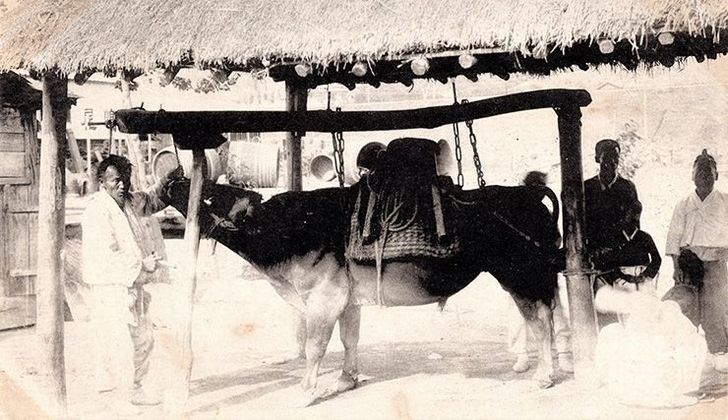
A blacksmith shoeing a Korean pony, circa early 1900s. Robert Neff Collection
By Robert Neff

Two boys shoeing a Korean pony, circa 1900s. Courtesy of Diane Nars Collection
In the late 19th century, ponies and oxen were often the subject of letters sent home by Westerners living in Korea.
The ponies were noted for their ferociousness and demonized for their seemingly determined need to bite and kick any living creature that came within their reach. The oxen were lauded for their docility and ability to carry large loads of goods. There was another aspect of these animals that captured Westerners' attention ― how they were shod.
Draft animals were shod on a fairly regular basis due to the rough nature of the roads. The Korean shoes were fairly thin and the head of the tacks used ― because they were not counter-sunk ― were quickly worn away, allowing the horseshoes to fall off.
Calks (projections on the horseshoe to aid in traction) were not used, so “when the ground [was] wet, or more especially in winter when the roads [were] slippery from densely packed snow or ice, the shoes [acted] as skates and the poor beasts [floundered] in a most pitiable way.”
Shoeing an ox was a difficult task for the blacksmith and very stressful for the poor animal. It was viewed by many (foreigners and Koreans) as cruel and helped to inspire Philip Jaisohn (Seo Jae-pil), the editor of The Independent (an English-language newspaper published in Seoul), to write in an 1896 editorial:
A blacksmith preparing to shoe an ox, circa 1900s. Courtesy of Diane Nars Collection
“The fore legs are placed in a running noose, as are likewise the hind legs. Then the ropes are tightened and the poor beast, notwithstanding his frantic efforts to retain his feet, is pushed over and falls upon his side with a thud. To complete the barbarity his head is hauled up and ridden down under his side during the slow shoeing process.
“After lying in this forced position for half an hour it is no wonder he regains his feet with difficulty when the thongs are removed. It is enough to make one's heart bleed to see the fine, patient oxen treated in this cruel manner. A stop should be put to such work by royal edict.”
However, the sympathy for the oxen wasn't extended to the pony.
“The restive blood of the ubiquitous stallion will not stand the puncturing of his hoofs with nails, so he has to be securely tied before the operation can proceed. This is done by fastening him in a sling which makes it possible for the blacksmith to handle his feet.”
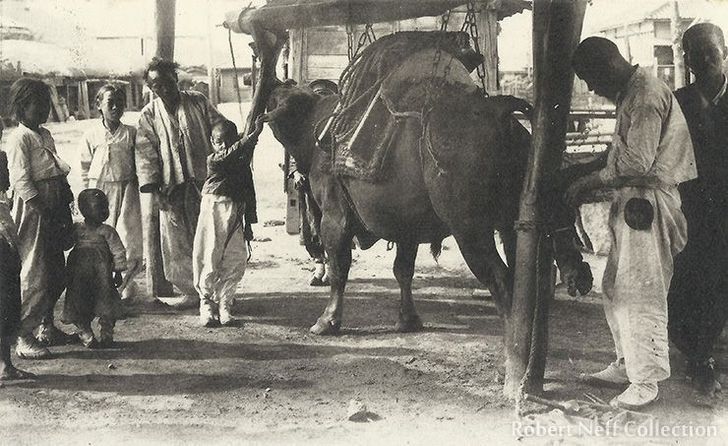
A blacksmith shoeing an ox, circa 1900s. Robert Neff Collection
More than one blacksmith received a painful reminder ― via hoof or tooth ― that caution was needed at all times when shoeing a Korean pony. Some people actually took a sadistic satisfaction in seeing the ponies shod.
“I love to see the pony shod, see him pinioned teeth and nail, in one hard knot, lying on his back under the spreading chestnut tree, with the village smithy putting tacks into him that brings tears to his eyes.”
Like many Westerners in Korea in the late 19th and early 20th centuries, James Scarth Gale, a missionary, had many unpleasant encounters with the hooves and teeth of ferocious little Korean ponies and apparently they left physical and mental scars. So, perhaps, his unchristian-like animosity toward the Korean pony can be forgiven.
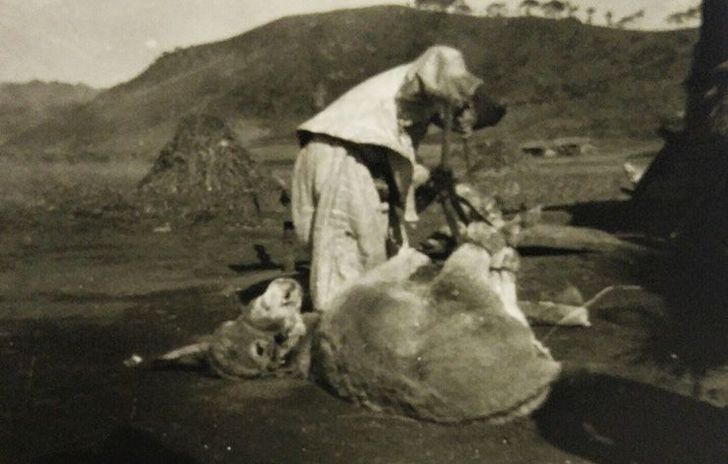
Shoeing a donkey at the American gold mines in northern Korea, circa 1900. Courtesy of Douglas Armsfield
Robert Neff has authored and co-authored several books including, Letters from Joseon, Korea Through Western Eyes and Brief Encounters.