INTERVIEW 'Thailand aims to bring Buddhist art to Nat'l Museum of Korea in 2025'

Visitors look around "A New Encounter: Immersive Gallery of Korean Art" exhibition at the National Museum of Bangkok. Courtesy of the National Museum of Bangkok
By Kwak Yeon-soo
"A New Encounter: Immersive Gallery of Korean Art," an exhibition at the National Museum of Bangkok (NMB) exploring Korean cultural heritage, has been extended until October due to its huge popularity.
The multi-sensory digital art exhibition features two immersive digital videos: “Journey of the Soul” depicting Buddhist beliefs about the afterlife, and “Royal Procession with the People,” which features the rituals of the Joseon royal court that embodied Confucian belief systems. It also features two Bodhisattva Avalokiteshvara ― or “Gwaneum Bosal” in Korean ― sculptures from Korea and Thailand to highlight the long-standing Buddhist traditions and artistic achievements of the two countries. It is jointly organized by the NMB and the National Museum of Korea (NMK).
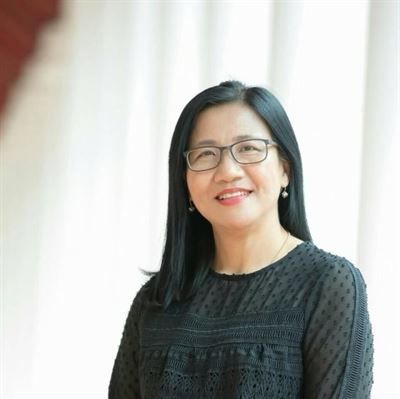
Nitaya Kanokmongkol, executive director of the Office of National Museums at Thailand's Ministry of Culture / Courtesy of Nitaya Kanokmongkol
Nitaya Kanokmongkol, executive director of the Office of National Museums at Thailand's Ministry of Culture, said Thais are fascinated by Korean digital art and immersive technology.
“We are in the early stage of embracing digital experience. We have a lot to learn from Korea in terms of integrating technology and digital media with art,” she said during a recent interview with The Korea Times. “For 'A New Encounter' exhibition, we used social media strategy to spread the word and attract new visitors.”
She said the role of storytelling is becoming more important in a new era of digital art.
“Shaping narratives has become more important nowadays as museums are being redefined for a digital age. Last year, we held an exhibition about how mankind has fought against infectious diseases. We displayed pandemics in history and how we dealt with them over time. It was meant to address lessons from the past and share ideas on how we could combat the COVID-19 pandemic, she said
Kanokmongkol also shared her impression of museums in Korea.
“I think Korean museums, in general, are family-friendly. Even on weekdays, museums are crowded with families and individuals, young and old. In Thailand, a majority of visitors on weekdays are students who are on field trips,” she said.
“In Thai museums, the locals-foreigners ratio is about 50 to 50. Speaking of NMB in particular, Thais account for about 40 percent, foreigners 40 percent and students 20 percent.”
During her seven-day visit to Korea on the occasion of the “K-Fellowship” program offered by the Korean Culture and Information Service, she visited and met with director generals at NMK, National Folk Museum, National Museum of Modern and Contemporary Art, Asia Culture Center and National Hangeul Museum.
The executive director said she discussed hosting a special Thai religious relics exhibition in Korea in collaboration with NMK.
“NMK expressed its interest in holding an exhibition showcasing Buddhist art from India and Asia. They will visit Thailand in September to examine and discuss what Thai artifacts will be on display. We are thinking of hosting the exhibition in 2025,” she said.