No. of multicultural households on steady increase in Korea
Single-person households top 30% in 2019
By Lee Kyung-min
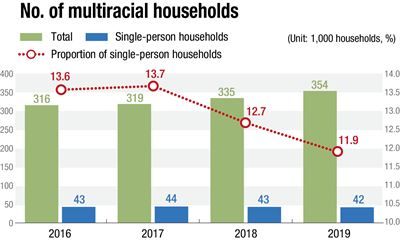
The number of multicultural households has been on the steady increase here, reaching 354,000 in 2019, up from 335,000 in 2018, Statistics Korea said Tuesday. This was a further jump from 319,000 in 2017 and 316,000 in 2016. Of them, the number of single-person households with multiracial background reached 42,000 in 2019, accounting for 11.9 percent of total multicultural households in Korea, and down from 43,000 in 2018.
The number of two-person and three-person multicultural households have been on a steady rise over the past few years, contrasted by a decline in the number of single-person households and households with four members or more. Overall, the number of multiracial families is climbing.
The statistics agency said that this can be attributed to an increase in the number of divorces and separation of family members and children leaving after reaching a certain age for reasons including education and marriage.
About 98,000 were two-person households in 2019, accounting for 27.7 percent of the total. This was up from 90,000 in 2018. The figure was 44,000 in 2017 and 43,000 2016.
There were 97,000 three-person households in 2019, accounting for 27.4 percent of the total. The number jumped from 81,000 in 2016.
Almost 33.3 percent of the total, or 117,000 were households with family members of at least four in 2019, down from 34.7 percent (110,000) in 2016.
“A change in the makeup of families with multiracial backgrounds can result from the divorce of parents,” Sul Dong-hoon, a professor of sociology at Jeonbuk National University said.
“In that case children live with either of the parents with custody, and the other lives alone. In other cases, children can leave for a couple of years to go to university far from home,” he added.
The same data showed that the number of single-person households nationwide stood at 6.14 million in 2019, accounting for 30.2 percent of the total. This is up from 5.85 million the previous year and the first time for the figure to exceed 30 percent.
Of them, four in five earned less than 30 million won ($27,600) annually. Their monthly spending averaged 1.42 million won, more than half of which or 884,000 won was spent on medical treatment.
Crimes they feared the most were break-ins (12.8 percent), followed by assault (10.7 percent) and robbery (7.4 percent).