Fun-loving Koreans: 1980s-style TV show captivates viewers

Eight middle-aged women, who performed as a team for the 2019 National Song Contest held in Seoul, pose with their colorful stage costumes. / Courtesy of Byun Soon-choel
Photographer captures local stars who competed in touring song contest
By Kang Hyun-kyung
The National Song Contest, starring amateur singers, is a rare TV show as it has enjoyed steady popularity over the past four decades since its first episode aired on KBS on Nov. 9, 1980.
Without much modification from the original format and very little change to the original set, the old-fashioned TV show has been surviving the digital revolution which has hit the media industry and forced both print and broadcasting media to undergo radical restructuring.
In each episode, 15 teams from all age groups compete in the show. Their backgrounds are diverse. Soldiers take advantage of their leave of absence from the military to compete in the touring show held in their hometown. Farmers, housewives, retirees, and children show off their singing and performance skills. Some contestants try self-deprecating humor or use physical comedy on stage to entertain the audience. Their costumes are outdated with mismatched tops and pants. Their geeky performances, unsophisticated stage manners, exaggerated gestures and excessive makeup makes audiences laugh.
Some take on the role of goodwill ambassador for their hometown on the nationally televised show, promoting it as the greatest place to live and boasting about its premium agricultural goods and products.
The geeky, hilarious contestants captured photographer Byun Soon-choel's attention. Inspired by them, Byun, 51, has traveled with the touring KBS show for the past 15 years to zoom in on the contestants.
Byun said each National Song Contest contestant is a portrait of Korea.
“I watched it when I was young. I still remember the awkward feeling that I had when I first watched it as a child,” he said during a recent Korea Times interview at Sungkok Art Museum in Seoul. “It was raw. Contestants' awkward performances and stage manners, and their weird costumes, all these things made me think it was odd…”
However, Byun said he realized the show had become a whole new thing to him when he saw it again back in 2005, when he returned to Seoul after a five-year stay in New York. “I felt like, 'This is it. I need to go for it for my next project,'” he said.
He rediscovered the show when he was searching for his next project following a project he'd done about interracial couples in New York. He said he was looking for something new, through which he could achieve a portrait of the Republic of Korea.
“The National Song Contest was irresistible. I was drawn to it. I realized it had all the stories that I wanted to present through my project,” he said. “I was initially trying to explore the feelings of the contestants to figure out what motivated them and gave them the courage to perform on the nationally televised show.”
He went on to say that a single quote can motivate readers to become novelists and a single line from a movie can make moviegoers dream of becoming filmmakers. “To me, it was the National Song Contest and its contestants as they inspired me to embark on the years-long journey to capture them and understand what they wanted to express.”
In 2014, he published a photography book, titled “National Song Contest,” released by Noonbit Publishing, and hosted an exhibition of his work at the Seoul Museum of Art.
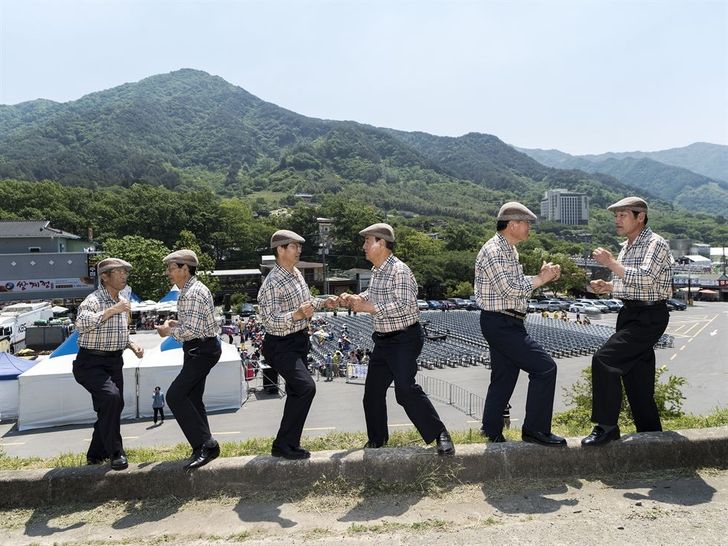
Six men pose with identical stage outfits in this 2019 photo taken at the outdoor stage for the National Song Contest held near Ssanggye Temple in Hadong County, South Gyeongsang Province. / Courtesy of Byun Soon-choel
Calling himself a perfectionist, Byun said back then he felt something was missing and this kept him touring with KBS to photograph other contestants.
Byun said he thought the National Song Contest would be a one- or two-year project. But he said it became unstoppable. “There are so many stories to tell. Now I feel I'm done with the photo project as things that previously made me confused have become clearer. To me, the National Song Contest project was the journey to find the identity of Korea. That's why I myself call it the portrait of Korea. Each contestant in my photography represents a different aspect of the country. Altogether, they represent Korea, a country with many different faces.”
His photos, captured between 2015 and 2019, are currently on view under the title of “Let the Wind Blow: National Song Contest” at the Sungkok Art Museum in Seoul.
Byun said all the contestants he met were serious about their performances and were well-prepared for the contest, trying hard to make themselves stand out among the other contestants.
“One of my models was a middle-aged lady I met on the sidelines at the song contest in the southeastern county of Uiseong. She wore a long white knit dress. She had made it to wear as her stage costume,” Byun said. “It would have taken a long time for her to prepare her costume. Like her, other contestants took their performances seriously.”
He said he learned a lot during his photo project.
He likened himself to Joseon Kingdom geographer and cartographer Kim Jeong-ho who produced a map of Korea lauded as the most accurate map of the country at the time. “He must have been very lonely,” said Byun. “While traveling almost all cities and counties of South Korea for the photo project, I was able to see things like terminals and markets that are slowly disappearing. The project enabled me to see various, very different aspects of Korea.”
Lee Taek-gwang, critic and professor of foreign language and culture at Kyung Hee University, said Byun's photography shows the power of ordinary people. He said Byun's models don't care much about artistry but they know how to express themselves in their own way to make them stand out.
“The TV show empowered ordinary people by calling them by their names and reminding them of their given roles as members of their community… (T)hrough the show, they are recognized and their roles are acknowledged,” he said about Byun's “Let the Wind Blow” project. “For Byun, the clash of amateurism and professionalism seems meaningless. Rather, his works prove how the two are inseparable and interrelated…”
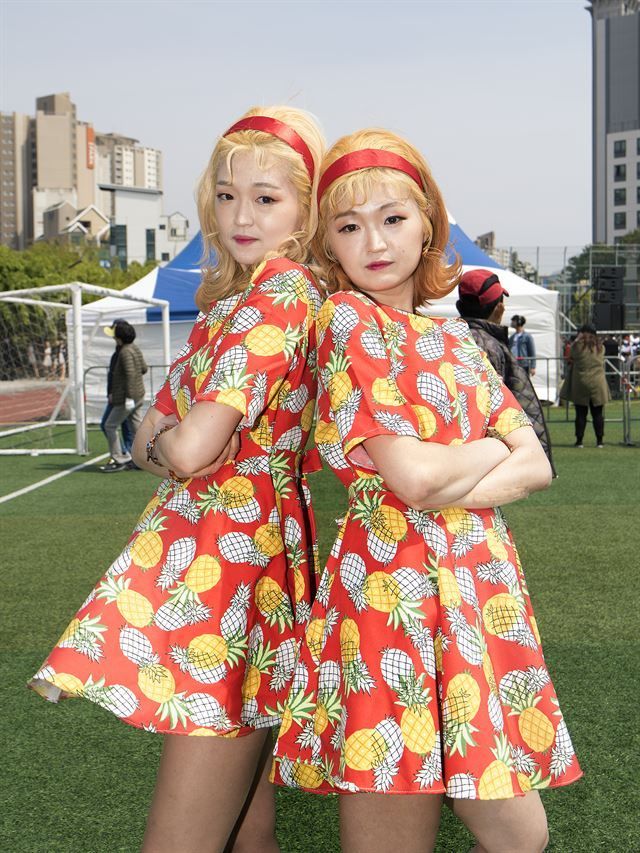
Two girls pose during the 2019 National Song Contest held in Busan. / Courtesy of Byun Soon-choel
Critic Choi Beom said Byun's 2014 photobook “National Song Contest” presents images of fun-loving Koreans. Writing in the foreword, Choi said, “His photography tells us what leisure is about and how we can make the most of it.”
In “National Song Contest,” the critic said, three types of people exist: entertainers, conformists and outliers.
“Contestants in the entertainers' category are the people who aspire to become celebrities. Celebs are treated as heroes of our time and the contestants want to become like their heroes. They fulfill their desire to become famous by taking the stage, albeit a brief moment,” he said. “There are also conformists. They are organized and tidy people. They dress up in hanbok (traditional Korean costume). It's their fashion statement. It encourages the audiences or viewers not to underestimate them, letting people know they belong to a decent family. Outliers are the people who refuse to define themselves in a certain category and they show they are free-spirited people who are not bound by any social norms or rules.”
Since the airing of its first episode in 1980, the National Song Contest has been held 1,980 times so far. The touring show dedicated to finding local stars has been held in almost all cities and counties. In some cities, the song contest was held multiple times.
Filming has been suspended since Feb. 23 due to the COVID-19 pandemic. KBS has been broadcasting reruns since.
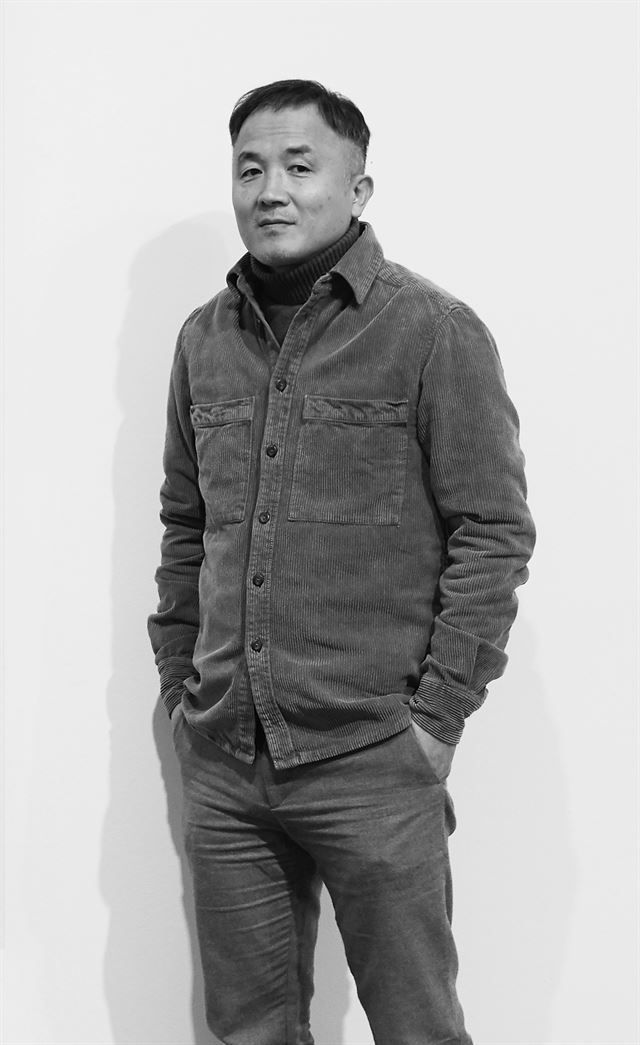
Photographer Byun Soon-choel / Courtesy of Byun Soon-choel
Mun Seok-min, the producer of the National Song Contest, said he and his team regret that they are unable to hold the contest to celebrate the 40th year anniversary next Monday.
He said the show was able to have enduring popularity because of its fun-loving contestants and audience.
“Unlike other shows, our contestants are ordinary people. Our neighbors star in the show,” he said. “Our audience seems to feel intimate with the contestants who are frank and not pretentious. Their sincerity also seems to have appealed to the viewers.”
Mun said many of its contestants are not aspiring singers.
“There are some who take their performance seriously and consider the song contest as sort of a springboard to a future career in the entertainment industry. But many contestants are just people who show up for the contest to show their love of singing or dancing on national television,” he said.
Many of the seven finalists of TV Chosun's mega-hit show “Mr. Trot” competed in the National Song Contest when they were obscure singers. Some contestants rose to national stardom as their performances went viral on social media.
They are a few of the exceptions. The vast majority of the contestants are ordinary citizens who consider their appearance in the song contest as a once-in-a-lifetime experience.
“Our selection criteria are not all about singing or performance skills,” said Mun. “We are trying to find people who are talented and also have a sense of humor. We consider the gender and age of the candidates as well, so people of all age groups and genders can participate in the contest. This is why you can find some candidates whose singing skills fall far short of the average candidate but they still make the cut to appear in the show.”
The longest-running TV show has amassed its own fandom. Mun said there are several groups of people who have travelled with the KBS team for the song contest.
“Our fans include non-Koreans. Years ago, we had a Black American fan who showed up at the song contest wherever it was held. I know he's gone back to America. We have several other avid fans. We are grateful for their unwavering support for our program,” Mun said.
Once the pandemic is over, the KBS producer said, the episode will be continued.
The program attracted crowds of thousands to the venue each time for each contest. During the past 40 years, over 10 million people flocked to the venues.