American chef Austin Kang hopes to entice foodies with authentic Korean cuisine

Pork belly, smoked in a clay pot with pine leaves, is on the menu for chef Austin Kang's farm-to-table pop-up dining project Ojina, on Jeju Island. Courtesy of Austin Kang
By Lee Gyu-lee
A few standard-fare dishes may instantly come to mind when thinking of Korean food ― sweet and spicy rice cake dish tteok-bokki, marinated beef bulgogi, or the quintessential side dish kimchi. However, celebrity chef Austin Kang says there is much more to the cuisine that offers a variety of benefits ― including nutrition ― that would appeal to the foodies around the world.

Korean-American chef Austin Kang. / Courtesy of Morph Management
“I think Korean food is really underrated right now,” the chef told The Korea Times during an interview at the company premises in central Seoul, July 14. “I really want to exploit Korean food and … make it as hip (abroad) as it is ― a real healing food.”
The Korean-American chef, who began cooking at a Mexican eatery and then ran a French-American restaurant, had little to do with Korean cuisine until recently. He barely spoke Korean until he learned the language while starring on TV shows, such as the 2014 cooking show “Master Chef Korea 4,” which raised his profile locally.
Learning Korean cuisine was not something he was interested in until he met a Peruvian chef for a TV show last year.
Kang said the chef gave him a light-bulb moment when he made Kimchi with local Peruvian ingredients for him. “I felt ashamed,” he said. “I'm Korean by blood, but I'm doing French, western cuisine. That was weird.”
So when the coronavirus changed his upcoming schedule, Kang took the opportunity to explore what was unfamiliar ground to him.
Since February, he has been learning authentic preparation processes of local cuisine from a farm owner on Jeju Island, who provides strictly organic and chemical-free Korean dishes for sick patients seeking food as a last resort to restore health.
He explained that his teacher, whose name he did not wish to mention, and the family go through a careful, meticulous selection of ingredients for fermentation. Such detail would include finding alternatives for the sea salt and fermented small-shrimp paste “saeu-jeot” ― commonly used to make kimchi ― so as to avoid micro-plastic pollutants.
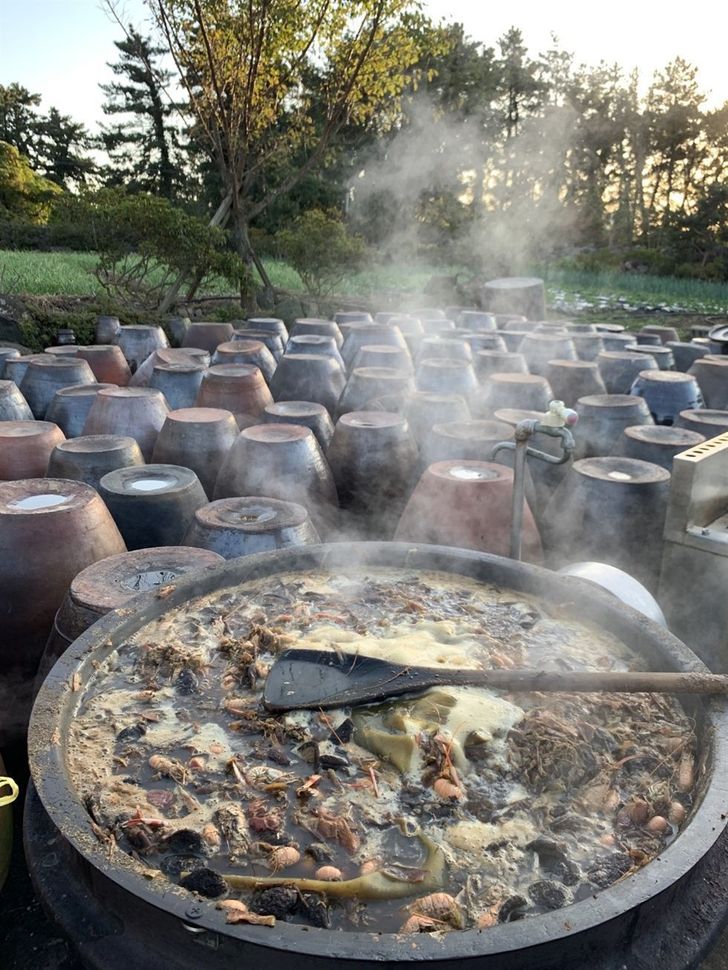
Broth used for organic kimchi boils in the pot. The background shows the lines of “jangdok,” large Korean-style earthenware. Courtesy of Austin Kang
As he delved deeper, he said he was stunned to learn not only the process but also the philosophy and history behind it.
“It's a premium food; if you know the history, really know what goes in, the time and the fermentation process it requires,” he said, referring to the cultural and agricultural history that has shaped the cuisine.
Korean food has largely evolved through complex cultural and political change, as well as to suit the specific geographical condition of the peninsula ― surrounded by a rocky coastline and rugged mountains.
To endure the hot summer and harsh winter here, fermenting became the prime method to preserve foods. Kang emphasized fermentation is what makes authentic Korean dishes a healing food and what makes this farm-to-table process special.
“With Korean food, you farm it, ferment it and then usually wait a few years for that process to change into a different type of food, which makes it complex,” he explained. “(The fermentation) seems rotten but once you eat it, it really helps with inflammatory problems and digestion, and with probiotics.”
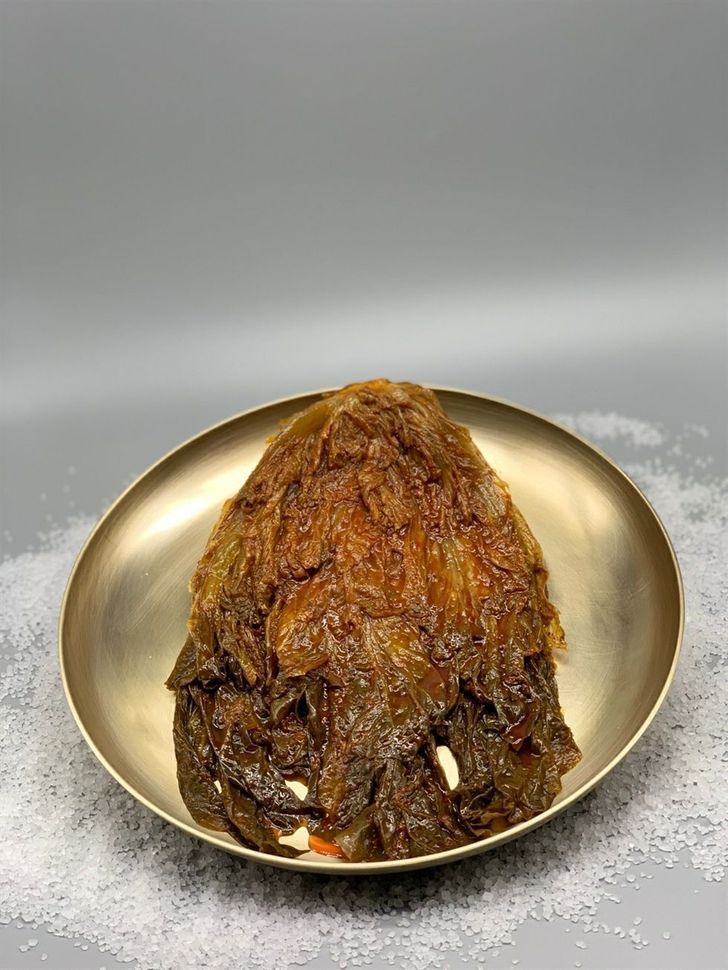
Kimchi fermented for about eight years. Courtesy of Austin Kang
As he mentioned, numerous studies have been conducted that yielded the benefits of fermented food.
“Fermented foods can bolster the gut microbiome, creating a healthier mix of microbes and strengthening the walls of the intestines to keep them from leaking,” Harvard Health Publishing wrote based on its 2018 research.
After months of learning, Kang is finally engaging in a hands-on experience with a pop-up private dining project
, using the ingredients from the farm, such as eight-year-old kimchi. The project ― started July 10 ― opens from Friday to Sunday, and will run until August 30.
He explained that he started conducting educational tours of the farm and its fermentation storage area ― containing all sorts of fermented products including fruits and condiments ― to make the dining experience more meaningful.
“This farm is a philosophy of human food ... We treat people, heal people,” he said. “So I thought to give the tour to show the hard work and the understanding it takes to make (fermented) Korean food.”
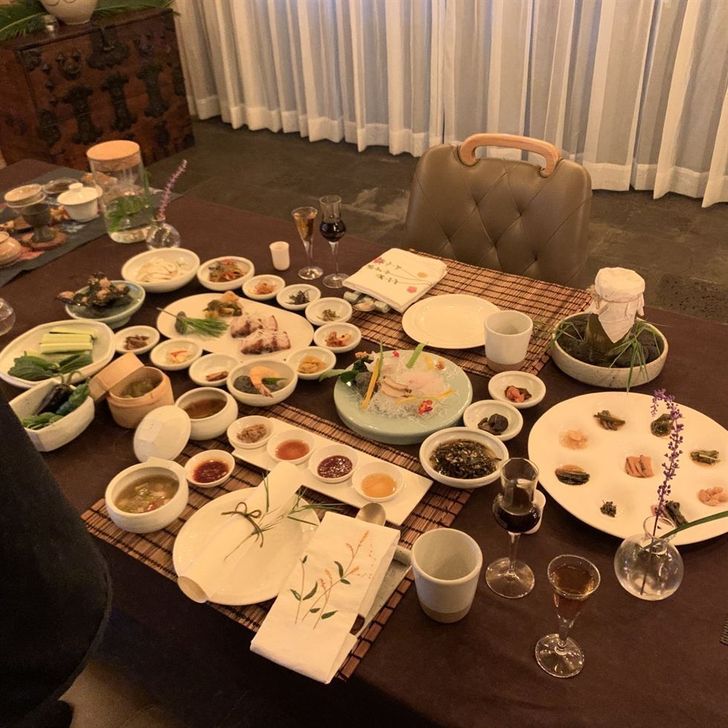
Food from Ojina. / Courtesy of Austin Kang
Taking the experience from the farm as the beginning, Kang said he intends to film the extensive and delicate process he learned.
“My goal is to film how (Korean food) all starts from the ground and how important nature is for Korean food,” he said.
From someone who previously had little background of the cuisine, Kang also wishes to share with non-Koreans the local culinary culture.
“Hopefully, people will be influenced to really open their eyes to Korean food, and learn its benefits and philosophy,” he said. “It would eventually encourage them to come to Korea, not just to Seoul but to explore rural areas where the culinary experience would be very special.”