'Younger man, older woman marriage' - a rising tie-up in Korea

Music video and film director Lee Sa-gan and idol singer Ron will marry in January. Capture from Instagram of Lee and Ron
By Dong Sun-hwa
Lee Sa-gan, 39, ex-girlfriend of actor Bae Yong-joon, recently made headlines for announcing she will marry her boyfriend Ron, a member of K-pop boy band Bigflo. He is 11 years younger than Lee.
And actress Ham So-won and singer Mina have tied the knot with much younger men too.
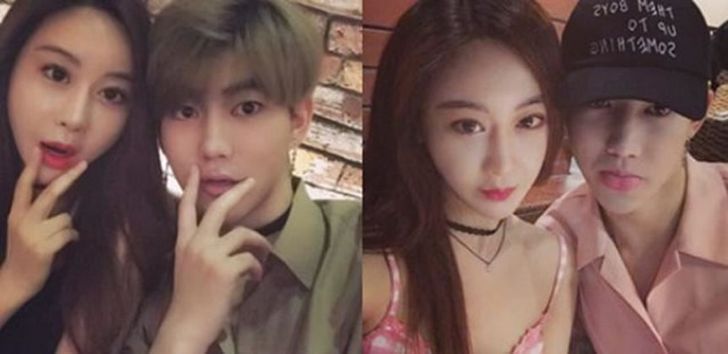
Actress Ham So-won married her Chinese boyfriend Jin Hua, who is 18 years younger than her. Capture from Jin Hua's Weibo
These are only some of many celeb marriages between younger men and older women.
But does it mean the age barrier has broken down among ordinary Koreans regarding their unions?
Not quite, experts say, calling it an illusion.
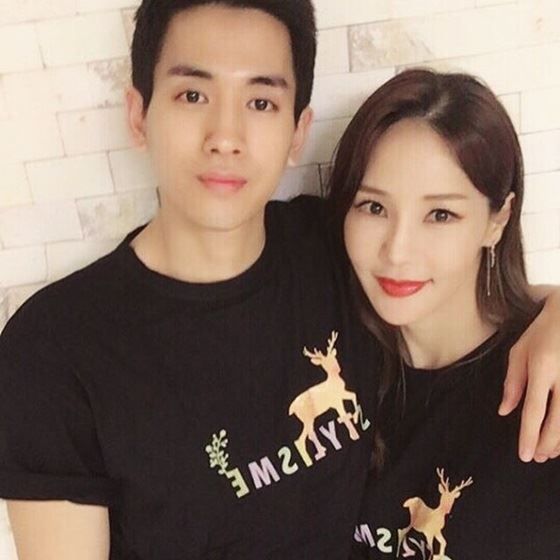
Singer Mina married Philip Ryu, who is 17 years her junior. Capture from Ryu's Instagram
“The cases of older women-younger men couples on television are actually only a small fraction of real society ― it is hard to identify them as a prevailing cultural phenomenon,” said Sung Nak-il, a professor of economics at the University of Seoul.
But there were about 34,800 older women-younger men couples in Korea last year, which was 16.9 percent of all first-married couples, according to Statistics Korea. It was a 0.5 percentage point increase on the previous year.
So what has given birth to such a trend?

Kwak Keum-joo, a professor of psychology at Seoul National University
One of the most noteworthy factors is people's avoidance of having children, according to Kwak Keum-joo, a professor of psychology at Seoul National University.
“Numerous people these days do not have children, mostly owing to economic reasons, and hence men do not consider a woman's age as much as they did in the past when thinking of marriage,” Kwak told The Korea Times.
She said in evolutionary psychology, it was believed that men instinctively prefer younger women for better reproduction chances.
“I would say evolutionary psychology is still dominant,” Kwak said. “But exceptional cases, in which people suppress their instincts to reproduce due to economic factors, are sprouting these days and are defying the initial belief.”
Kwak also said that some women love the feeling of being responsible and like to give “maternal love” to younger men, suggesting another reason behind the increase in non-traditional couples.
The professor added women have become more economically independent and can choose their husbands thanks to their money-making strength.
“Hunting was a way to accumulate wealth in the past and it was usually a task for men, which enabled those with superior hunting skills to choose young and beautiful women,” Kwak said.
“Nowadays, however, the majority of women earn their own money and cultivate skills in their own fields, therefore they do not have to rely on men's wealth and regard it as the foremost condition when choosing husbands.”
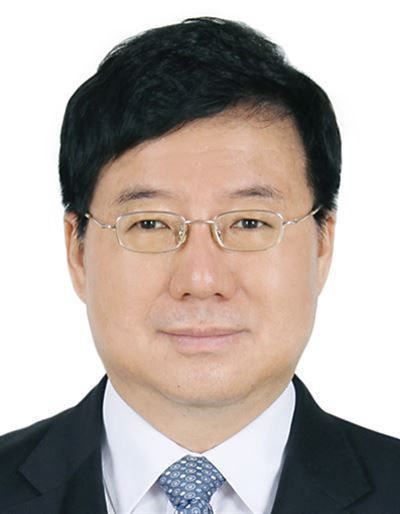
Sung Nak-il, a professor of economics at University of Seoul
Hence, these women might look for something different, such the appearance or personality of men.
Sung's perspective is similar to Kwak's. Agreeing that the economic power of women has contributed to an increase in older women-younger men couples, Sung underscored that the delay in women's marriages resulted from their active involvement in the economy has been a major cause of the rise.
“The trend can be attributed to a change in women's age of marriage rather than a change in their perceptions,” Sung told The Korea Times. “From statistics, it can be observed that as women get older, more of them tend to tie the knot with younger men.”
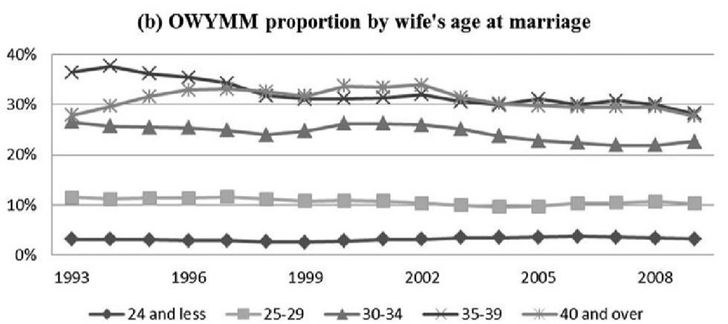
The graph shows the older-women/younger-men marriages (OWYMM) proportion by wife's age at marriage. Capture from the 2015 paper “Who marries a younger man? Marriages between older women and younger men in Korea,” written by Sung Nak-il, Lee Bun-sung and Jo Dong-hyuk
The graph shows that 30 percent of women in their late 30s or early 40s are marrying younger men in 2000s, while less than 10 percent of women in their 20s tie the knot with younger men.
Sung said this is firstly due to a decrease in the number of “available” men. In the paper “Who marries a younger man? Marriages between older women and younger men in Korea,” published online in 2015, Sung and his co-authors wrote: “As a woman marries older, her marriage pool of candidates narrows, thereby increasing the likelihood of OWYMMs (older-women/younger-men marriages.) In other words, one of the rational choices of older women given the demographic constraints of the marriage market (i.e. the limited number of eligible men) may be the OWYMM.”
The professor also referred to the concept of exchange theory and hypergamy, a type of marriage that allows a rise in status, to explain the increase.
“Women 'trade' their level of education or income with men's youth or attractiveness in exchange theory, which is a case of hypergamy for men,” Sung said.