Healing stressed-out souls with wisdom

Song Yeon-ju, 24, an applicant for this year's state exam to select civil servants, seeks counseling from Deungmyoung, a young Buddhist monk who runs the “Mind Charging Station” in Noryangjin of southern Seoul, Wednesday. / Korea Times photo by Choi Won-suk
Buddhist monk runs 'Mind Charging Station' for troubled test-takers in Noryangjin
By Park Jin-hai
Song Yeon-ju, a 24-year-old applicant for this year's state exam to select civil servants, spends much time in Noryangjin in southern Seoul, and describes the place as an “isolated island” away from all the fashion and glamour of the city.
“Faced with the streets with many old buildings that house private academies that prepare students for the civil service exam, many worried looking young people my age wearing loose-fitting sportswear and slippers who even try to save their lunch times for studying, I feel the heartlessness and stuffiness in it,” she said. She spent over one year to become a ninth-grade civil servant, an entry-level civil servant.
“On a warm spring day, my friends who landed decent jobs post their date pictures under the cherry blossom trees on social media, while I'm locked up here alone, going between institutes and study rooms. I ask myself: What am I doing here?”
Song is one of over 155,000 people who took the entry-level civil service exam earlier this month from which less than 5,000 people will be hired. Passing the test became difficult as the competition ratio is more than 31 to one.
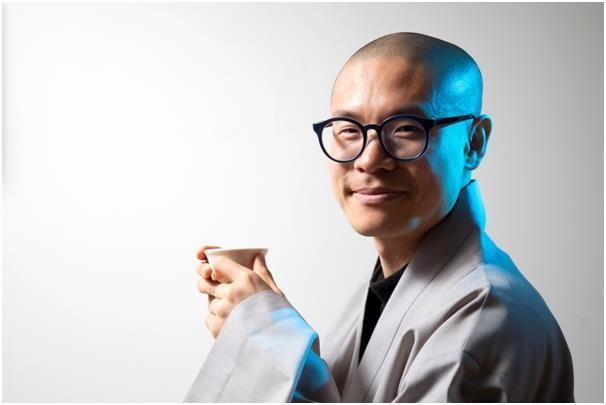
Monk Deungmyoung leads the “Mind Charging Station,” a mediation and counseling center opened in January by his teacher Rev. Magga in Noryangjin, southern Seoul, inspired by an elderly woman he met last year whose only son committed suicide after failing civil service exams for nine straight years there. The center aims to save young people wandering the streets. / Korea Times photo by Choi Won-suk
With the lack of job security and high unemployment among younger generations, more and more are drawn to Noryangjin to take a shot at becoming civil servants with guaranteed retirement and pension.
The applicants, who numbered 98,000 in 1995, tripled in 2016 to 289,000. Among the young jobseekers between the ages of 15 and 29, four out of 10 jobseekers turned out to be civil service candidates, according to Statistics Office data issued in May 2017.
Recent research, conducted by Korea Advanced Institute of Science and Technology (KAIST), estimated 440,000 people in Korea are preparing to take the state-run civil service exam.
Monk walked out of temples
“Mind Charging Station” run by Deungmyoung, a young monk, is a place for desperate young people who feel isolated from the rest of the world, where they can recharge their spent minds, gain the energy to love themselves and move on.
Located on the top floor of a four-story commercial building, it is a first privately funded Buddhist outreach center to help those young people in the city.
“Most people say they didn't expect to see a monk walking and meeting people on the busy streets. They say they thought Buddhism only exists on TV screens before they meet me,” said the 32-year-old monk, laughing that he is a “rarity” because he is one of less than 100 young monks in their 20s and 30s remaining in the country. “When the study period goes beyond one year, these people face emotional fallout. After repeated failures on the exams, they say they come to a state where they just sit at their desks but cannot concentrate on their studies for one month or more.”
The majority of those he counsels are confused about whether they should continue taking the exams or romantic relationships.
Opened in late January, the center was founded by Rev. Magga, Deungmyoung's teacher. Magga initially planned to open a mediation center in another part of Seoul, but he changed his plan the moment he met an older woman last year whose only son committed suicide after failing the civil service exam for nine straight years.
“The lady pleaded with tears to my teacher: 'Where is Buddism when young people suffer alone and kill themselves?' Right after meeting her, my teacher started looking for a place in Noryangjin,” Deungmyoung said. “Instead of waiting for the slow-responding Jogye Order to change, my teacher and I decided to act first to save those young people wandering the streets.”
“Mind Charging Station” has a place where people can have free tea time, counseling with the monk and a rooftop space with three mini tents where people can meditate.
Visitors answer true/false psychological questions to find the right color that is related to their mental state and they go to the small tent marked with that color and meditate for 10 to 15 minutes to audio mediation guides.
“After I broke up with my boyfriend, not a single day passed without shedding tears,” Song said, recalling the moment she came to the center.
She was in deep despair but it was not easy for her to seek help. “I used to spend whole weeks speaking only a few words. The only people I contacted were study room supervisors, supermarket workers and restaurant owners. I can't tell those people what worries me. I can't tell my family either, because I don't want them to worry about me,” she said.
Taking classes with people who could be her rivals, Song said lack of communication aggravated her feelings of isolation. “The only communication done here is via post-it notes,” she said. “I've seen someone leaving post-it complaints on the front of desks such as 'Your pencil case zipper noise bothers me' or 'Your parka makes a loud noise when you move.' Among them, the most shocking thing was 'Please don't breathe (too loudly),'” Song said. “People's nerves are on edge in Noryangjin. When people commit suicide next door, there are people who ask police and ambulances to approach the site with sirens off.”
According to Dongjak-gu Office, among 120 test preparers surveyed in Noryangjin between 2014 and 2015, 84 of them, or 70 percent, were categorized as at risk of developing depression and attempting suicide. The rate among test-takers is three times higher than average residents living in the district.
Noryangjin, refuge of hopeless youth
Monk Deungmyoung himself is someone who knows better than anyone the sense of despair among young people.
A graduate of Seoul's selective Yonsei University, he was a founding member of the student-led startup Munc and Rubicon Games, a developer of social games. The aspiring entrepreneur, who had suffered from a neglectful father and verbally abusive schoolmates, was busy in building up his career, in false belief that a respected job would solve his low self-esteem.
“I thought I had gotten over it. But, facing similar situations that reminded me of my painful past, it all came back to me again more acutely. I was in total devastation and suffered uncontrollable anger and didn't know why,” the monk said. After meeting his teacher and facing himself in mediation, he learned how to love himself and became a monk in 2011. Taking charge of “Mind Charging Station” is his first official mission.
He says more than half the people in Noryangjin preparing for the civil service exam think they have no other chance elsewhere. “After losing hope in getting jobs, but feeling they should have something to tell their families what they are doing, they choose to come here as a safe haven.
Having failed to fit into society, and lacking communication with their parents, these young people with low self-esteem have no other place to go. They just live here and spend their time. Some feel hapless and make extreme choices to end their lives,” Deungmyoung said.
He says Noryangjin is a microcosm of Korea. “Society constantly tells people they should succeed. Offering examples of a few good professions such as professors or conglomerate employees, it drives young people to cram into small doors of success. When they fail, it is easy for them to feel worthless,” he said.
Ironically, as well as institutes and study rooms, internet cafes and billiard rooms also thrive there. The 700-seat and 900-seat internet cafes are fully packed from morning to night so that it is hard to find a seat. People placing their thick criminal law books aside and playing games all day is a familiar scene.
Deungmyong says those wandering young people are the “seeds” who have the potential to grow bigger than, say, Samsung employees and contribute to the country. “When these people in their 20s upgrade their minds and change, they can do many great things. It is regrettable the country pays little attention to them,” he said. “Although we started small, we thought it is meaningful to act first.”
He said he wants to make “a community based on complete love and understanding” so anyone can feel secure to reveal their heart. His mediation study club with four people is the starting point.
“I want it to be a group that firmly supports each person grow together. Realizing how precious each of them is, is more important than finding ways to gain an acceptance letter. This can help a person have a happy and fulfilling life,” he said.
In April, he and other volunteers took to the streets to hand out free meals, and in May, in celebration to Buddha's birth, he plans to build a giant LEGO Buddha, where each person in Noryangjin can put a piece in it marked with their dream of getting a civil service job.