Korea’s photogenic Mukho neighborhood alarmed by tourists blocking road to take photos
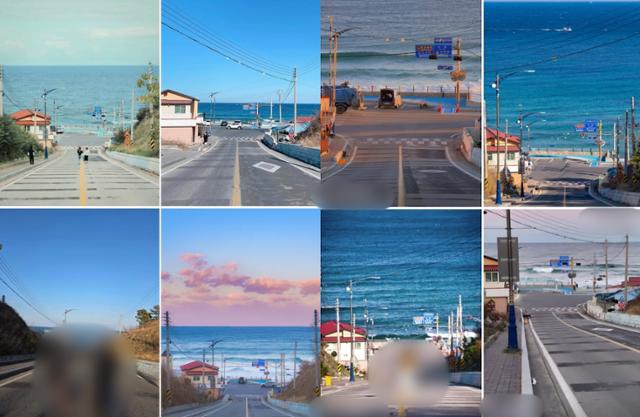
A collection of Instagram posts tagged “Eodal Samgeori” highlights the scenic intersection in Donghae, Gangwon Province, which has recently drawn attention from travelers seeking photo spots showing the ocean. Captured from Instagram
The coastal neighborhood of Mukho in Donghae, Gangwon Province, has recently gone viral on social media. Set on a low hill overlooking the vivid blue of the East Sea, the area's winding alleys and tightly clustered homes have captivated travelers seeking scenic backdrops.
The place that put Mukho on the tourist map is Eodal Samgeori, a three-way intersection. At the end of the downhill road, the horizon appears as a dramatic panoramic backdrop, turning the spot into a photo hotspot.
But when this reporter visited Mukho on Feb. 7, the scene behind the beautiful landscape was unexpectedly alarming. To capture photos with the sea as a backdrop, visitors often stood in the middle of the road, leading many tourists to engage in a dangerous standoff with passing cars.
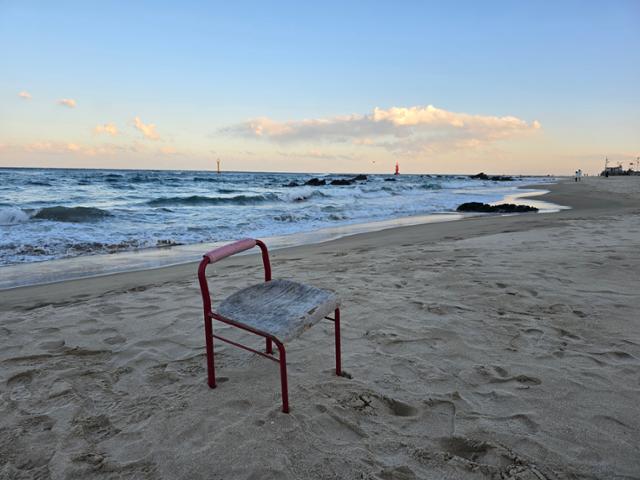
A chair sits on Eodal Beach in Donghae, Gangwon Province, on Feb. 7. Korea Times photo by Shin Eun-byul
Once a prosperous port in the 1970s, the Mukho had sunk into quiet decline and only recently regained attention. Since March 2020, when rail service between Seoul and Mukho began, it has become accessible via public transport and started welcoming travelers who use the area as a base to access scenic walks.
From Seoul Station, the KTX-Eum train reaches Mukho Station in about two and a half hours. During the Lunar New Year holiday, all eight trains departing Seoul for Mukho were sold out. Many visitors also arrive by car, braving the three hour drive from Seoul.
As travel preferences shift from major cities to quieter small towns, Mukho’s appeal has grown. A Donghae City official said, “As solo travel, healing trips and sentimental travel emerge as key trends, Mukho, which is quieter than famous cities like Gangneung and Sokcho, has rapidly risen as a destination.” Boosted by Mukho’s popularity, Donghae recorded more than 12 million visitors last year, up by about 600,000 to 700,000 from the previous average.
Its suitability for day trips adds to Mukho’s charm. Even visiting all 10 Mukho-area attractions listed on the city’s official website takes only about three hours on foot.
Comic-like scenery becomes a ‘must-visit'
Although Eodal Samgeori lies within the Mukho area, it sits slightly apart from the cluster of official attractions, yet travelers treat it as a must-visit stop.
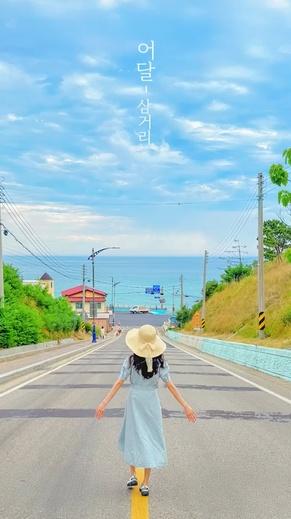
A view of Eodal Samgeori posted on the Donghae City Naver blog in July last year / Captured from the Donghae City blog
When visited on the afternoon of Feb. 7, about 30 travelers had gathered at the intersection, with more arriving. The 20 or so parking spaces were packed, and many visitors arrived by taxi.
As rumored, it was indeed a prime photo spot. Some online commenters say it resembles Kamakura, the Japanese coastal town associated with the anime “Slam Dunk.” Others compare it to scenery in films by Studio Ghibli, founded by Hayao Miyazaki. A July post on Donghae City’s official blog even described Eodal Samgeori as “pure Ghibli emotion copied and pasted.”
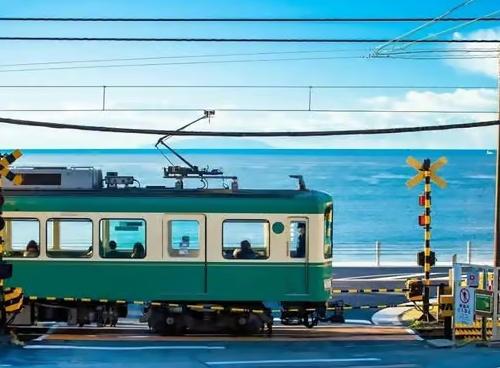
A view of the Japanese coastal city of Kamakura, a common comparison for Eodal Samgeori in Donghae, Gangwon Province / Captured from GetYourGuide
Safety, however, is an issue. Dozens of people repeatedly stepped onto the roadway to photograph themselves against the sea, moving aside only briefly when cars approached. Some joked it felt like a game as everyone dodged vehicles.
Drivers slowed when they spotted people in the road, yet some visitors kept taking photos until the last second. “A car is coming” and “Tell me when a car comes” were overheard frequently. The Donghae City blog also carries a warning: “Vehicles may pass, so please be careful.”
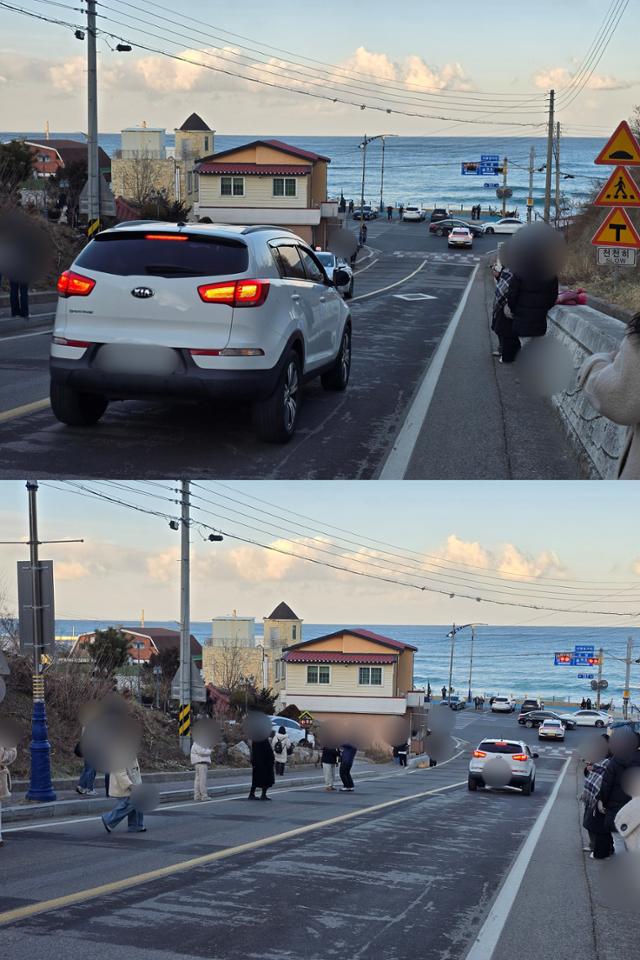
Visitors at Eodal Samgeori in Donghae, Gangwon Province, step aside briefly for passing cars before moving back into the roadway to take photos on Feb. 7. Korea Times photo by Shin Eun-byul
Such scenes also illustrate the problems of overtourism. An ordinary residential space has been inundated with visitors, inconveniencing locals. However, it is difficult to restrict entry to a place that became famous through word of mouth. While welcoming the surge in tourists, Donghae is grappling with safety risks. A city official said, “We are preparing a comprehensive tourism plan so visitors can enjoy Eodal Samgeori more fully without inconveniencing nearby residents and guests,” adding, “We are reviewing various ideas, including creating a car-free street.”
This article from the Hankook Ilbo, the sister publication of The Korea Times, is translated by a generative AI system and edited by The Korea Times.