Gangneung carries spirit of communal harmony through Danoje tradition

Shaman and “gut” performers stage Dano-gut during a ritual to celebrate Dano in Gangneung, Gangwon Province, June 22. Courtesy of Gangneung Danoje Festival Committee
Coastal city invites mountain deities to mortal world in millennium-long tradition
By Lee Hae-rin
GANGNEUNG, Gangwon Province ― Dano is one of the three most celebrated holidays in Korean tradition along with Chuseok and the Lunar New Year.
Fewer people may be observing this day of great festivity based on the agrarian cultures of the past, but it still remains the biggest local event in Gangneung, an eastern coastal city, two hours from Seoul by train.
Falling on May 5 of the lunar calendar each year, Dano was considered a day with the strongest cosmic yang energy. People enjoyed various rituals and popular pastimes. They wished for a good harvest and for peace and prosperity within the family and the nation.
Several Asian countries and Korean cities celebrate the spring festival, but the festival celebration in Gangneung stands out in many ways. Designated as an intangible cultural heritage of humanity by UNESCO in 2005 for its cultural and historical values, Gangneung's Danoje festival ― a combination of “Dano” and the Korean word meaning ancestral rites “je” ― appears in many ancient history records and encompasses the city's rich historic and cultural legacy while continuing to shape the regional identity.
The preparation for the festival begins one month before the day of Dano, with the brewing Sinju brewing ― a sacred liquor that is used in religious rituals as offerings to the mountain deities of the Daegwallyeong Range.

Gangneung residents dressed in traditional outfits run ancestral rituals marking the beginning of the Dano celebration at a mountain in the Daegwallyeong Range using the sacred liquor Sinju to invite mountain deities, June 3. Courtesy of Gangneung Danoje Festival Committee
The nature of the celebration is closely linked with the region's geography, explained Kim Kyoung-a, a Danoje festival interpreter with 10 years of experience.
“Located near high mountains in Daegwallyeong, the Alps of Korea, the city has a tradition of worshipping tutelary deities believed to reside in the mountains and the festival is an invitation that residents offer gods to the world of mortals, praying for the well-being of their family and the community,” she said.
Thus, the sacred liquor is brewed from rice that Gangneung people voluntarily donate with their cherished wishes. Only those who contributed to making Sinju can earn a bottle in return as the drink is not for sale, but visitors are offered a free drink at the festival as a sign of the town's hospitality, she explained.
This year, a record-high 6,527 households brought together approximately 16,800 kilograms of rice, marking the festival's full-fledged return after the COVID-19 pandemic.

Gangneung residents dressed in traditional Korean attire “hanbok” offer a cup of Sinju, a sacred liquor brewed with rice donated by local residents one month before the festival, to a visitor, June 22. Courtesy of Gangneung Danoje Festival Committee
The core value in the region's Dano celebration lies in harmony and transcending religious, social and cultural differences, she said.
Through generations, shamans have taken major roles in the region's Dano commemorations due to the shamanistic origin of the “gut,” ritualized rites of the shamans. The tradition had been respected throughout the Goryeo and Joseon periods when Confucianism and Buddhism were introduced to the ancient empires and had greater political influence, giving the regional celebration multireligious depth through combinations of Confucianism-based ancestral rites and Buddhist religious ceremonies. It also integrated the nobles and commoners in celebration, she explained.
The city carries the spirit of communal harmony today by offering visitors Sinju and rice cakes, both made from rice collected from Gangneung locals, while also inviting multicultural performers on stage to make the festival more diverse and inclusive.
The festival is also renowned for the high artistic values of the region's intangible cultural heritage, encompassing traditional dance, music and drama.
“Dano-gut is the key component of the festival. It best represents the lives of ordinary people and holds high artistic value in Korean traditional dramatic performing arts,” Gangneung-born professional gut performer Kim Woon-seok told The Korea Times during the festival.
During Dano-gut, shamans and performers first call in and welcome the deities, then entertain them while making requests on people's wishes, including long and healthy life, success in marriage, and peace and prosperity in the community. Finally, the ritual ends by sending the gods back on their way to their celestial dimension.
In the past, this shamanistic ritual was performed by only a few “naturally born” shamans. However, a growing number of the younger generation are seeking training to pursue the traditional arts and carry on the local legacy, he said.
A number of prestigious academic arts institutions in the country, such as Korea National University of Arts feature Korean traditional drama as a major and greatly value gut artistry in their curriculum to cultivate future gut experts, who must be skilled in singing, dancing, performance directing as well as playing several traditional instruments, he explained.
Besides over a dozen types of gut, a total of 66 cultural programs and events took place during the festival this year, including ancestral rites, traditional percussion concerts, Buddhist rituals and a wide range of folk games and sports.

Men engage in “ssireum,” or Korean traditional wrestling, during the Gangneung Danoje Festival in Gangneung, Gangwon Province, June 22. Courtesy of Gangneung Danoje Festival Committee

Gangneung Danoje venue is crowded with locals and visitors during the festival, June 22. Courtesy of Gangneung Danoje Festival Committee
The driving force to carry on the tradition, over nearly a millennium, is the people of Gangneung's love and pride for it, according to Kim Hyoung-joon, the secretary general of the festival committee. The city is the only one in the country to have never skipped a year in Dano celebration even during the Japanese colonial occupation and the Korean War (1950-1953).
“Gangneung Danoje has been made by its people from the start and continues to be that way … Every resident of Gangneung is eager to participate and thinks of it as their own,” he said. This year's festival, as previously, ran with the help of local volunteers, eager to carry on the nearly thousand-year-old tradition for another millennium.
“Let's say a Gangneung-born person meets another while living in another city. Even if they have never met and don't know anything about each other, they can immediately bond and talk for hours just about 'Dano,' and that's what makes the festival so special. Chuseok and Seol (Lunar New Year) are celebrations of families, but (Gangneung) Dano is a celebration of this region,” Kim said.
The city continues efforts to modernize the festival with its traditional heritage.
Hoping its stories and values will resonate with a wider audience even when the celebration is over, the city collaborated with local artists and creators to develop a series of fortune-calling souvenirs ranging from key chains to smartphone accessories based on the celebration's core message ― wishing peace and prosperity.
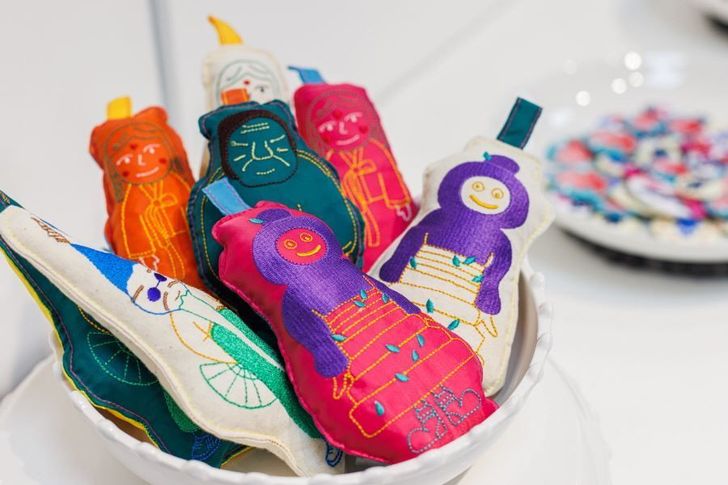
Fortune-calling dolls designed after characters of the Gwanno mask drama, a traditional theater piece telling the story of love, misunderstanding and reconciliation, and satire of the nobility / Courtesy of Gangneung Danoje Festival Committee
For the people of Gangneung, the annual festival is like a picnic or a big party that brings everybody in town together, he said, extending the invitation to join the local celebration.
This year, Gangneung saw over 623,000 visitors during the eight-day festival. The figure is higher than the pre-pandemic annual average of around 500,000 and a 20 percent increase from the previous year's 357,000.
Gangneung is one of the country's five regional tourism hub cities designated by the Ministry of Culture, Sports and Tourism and promoted by the Korea Tourism Organization for 2020 to 2025, along with Busan, Jeonju and North Jeolla Province, Mokpo of South Jeolla Province, and Andong of North Gyeongsang Province.