Seosulla Street offers atmospheric, tasty stroll next to royal shrine in Seoul

Grilled rice sticks and gwapyeon, or fruit jelly, made with seasonal fruits served with makgeolli, or Korean traditional unrefined rice wine, at a hanok restaurant in downtown Seoul's Seosulla Street / Courtesy of Korea Tourism Organization
Lesser-known alley is charming 'gastroventure' destination
By Lee Hae-rin
Seoul is a mix of the past and present, where centuries of tradition and cutting-edge technology coexist. Skyscrapers and neon signboards surround royal palaces, while traditional Korean homes, known as “hanok,” in the older sections of the capital formerly called Hanyang, are reminders of the more than 500 years of history of the Joseon Dynasty (1392-1910).
Seosulla Street near Changdeok Palace and Jongmyo Shrine in the heart of the capital is a lesser-known alley compared to nearby destinations such as Ikseon-dong and Insa-dong. But it is a charming local secret that celebrates historical beauty as well as urban gastronomy.
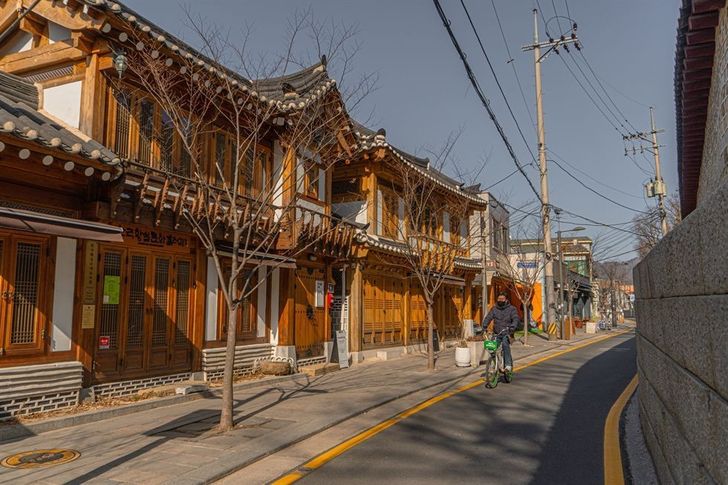
Seosulla Street / Courtesy of Korea Tourism Organization
Its name is a combination of the Korean words “Seo,” or west in Korean, and “Sulla,” referring to the night patrol force that once guarded Jongmyo Shrine, part of Korea's historical heritage, symbolizing the Joseon royal family's authority.
Designated as a UNESCO World Heritage site in 1995, the 200,000-square-meter green space is home to these traditional houses containing “sinju,” tablets, engraved with the names of Joseon monarchs, and continues to serve as a venue for ancestral rituals by the members of the Jeonju Yi clan, the descendants of the Joseon royal family.
Today, the 800-meter-long alley, following along the western wall of the royal ancestral shrine, is home to trendy restaurants, coffee shops and craft workshops, many of which are housed in renovated hanok, where the palace workers used to live during the Joseon period. The street is growing in popularity among Korean foodies as it offers a serene stroll that is filled with healthy fusion dishes.
Buckwheat noodles is one of the recommended traditional dishes, especially popular when served cold with a refreshing soup in the summer season, offering the subtle yet irresistible fragrance of the buckwheat. Mixed with a spicy sauce or perilla oil with a dash of soy sauce, the dish is perfectly paired with jumbo buckwheat “mandu” or dumplings, which can be served steamed or deep-fried.
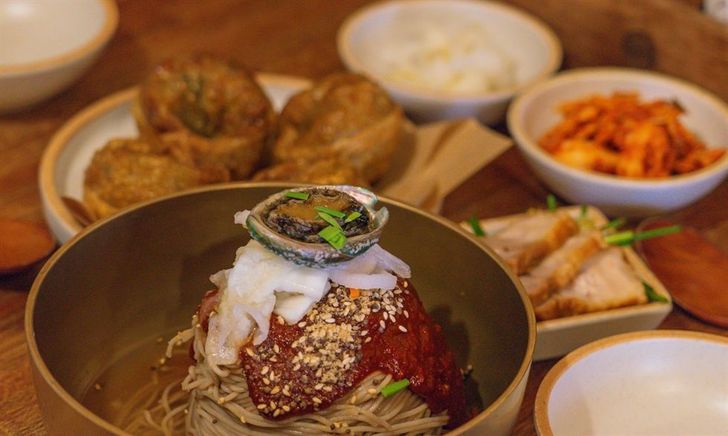
Buckwheat noodles mixed with a spicy sauce and fried jumbo buckwheat dumplings served at a restaurant in central Seoul's Seosulla Street / Courtesy of Korea Tourism Organization
The alley also features hanok-style coffee shops serving Korean traditional desserts and drinks with a modern twist. For example, grilled rice sticks served with malt syrup and powdered soybeans deliver a chewy texture and a harmonious marriage with both coffee and “makgeolli,” a traditional Korean rice wine. “Gwapyeon,” or traditional-style fruit jelly, is a dessert made by mixing seasonal fruits with bean starch, sugar and honey.
Another must-try delicacy is grilled Jeju “sundae” ― a sausage-like dish made by filling pork intestines with different ingredients mixed in blood. The dish comes with two types of sauce with a modern twist: fermented soybean paste sauce, which offers an extra spicy kick with chopped chili peppers, and truffle mayo, to suit both Korean and foreign taste buds.
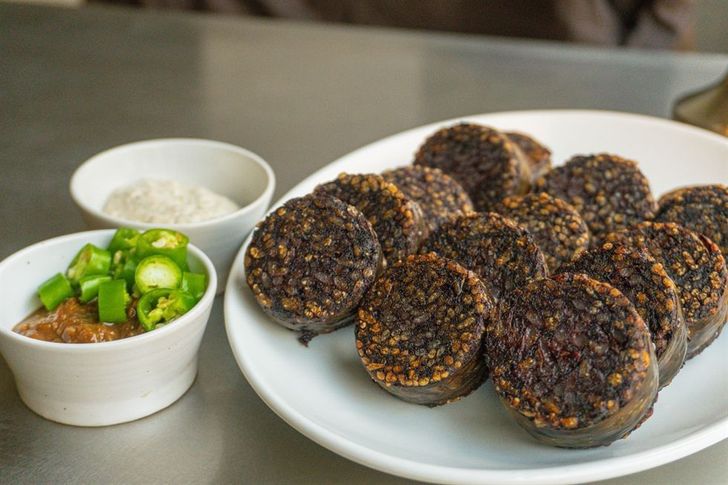
Grilled Jeju sundae, a sausage-like dish made by filling pork intestines with different ingredients mixed in blood, at a restaurant in central Seoul's Seosulla Street / Courtesy of Korea Tourism Organization
A pasta dish consisting of salted freshwater shrimp from the southern coastal county of Gangjin is a popular menu item. The dish offers a unique mix of Korean salted seafood mixed with Western cuisine, which goes well with both wine and makgeolli.
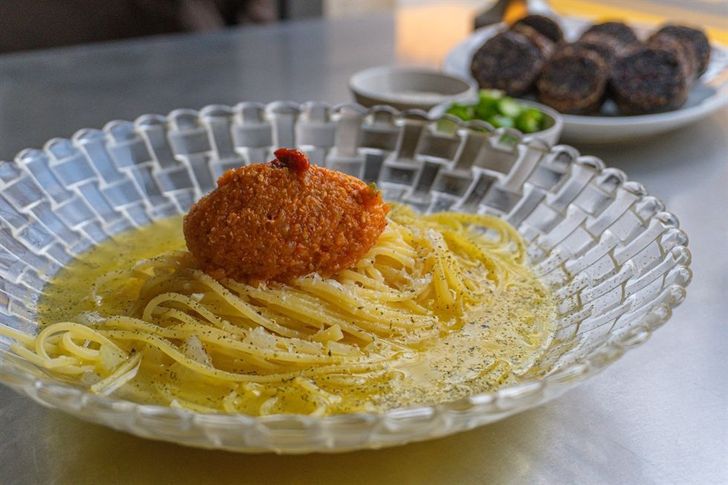
Salted freshwater shrimp pasta served at a restaurant in central Seoul's Seosulla Street / Courtesy of Korea Tourism Organization
Locations featured in this article are presented in the gastronomy tour guidebook “Food Trip through 7 Hidden Alleys of Korea,” published by the Korea Tourism Organization (KTO) in May.
The book presents seven selected alleys from six cities across the country based on a survey with 1,058 Korean travel aficionados aged in their 20s to 40s, asking which alleys and must-eat places they want to recommend to foreign travelers visiting Korea.
The seven alleys featured in the guidebook include Seoul's Seosulla Street and Yongnidan-gil, Gaengnidan-gil in Jeonju, Songdo Cafe Street in Incheon, Apsan Cafe Street in Daegu, Huinnyeoul Culture Village in Busan and Aewol Handam coastal trail on Jeju Island.
The digital version of the book is available in English, Japanese and traditional and simplified Chinese at
. The KTO plans to further develop tour programs based on the featured itinerary.