Jeonju's hidden alleys perfect place for 'gastroventures'

Grilled octopus skewers at Jeonju Hanok Village / Courtesy of Korea Tourism Organization
Historical city offers foodie paradise with traditional, creative cuisine
By Lee Hae-rin
JEONJU, North Jeolla Province ― Two hours from Seoul by KTX bullet train, Jeonju is known for its historical pedigree given that it is the hometown of the 1392-1910 Joseon Kingdom's founder, Yi Seong-gye.
Designated as the country's first Creative City of Gastronomy by UNESCO in May 2012, however, the southwestern city is now building a new pedigree of gastronomy with a wide range of restaurants, coffee shops, bars and street food vendors that offer regional traditional specialties as well as creative cuisine.
A leisurely stroll through Jeonju Hanok Village is a must for travelers. The village featuring around 700 traditional buildings is famous for its size ― the largest among hanok villages in Korea ― but also for a variety of street food and traditional dining options throughout its small alleys.
Many of the street foods feature Jeonju's local specialties as ingredients.
Water parsley dumpling, for example, offers a taste of vegetables selected as one of the city's top 10 delicacies along with several other vegetarian options. Freshly grilled octopus and chicken skewers are served with cheese from the neighboring town of Imsil, the first cheese producer in the country.
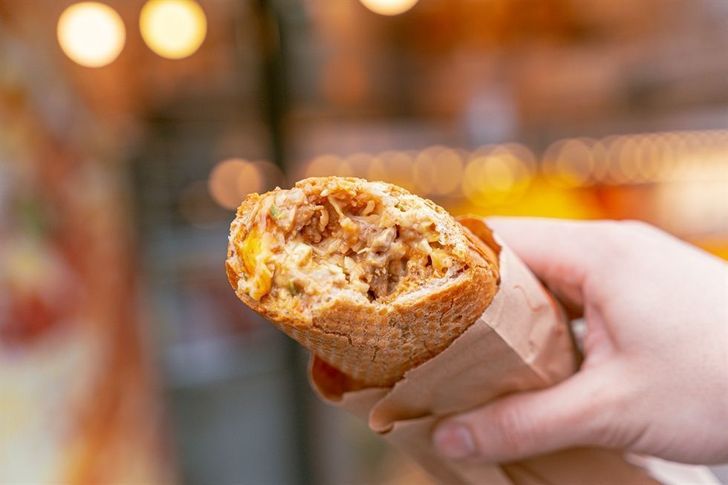
Baguette burger at Jeonju Hanok Village / Courtesy of Korea Tourism Organization
Baguette burger is one of the go-to foods for Korean visitors to the hanok village. It is a harmonious mix of Western and Korean ingredients, featuring smoked pork with a sauce made of Cheongyang red pepper, soy sauce, cabbage, garlic, onion and mayonnaise assembled in a baguette.
The alleys also offer traditional dishes, such as bibimbap, a traditional Korean dish of steamed rice topped with vegetables and stir-fried meat, which is enjoyed mixed together with a red chili paste.
Bean sprout and rice soup, often enjoyed by Koreans as a hangover dish, is another signature delicacy of Jeonju, served with moju, a regional alcoholic drink used to treat hangovers made by boiling unrefined rice wine with medicinal herbs.
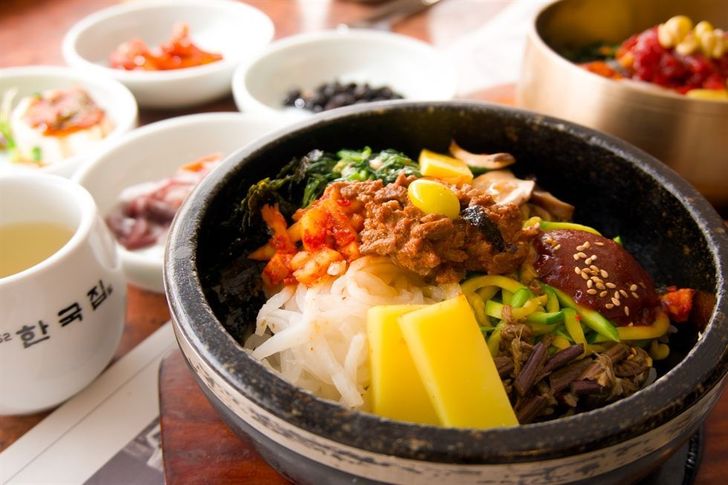
Bibimbap, a traditional Korean dish of steamed rice topped with vegetables and meat, at Jeonju Hanok Village / Courtesy of Korea Tourism Organization
The evening highlight to round off the itinerary is quenching thirst at “Gamaek,” or corner store beer, a portmanteau of “gagae (store)” and “maekju (beer) in Korean. The regional culture of workers enjoying a glass of beer with simple side dishes such as dried pollack fillet, dried squid on the grill and peanuts at humble corner stores has become popular for young and old and locals and travelers alike.
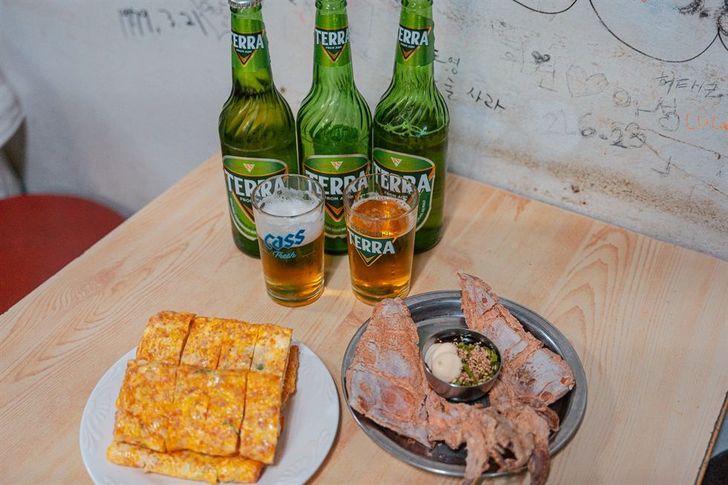
Bottles of beer, egg omelet and grilled dried squid served at a “Gamaek” in Jeonju / Courtesy of Korea Tourism Organization
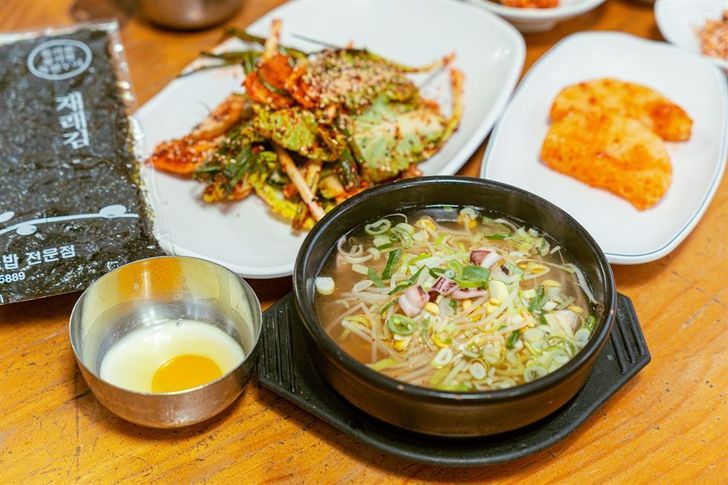
Bean sprout and rice soup in Jeonju / Courtesy of Korea Tourism Organization
Locations featured in this article are presented in the gastronomy tour guidebook “Food Trip through 7 Hidden Alleys of Korea,” published by the Korea Tourism Organization (KTO) in May.
The book presents seven selected alleys from six cities across the country based on a survey with 1,058 Korean travel aficionados aged in their 20s through to 40s, asking which alleys and must-eat places they want to recommend to foreign travelers visiting Korea.
The seven alleys featured in the guidebook include Jeonju's Gaengnidan Street, Seosulla and Yongnidan Streets in Seoul, Songdo Cafe Street in Incheon, Apsan Cafe Street in Daegu, Huinnyeoul Culture Village in Busan and Aewol Handam coastal trail on Jeju Island.
The digital version of the book is available in English, Japanese and traditional and simplified Chinese at
. The KTO plans to further develop tour programs based on the featured itinerary.