Urban regeneration projects turn derelict facilities into scenic attractions

People look around the inside of a former oil container at Oil Tank Culture Park in Mapo District, Seoul. Courtesy of Korea Tourism Organization
By Lee Hae-rin
Urban regeneration is the process of transforming old buildings and facilities to give them a new form and use. It adds new value to forgotten sites and aims to take an eco-friendly approach to preserving the sites' historical identity and creating a new harmony with its surroundings.
For those who are interested in protecting the environment and learning about the country's modern history, the Korea Tourism Organization (KTO) recommends visiting these urban regeneration sites.
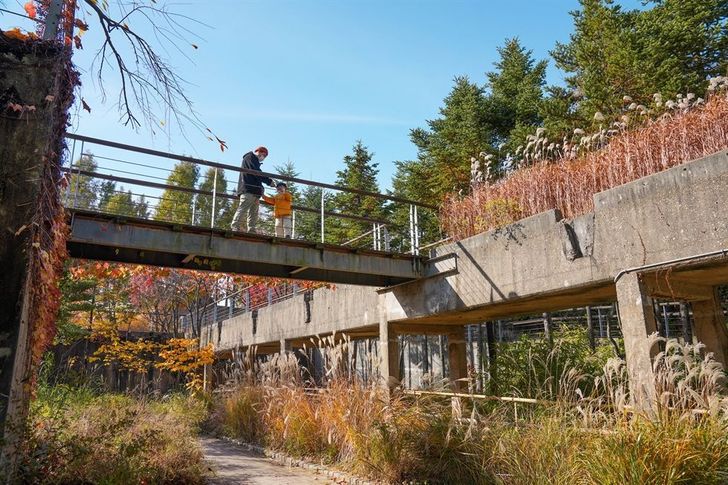
Seonyudo Park / Courtesy of Korea Tourism Organization
Seonyudo Park, Seoul
Seonyudo Park is an eco-friendly ecological park built in the ruins of a former water purification plant in the middle of the Han River in Yeongdeungpo District, southwestern Seoul.
Seonyudo was originally a small island. For its beautiful scenery, it was named to mean “where Taoist hermits come to play,” and was praised by many poets and artists of the 1392-1910 Joseon Kingdom.
However, the peak started losing its original shape and striking view following the Japanese colonial period as its stones were taken away to reinforce the riverbank, and then it all but disappeared from view in 1978 to make way for a water purification plant. For 20 years, the plant supplied tap water to the southwestern part of Seoul until it closed down.
In April 2002, the Seoul Metropolitan Government renovated the site into an eco-friendly ecological park. Once a concrete industrial site, the park now offers both scenic and meditative spots and a variety of entertainment in the middle of the Han River.
The park is the country's first eco-friendly park developed from an abandoned site. Just as Tate Modern of London is housed in a former power plant and Landschaftspark Duisburg-Nord in Germany is built upon an old industrial area, the park preserves the location's original identity and displays high architectural value.
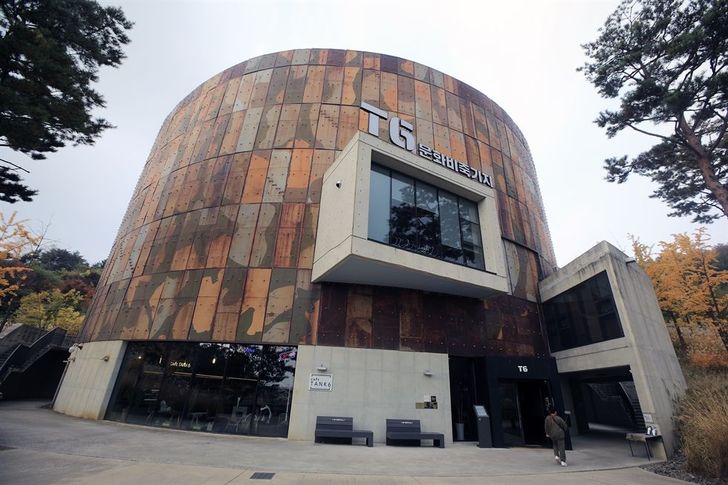
Oil Tank Culture Park in Mapo District, Seoul / Courtesy of Korea Tourism Organization
Oil Tank Culture Park, Seoul
Oil Tank Culture Park is an urban cultural complex refurbished from an abandoned oil storage depot in Mapo District, western Seoul.
The oil site was a high-security facility built between 1976 and 1978 as a precautionary measure against an oil crisis following Middle Eastern conflicts. Its five giant tanks could hold reserves of over 69 million liters of oil, enough for Seoul citizens to use for a month or enough to refuel 4 million vehicles.
However, while the city was preparing for the 2002 World Cup, the site was classified as a dangerous facility within 500 meters of the new football stadium and was shut down. In 2017, Seoul City gave new life to the abandoned site as an urban cultural complex.
The facilities there are made of materials recycled from the original tank. The oil tanks were turned into cultural spaces for exhibitions and performances, while reserving their original shape and history. The cafe, lecture rooms, and library in the park are also built from parts of the dismantled oil tanks.
The park is designated as a Seoul Future Heritage Site and presents the coexistence of past and present, history and culture.
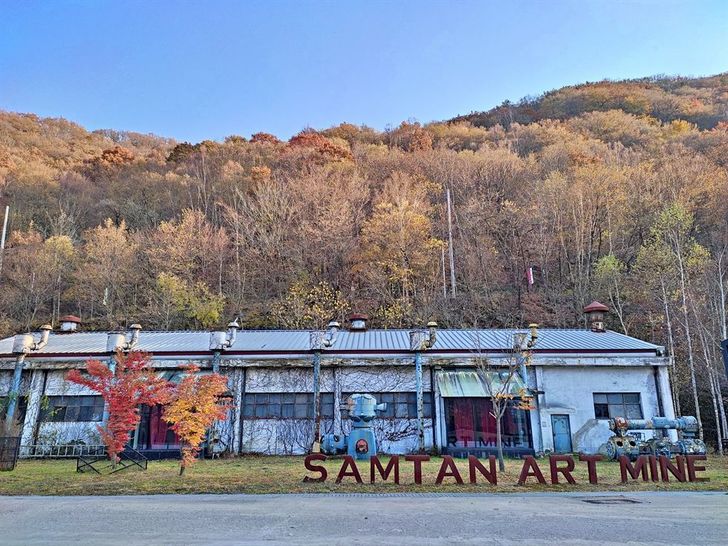
Samtan Art Mine / Courtesy of Korea Tourism Organization
Samtan Art Mine, Gangwon Province
Samtan Art Mine in Jeongseon, Gangwon Province, is an art center created from a coal mine that led the country's rapid industrial growth since its opening in 1964.
Located along the skirt of the beautiful Mount Hambaek, the mine closed down in 2001 due to the government's policy to reduce coal production amid declining demand for domestic coal.
In 2013, the mine, which was owned by a mining corporation, was renovated and newly opened as Samtan Art Mine with a collection of over 100,000 art pieces from 150 countries.
The unique design of the facility comes from preserving its industrial legacy and giving it an artistic touch. The original structures of locker rooms, shower rooms and boot-washing stations used by 3,000 miners at the time are well-preserved and transformed into an industrial exhibition space displaying art collections.
It also memorializes the history of miners and their dedication to the development of the country. Statues and portraits of miners are presented along with the art collection and visitors can take a guided tour to learn about their history.
Samtan Art Mine received a grand prize at Korea's Public Design Contest in 2013 and is designated among “100 Korean tourist attractions that Koreans must visit” by the Ministry of Culture, Sports and Tourism and the KTO.
Visitors are recommended to check the opening times and operating details of the sites in advance, as they may be altered in line with changing social distancing measures.