Traditional Korean alcohol in heart of Seoul

A new batch of makgeolli is wrung from a cloth sack into a vat at Together Brewing in Yeonhui-dong, Seoul, on Dec. 21. / Korea Times photo by Shim Hyun-chul
Mint, star anise spice up makgeolli
By Kwon Mee-yoo
There is a makgeolli brewery located in the quiet yet hip neighborhood of Yeonhui-dong, western Seoul, producing the traditional rice alcohol with unlikely flavors of plum blossom, mint and yuzu.
Choi Woo-tack, founder and owner of Together Brewing, gave a hint that the next flavor of the newly established brewery would be star anise, or illicium verum.
Makgeolli is the oldest alcoholic beverage in Korea, but Choi breathes new life into the milky grain-based beverage.
"Liquor largely depends on each customer's preferences. It is important to keep customers from losing interest. That's why craft beer breweries produce a diverse range of beer," Choi said during an interview with The Korea Times on Dec. 21. "That's why I'm creating six basic flavors of Together Brewing's first series ― Yeonhui."
The naming, label and pricing are intuitive. The Yeonhui series reflects Choi's interpretation of the neighborhood through flavored makgeolli.
"The atmosphere of Yeonhui-dong is unique. It is one of Seoul's old, luxurious residential areas with the recent addition of nice cafes and hip places. There are international schools such as Seoul Foreign School and Seoul Overseas Chinese High School. The neighborhood is known for some of the best Chinese restaurants in Seoul," the 37-year-old brewer said.
"It is also relatively close to the Hongik University and Yeonnam-dong area, both very popular among young, trendy people. Being within walking distance of those areas is a great merit."
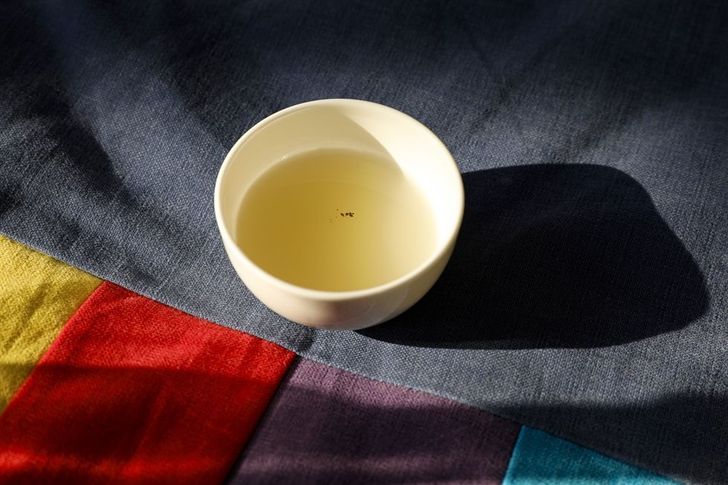
A cup of Yeonhui Mint, a mint-flavored makgeolli developed at Together Brewing / Korea Times photo by Shim Hyun-chul
Practical reasons also influenced Choi's location selection.
"Raw rice wine has a low tax, so it was possible to open a brewery in Seoul. Being readily accessible to the younger population was my aim, breaking away from the typical notion of a traditional Korean brewery, a grand hanok (traditional Korean house) in a rural area," he said.
The first three flavors in the series are Yeonhui Maehwa, Yeonhui Mint and Yeonhui Yuzu. Each type of makgeolli is named after the main flavor ingredient which is hand-drawn on the label and easily recognizable.
The beverages are priced according to their alcohol by volume (ABV). Yeonhui Maehwa (12 percent ABV) is priced at 12,000 won, Yeonhui Yuzu (10 percent ABV) is 10,000 won and Yeonhui Mint (9 percent ABV) is 9,000 won.
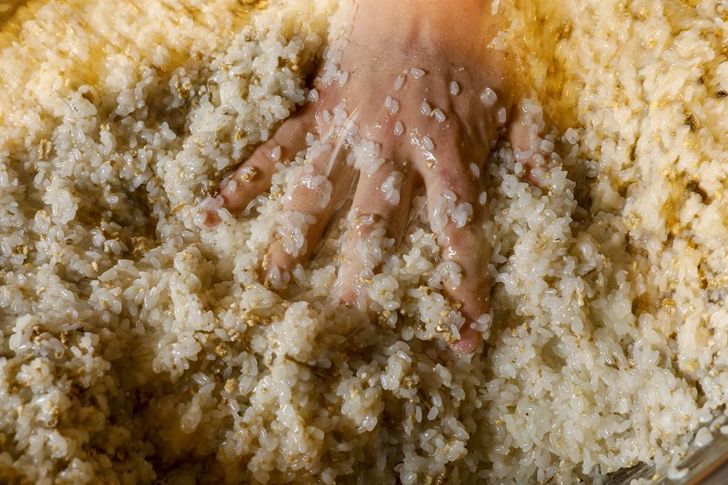
Choi Woo-tack mixes steamed rice, water, nuruk (a Korean fermentation starter) and flavoring ingredient apple mint to make Yeonhui Mint makgeolli at Together Brewing in Yeonhui-dong, Seoul on Dec. 21. Korea Times photo by Shim Hyun-chul
Choi blends traits of Yeonhui neighborhood with rice wine
As a lover of alcoholic drinks, Choi took a beer brewing course and earned his master's degree in biological engineering with a thesis focused on wine. He also worked at Korea Studio Sool, a traditional Korean alcohol research institute, for about five years before opening his business.
"I can't be the best at brewing beer or making wine, since they didn't originate in Korea. So I became more interested in adding modern elements to traditional Korean alcohol,” he said.
Choi adds a flavor to the basic elements used in making makgeolli ― water, rice and nuruk (a traditional Korean fermentation starter).
"Cheongju (refined rice wine) and beer are typically clear and there's not much difference in texture or mouthfeel. Then the texture of raw rice wine came to my mind as a new opportunity to renew the taste of makgeolli. The rice starch could bring a new character to makgeolli with a hint of a flavoring ingredient," he said.
The brewing of makgeolli begins with washing and steaming rice. After it has cooled down, Choi mixes the steamed rice with water, nuruk and a flavoring ingredient. The mixture is stored in a clay crock pot and left to ferment.
"For the first few days, it is stored in a warm place for initial fermentation and then kept cool for about a month for the main fermentation," Choi explained.
"I am well aware of the characteristics of each type of makgeolli. The single-step fermented danyangju is sourer and has a low alcoholic content. As they go through more fermentations, the taste and scent grow stronger and alcohol increases. So I tried to find flavoring ingredients that would go well with the base drink and spice it up.”
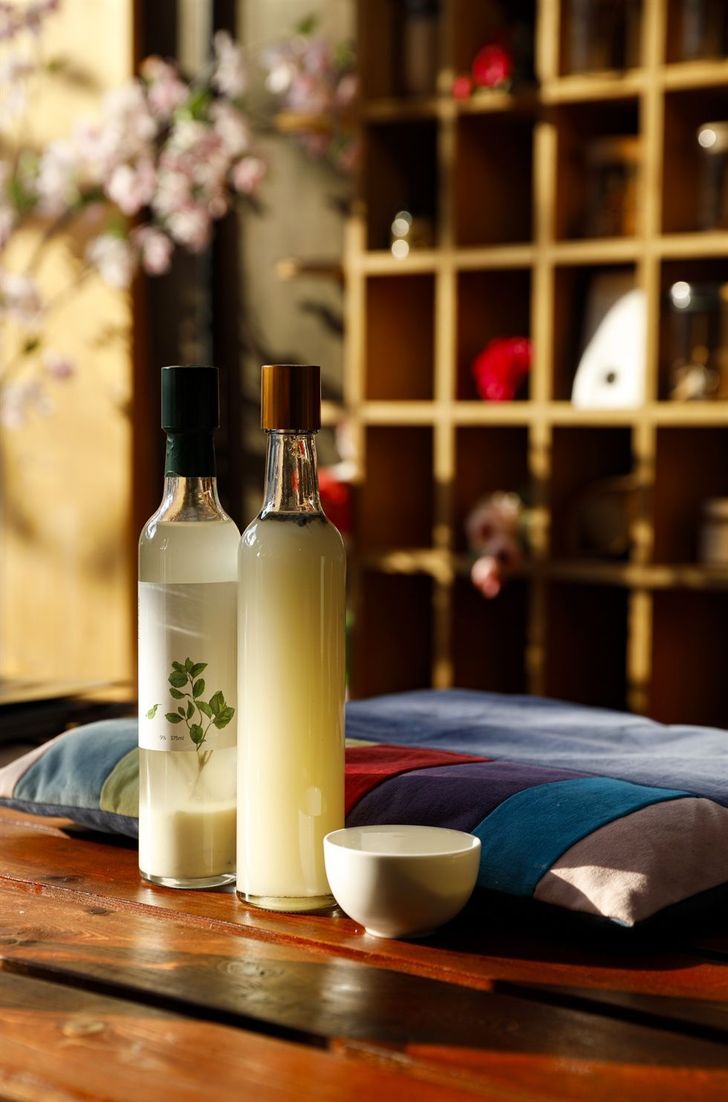
Shown are two bottles of Yeonhui Mint makgeolli at Together Brewing. The one on the right is freshly brewed and bottled, while the left one is complete with its label. Actual mint herb is not included in the bottles for sale. Korea Times photo by Shim Hyun-chul
Among the Yeonhui lineup, Yeonhui Mint is based on Bueuiju, also known as dongdongju, which is fermented once.
"I was wondering which ingredient would go well with this sweet and sour alcohol and took inspiration from the cocktail mojito, which has a spicy taste combining sweet and sour flavors with mint. So I developed a recipe adding mint to the mixture of water, rice and yeast," he said. "Mint is a very polarizing ingredient, but I targeted those who like it very much. After all, that is what a craft brewery can do."
Yeonhui Yuzu is based on Hosanchun, a type of traditional alcohol with a bitter finish.
"I looked into sweet yet bitter ingredients and citrus fruits seemed to be suitable. Among them, I picked yuzu to recreate the fruity flavor of American IPA beer in makgeolli," Choi explained.
Yeonhui Maehwa is based on seoktanju, a type of makgeolli that has a refreshing finish after a taste of sweetness.
"Yeonhui Maehwa is my interpretation of the spring flowers of Yeonhui-dong. The plum blossom reminded me of cherry and I took inspiration from the Belgian kriek lambic beer," he said.
Choi's next flavor is star anise, another unusual pairing for makgeolli.
"There are many Chinese restaurants in this area as well as the Chinese school. I collaborated with Mongjoongsik, a nearby Chinese restaurant which presents themed courses such as A Better Tomorrow, to use Chinese ingredients in makgeolli as a nod to the neighborhood," Choi said. "It is loosely inspired by ouzo or raki, distilled drinks from Eastern Europe using anise."
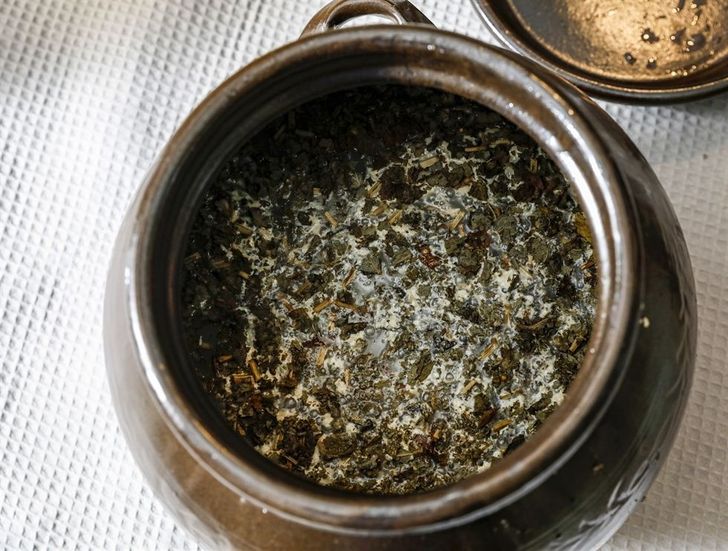
Makgeolli mash fermented in a crock / Korea Times photo by Shim Hyun-chul
Currently, Choi offers around 100 bottles of each flavor every month. "Together Brewing is in its early stage, establishing the brand's value. So I'm trying not to bite off more than I can chew from the beginning," he said.
Half the amount produced is supplied to contracted bars and restaurants, while the remaining goes on sale twice a month on a set date.
"Popular bakeries in the Hongdae area make people line up at the door even before opening. Ultimately, I want to make makgeolli that is worth lining up for," he said. "There was no one in the first month, but as the Yeonhui series went viral through social media, a few people queued up on the announced date."
The brewery is small, but Choi maximizes the advantage of brewing in small batches.
"A typical beer fermenter used by craft breweries holds about 200 liters to 500 liters, so it is difficult for them to experiment, as they're taking the risk of throwing away that much beer if it fails," Choi said. "However, I can make each batch with 10 kilograms or 20 kilograms of rice, so I can be more flexible and experimental. As long as I have rice, water and nuruk, the possibility is infinite."
The brewery also offers a makgeolli making experience. Participants can experience the basic processes of steaming and mixing rice with nuruk and adding flavoring ingredients of their choice such as cinnamon.
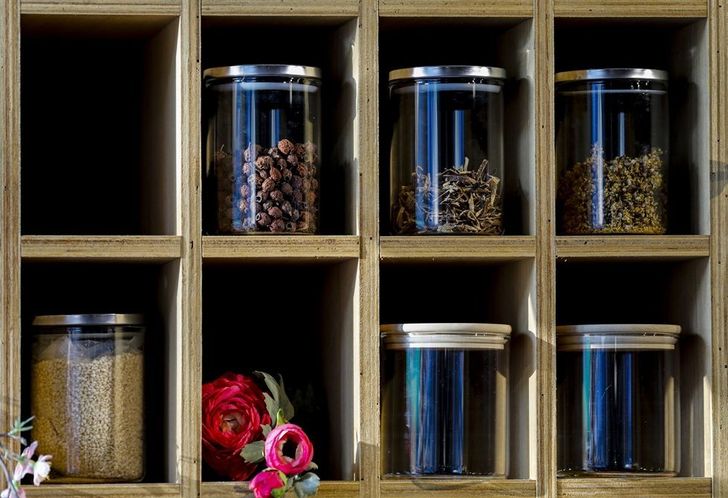
A variety of flavoring ingredients at Together Brewing / Korea Times photo by Shim Hyun-chul
"They will be gifted with a pre-made bottle of the Yeonhui series and of course keep what they made, which they can drink after a month of fermentation," Choi said. "I try to keep a wide range of ingredients for the experience program, so participants can make their own alcohol to their liking. Some of their choices have inspired me too."
One of the items on Choi's list is milk tea-flavored makgeolli.
"The milky and sweet nature of makgeolli goes well with milk tea. I've tested a batch with Earl Grey tea. I'm considering collaborating with a tea room in the Yeonhui area to find the right tea for makgeolli, taking professional advice," he said.
"I try to pursue coexistence in Yeonhui-dong. That's why I'm collaborating with local restaurants such as smoked salmon specialty Longboat Smoker and Chinese restaurant Mongjoongsik. Taking a long-term perspective, I hope to donate part of the profits to the neighborhood."