Paju's border-area tourism hit by COVID-19 after ASF

The Third Tunnel of Aggression, an underground tunnel dug by North Korea with the intent of invading the South, in Paju, Gyeonggi Province / Courtesy of Korea Tourism Organization
By Jun Ji-hye
Residents of the Korean border city of Paju near the western inter-Korean border have become more anxious as the fast spread of COVID-19 here is raising uncertainty over when the city's tourist sites can resume operation, city officials said Thursday.
The city's border-area tourism was suspended on Oct. 2 as part of the government's efforts to stop the spread of African swine fever (ASF) in inter-Korean border areas.
The nation has been hit by an increasing number of ASF cases, with the first case reported in Paju on Sept. 16.
As the border city has attracted many foreign and local tourists, the suspension of the tour programs in the region, such as those to the demilitarized zone (DMZ) and the Third Tunnel of Aggression, threaten the livelihood of residents there.
The Third Tunnel of Aggression is one of the secret tunnels under the border between the two Koreas that the North drilled as a channel to penetrate into the South.
Other major tourist attractions in the city include the Dora and Odusan Unification Observatories, which offer views of the North's border town of Gaeseong, and Imjingak Pavilion, where many visitors look at the North through binoculars.
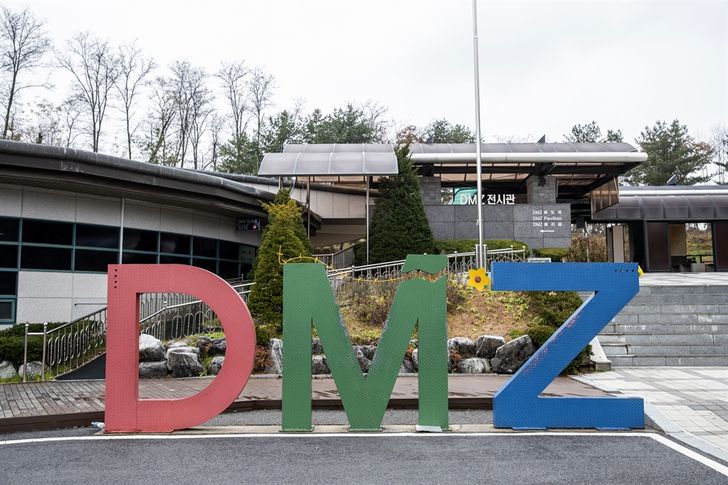
DMZ Pavilion near the Third Tunnel of Aggression / Courtesy of Korea Tourism Organization
Paju city officials and residents have been striving to come up with various countermeasures to stop the spread of ASF, asking the government to resume the border-area tourism at the earliest possible date.
Following the recent outbreak of the new coronavirus, they have also made efforts to prevent virus infections in the region, with the Paju City Facilities Management Corp. having disinfected crowded areas there. But despite the city's efforts, two cases of coronavirus infection were reported, Monday.
The city was initially planning to begin operation of the “Imjingak Peace Gondola” on March 14, but postponed the opening until April following confirmation of the coronavirus infections.
The city began construction of the gondola in a 32.7 billion won ($27 million) project in October 2018 in a bid to further vitalize DMZ tours. The construction has recently been completed.
The Odusan Unification Observatory was also forced to shut down temporarily, Tuesday, as a precaution against the fast spreading coronavirus, according to the Ministry of Unification.
The Army's 1st Infantry Division, which oversees access to the civilian control line area near the border, decided to permit entry of a minimum number of farmers who do not show symptoms associated with the coronavirus, such as fever, after a meeting with heads of three villages there.
“We have made diverse efforts for months (since the ASF outbreak) for the security-related tourism to be resumed at the earliest possible date, but it is regrettable that coronavirus infections have occurred at the city,” a Paju city government official said.
He added the city will continue to enforce strict quarantine measures against ASF and coronavirus.