Hong Kong: A city of coexistence

People sit at an outdoor restaurant in the Old Town Central in Hong Kong. / Courtesy of Hong Kong Tourism Board
Old town beneath skyscrapers keeps traditions alive
By Park Jae-hyuk
HONG KONG ─ Born to a British father and a mother from Hong Kong, my tour guide Stephen Cheung must have been one of the most suitable men to represent the Old Town Central district in this Asian city.
The 27-year-old introduced the district as “a place in which East and West, tradition and modernity and Hong Kong and mainland China coexist.”
Crisscrossing a labyrinth of one-way roads and thousands of stairs on a steep hill, he showed me the true face of Hong Kong hidden underneath skyscrapers lining up along the coast.
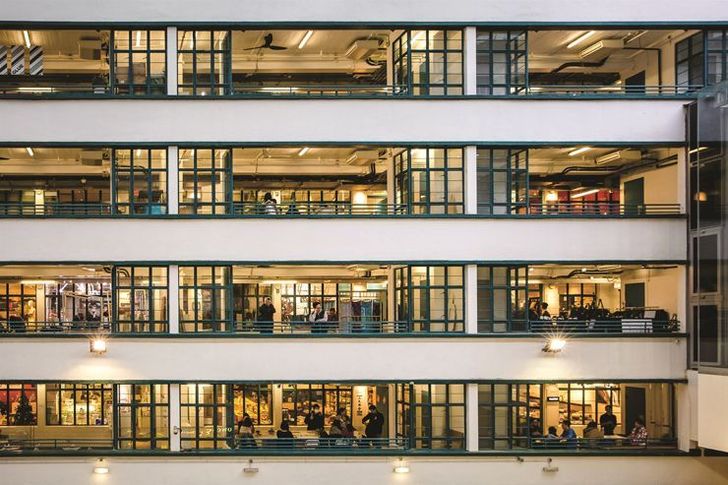
The former Police Married Quarters which is now used as a venue for artists and designers / Courtesy of Hong Kong Tourism Board
Reminders of colonial period
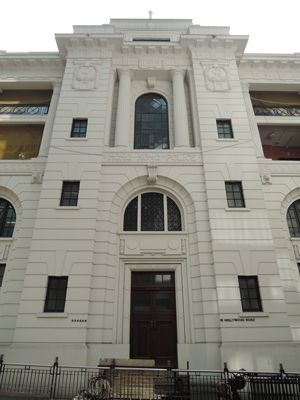
The former Central Police Station / Courtesy of Hong Kong Tourism Board
Most first-time visitors to Old Town Central may be astonished by the busy streets full of high-quality street art, antique galleries and fancy restaurants in the Soho, Noho and Poho areas.
Thirsty souls must feel like pub crawling at night around Lan Kwai Fong.
The district rich in entertainment, however, was the birthplace of modern Hong Kong, where the British began their 156-year-long colonial rule following the Treaty of Nanking which ended the First Opium War.
Still, the vestiges of the colonial regime can be found everywhere in this historic town.
At the eastern end of Hollywood Road is the former Central Police Station which is engraved with large letters “G” and “R” above the entrance. The letters symbolize King George V of the United Kingdom.
Behind the old police station is the Victoria Prison, Hong Kong’s first and longest-running prison to date. It is also known as the first Western building made with durable materials in the city.
Designated as monuments of Hong Kong, the buildings have now been converted into modern food plazas, a museum and an art gallery.
Near the former Central Police Station compound, you can visit another tourist attraction related to the police ─ the old Police Married Quarters (PMQ) which offered rooms for the rank-and-file officers serving at the nearby Central Police Station.
The former PMQ is now used as a venue for artists and designers, just as Insadong Ssamzigil in Seoul is.
Localization of western foods
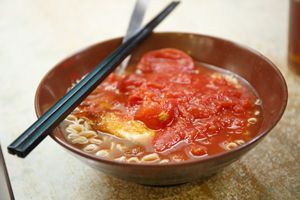
Sing Heung Yuen’s tomato soup-based instant noodles / Courtesy of Hong Kong Tourism Board
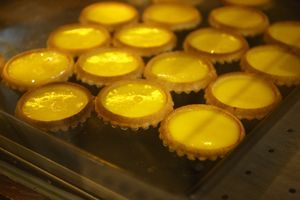
Tai Cheong Bakery’s Hong Kong-style egg tarts / Courtesy of Hong Kong Tourism Board
The buildings are not the district’s only remainder of the colonial period. Western foods that have evolved into local Hong Kong foods also imply the long years of British colonial rule.
Tai Cheong Bakery at Lyndhurst Terrace will offer you the best Hong Kong-style egg tarts beloved by Chris Patten, the last British governor of Hong Kong. He called them “the best egg tarts in the world.”
They pair well with Hong Kong-style milk tea, another reminder of the British. Hong Kong locals use condensed milk to give the tea a richer flavor, unlike the British who use fresh milk.
If the egg tarts are not enough to satisfy your appetite, I recommend you drop by Sing Heung Yuen to have its famous tomato soup macaroni, sitting on shabby seats at shared tables at this outdoor restaurant.
There may be a long queue at lunchtime, but it is worth the wait.
20 years after handover
While 20th century Hong Kong was the era of East-West coexistence, the city’s 21st century will be a time for adapting to mainland China.
Although 20 years have passed since the handover, the island still maintains its own charm.
At the Man Mo Temple filled with incense, Cheung explained that Hong Kong could preserve freedom of religion as it avoided the Chinese Cultural Revolution.
Unlike most Korean temples, Man Mo built in the late 19th century worships the literature god and the martial god, represented by a large writing brush and a big spear.
When touched, the brush and the spear are believed to bestow the abilities of the gods. You can also have your fortune read at this urban temple.
In addition to temples, Christian and Anglican churches exist in Hong Kong, as well as several mosques.
Despite the liberties, Hong Kong seems to have changed slowly but surely.
At the Cat Street Market packed with antiques, you can easily find Mao’s Little Red Book displayed beside Bruce Lee posters.
“Hong Kong locals have mixed feelings about China,” the guide said. “Hong Kong’s economic growth has been sluggish, while China has grown rapidly. It is highly expected that Beijing’s influence on Hong Kong will increase further.”
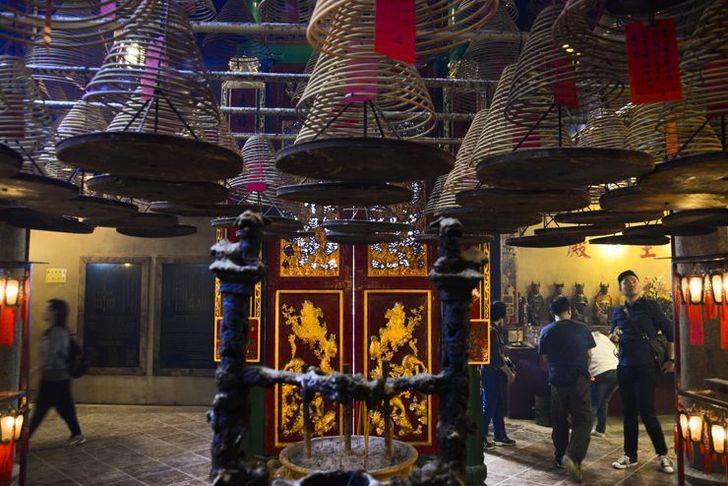
The inside of Man Mo Temple / Courtesy of Hong Kong Tourism Board