Jeju Air soars skyward
.jpg?w=728)
/Courtesy of Jeju Air
No-frills carrier eyes continued success in Asian skies
By Jung Min-ho
It took 10 years for Jeju Air to become Korea’s third-largest airline.
The budget carrier, which began operations with one Boeing 737-800 aircraft in 2006, now flies 26 planes, after breaking through the duopoly that Korean Air and Asiana Airlines had over domestic skies for decades.
Following its successful stock market debut in November 2015, the airline has been in the black while only showing small growing pains. With more cash and new business strategies, it now aims to fly higher.
Next year, the company plans to boost its fleet to 32 planes as well as the number of its regular destinations from the current 39 to 50.
With these efforts, Jeju Air expects to transport 10 million passengers annually. By the end of this year, about 8.6 million passengers are anticipated to have used its services, up from 7.19 million in 2015 and 5.55 million in 2014.
One of the airline’s short-term goals is to reach 1 trillion won ($855 million) in sales in 2018 to cement its status as the nation’s top budget carrier.
The biggest threat to this goal was the termination of contracts with some of its leased aircrafts. But a Jeju Air official said the concern is now gone.
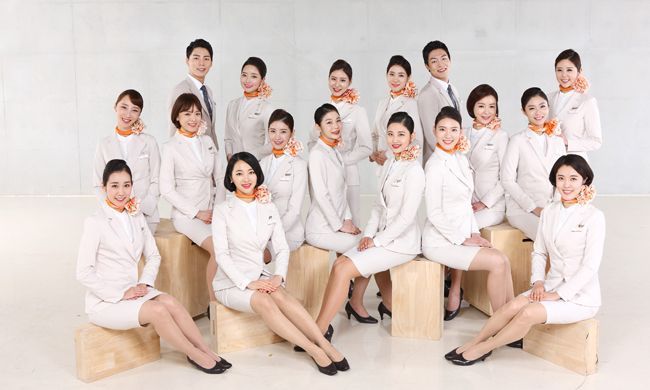
Jeju Air has carried some 8.6 million passengers to 39 destinations this year, and plans to transport 10 million passengers to 50 destinations next year. / Courtesy of Jeju Air
Leasing aircraft and operating them for profit is a popular business strategy for small airlines because it is the fastest and cheapest way to get planes in the sky. “But it costs renters a lot when they have to fully repair the aircraft before returning them,” said the official.
But the airline has renewed its contracts to extend the lease for two of its planes, which were initially scheduled to be returned next year. It plans to extend leases for five other planes which it is scheduled to return in 2018.
Other than that, it has been a great year for Jeju Air. In the third quarter of this year, the airline achieved 221.7 billion won in sales and 38.2 billion won in operating profit, up from last year’s 166.7 billion won and 16.8 billion won, respectively.
The carrier’s financial reforms have helped propel its growth. Its ratio of costs to sales, for example, has been reduced over the past five years, from 88 percent in 2012 to 79.9 percent in 2015. So far this year, the figure is 78 percent.
Jeju Air has also increased the size of its equity from 35.9 billion won in 2012 to 267.1 billion won this year. Meanwhile, its debt ratio has fallen from 252.4 percent to 111.6 percent.
With more cash and short-term bonds in hand, the airline can be more flexible and nimble in making investment decisions.
Low-cost airlines around the world are increasingly adding longer flights to their networks. But Jeju Air will tread carefully.
For now, the airline will invest in purchasing aircraft instead of leasing them, given that buying is cheaper than renting in the long term.
Jeju Air will buy three Boeing 737-800 planes, which it plans to start using in 2018. Currently, all of its planes are on operating leases.
Another investment will be made for its hotel business in Seoul’s Hongdae area, in which a new shopping mall is scheduled to be built. The main target will be price-sensitive travelers that would use its airline services.
Jeju Air is also a member of Value Alliance, the world’s first alliance of low-cost carriers. The company expects more customers by using the alliance when it begins ticket purchasing services next year.
Jeju Air ultimately aims to become a travel network firm that offers comprehensive services from accommodations, tour agencies and car rentals — without frills.