Jeonju film fest captures indie spirit
.jpg?w=728)
The 17th Jeonju International Film Festival draws sell-out crowds. / Courtesy of Jeonju International Film Festival
.jpg)
By Jason Bechervaise
Festivals are often and rightly judged on the films. This year at the 17th Jeonju International Film Festival that began on April 28, it excelled with a range of films both local and foreign capturing the spirit of independent and alternative cinema.
Based on the experience of attending the festival for the past three years, this was without doubt the best in terms of cinema witnessed. As a critic, you have to brace yourself for weaker or bad films, but this year there were very few underlying the strong year it’s been.
As of May 1, the festival reported that 106 screenings had been sold out, up from last year’s figure of 95, and two higher from two years ago. The 2,000-seat outdoor theatre was sold out for the “Dongju: The Portrait of a Poet” underscoring the success of the festival and also the film, which accumulated more than a million admissions in local cinemas.
Here is a selection of short reviews.
.jpg?w=728)
A scene from “Dongju: The Portrait of a Poet”
Born to Be Blue
.jpg)
Choi Min-sik in a scene from “Old Days”
.jpg)
Yoo Ji-tae in a scene from “Old Days”
.jpg)
Kang Hye-jung in a scene from “Old Days”
.jpg)
Oh Dal-su in a scene from “Old Days”
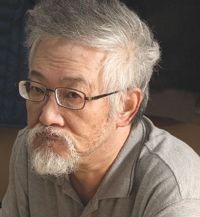
A scene from “Spy Nation”
Ethan Hawke delivers one of his strongest performances as the renowned American jazz musician Chet Baker as he battles heroin addiction while staging a comeback. Comfortably harnessing the challenges of playing a trumpet and mastering Baker’s high pitched voice, Hawke appears as a natural fit for the role despite the demands of the role
At the opening film press conference, director Robert Budreau said “I cast Ethan Hawke because I thought that he not only looked like Chet Baker in his 40s but that Ethan has a certain musical sensibility that very much felt true to the spirit of Chet Baker.”
Shot both in black and white and color, Budreau’s film captures American society in the 1960s as it grapples with racial and gender inequality, while also shedding light on the difficulties of drug addiction.
But this is no one man show as the film also focusses on Chet Baker’s lover Jane who supports the musician while he recovers from an injury after his past begins to haunt him. Expertly played by Carmen Ejogo (“Selma”), she continues to be a talent to look out for.
Junun
Paul Thomas Anderson (“There Will Be Blood”) is arguably one of the most talented filmmakers in the world. His films don’t necessarily attract the masses, but his intelligent approach to filmmaking as a craft always leaves a lasting impression even if they demand much thought.
His latest film is a documentary and is actually more accessible; thus rather refreshing at just 54 minutes. It documents the making of an album called “Junun” in Rajasthan, India which is a collaboration among an Israeli composer Shye Ben Tzur, Radiohead guitarist Jonny Greenwood, producer Nigel Godrich and the Indian ensemble, the Rajasthan Express.
Focussing almost entirely on the production process, it is fascinating to see professionals from different backgrounds work together on a project that resonates well beyond the end of the credits.
Superbly edited, recorded and cleverly produced, Anderson further demonstrates his wealth of skills when it comes to the visual and audio mediums.
Old Days
Few can deny that Park Chan-wook’s “Oldboy” (2003) has left an indelible mark on the world stage when it comes to cinema. Its critical and commercial success overseas propelled Korean cinema into the spotlight. As such, a long-awaited blu-ray is set for release, which will include a documentary about the film that premiered in Jeonju.
.jpg?w=728)
A scene from Paul Thomas Anderson’s documentary “Junun”
“Old Days” reflects back to the period when “Oldboy” was in production shedding light on the arduous process as conflicts arose over budgets and even over choices of hair and costume. Yet, as Kang Hye-jung states in one of many interviews with the cast and crew, “it’s like a far off homeland” suggesting a sense of belonging amongst the crew and even a longing to go back.
As a documentary, it’s carefully woven together by director Han Sun-hee and there’s no doubt it reveals a wealth of information and interesting anecdotes about how the film was made, but where it falls short is that it fails to comprehensively examine the film’s reception overseas. Still, this is highly recommended for fans of Korean cinema and for those who admire “Oldboy”.
The Clan

A scene from “The Clan”
Black humor is an effective tool used by some filmmakers such as Bong Joon-ho and the Coen Brothers. This is also adopted by Argentine director Pablo Trapero in his excellent film “The Clan” based on the case of the Puccios, a family who kidnapped four people and murdered three of them in Buenos Aires in the 1980s.
Capturing the volatile political and social climate in Argentina in the early 80s as it began its transition into a democracy, the director is seemingly authentic in his portrayal with close attention to the film’s mise-en-scene. But the film’s soundtrack adds a humorous element to the feature creating an intriguing ambience. In a discussion with the audience at Jeonju, the director said “the music provides the black humour. The story the film deals with is very painful, soI thought I needed to put a bit of distance for the audience.”
The film goes on release in Korea on May 12.
Spy Nation
One of the most sought after films of the festival was this documentary that looks at the National Intelligence Service (NIS) involvement in an espionage trial involving North Korean defectors.
While current commercial Korean cinema lacks the energy and passion evident in earlier films, especially in the late ‘90s and early 2000s, Korean documentaries are now in a very exciting phase as optimised by films such as “Factory Complex” by Im Heung-soon.
Much like the documentary “The Truth Shall Not Sink with Sewol,” it is politically charged, but Choi Seung-ho also makes a compelling case in a well-structured film akin to a strong piece of journalism.
The Jeonju IFF continues through Saturday and will close with the digital re-mastering of Ryoo Seung-wan’s “Die Bad.”