Jeonju: top pick for budget travelers
.jpg?w=728)
.jpg?w=728)
Korea Times photos by Baek Byung-yeul & Courtesy of Jeonju City Government
Overnight visitors flock to Jeonju
By Baek Byung-yeul
JEONJU, North Jeolla Province — For many female office workers, Tokyo or Hong Kong are the preferred destinations for weekend trips or overnight getaways during the week. But the city of Jeonju, known for its traditional heritage, is fast becoming the top pick for short trips among young women.
Jung Sung-eun, 23, who visited Jeonju with her friends during the Jeonju International Film Festival (JIFF) period earlier this month, was impressed with the city’s captivating mix of tradition and modernity.
She and her friends were led to the city by social media buzz. “While looking for a nice travel destination for the summer holidays, we were mesmerized by numerous postings with beautiful photos of villages and foods on social networks,” the Seoulite said. “Considering that we don’t have a car and are low on budget, Jeonju was a top choice for us.”
With the Jeonju city government’s effort to revamp its stuffy, old-fashioned image, the historic city is gaining more popularity among young visitors like Jung.
Jeonju’s major strength as a tourist destination is that most of its hot spots are located within close proximity of each other, enabling visitors to see a wide range of sights in a short period.
.jpg?w=728)
Seen is the street of the Hanok Village in Jeonju, North Jeolla Province, Monday. The city recently has been emerged as one of favored destinations in Korea for budget travelers. / Korea Times photo by Baek Byung-yeul
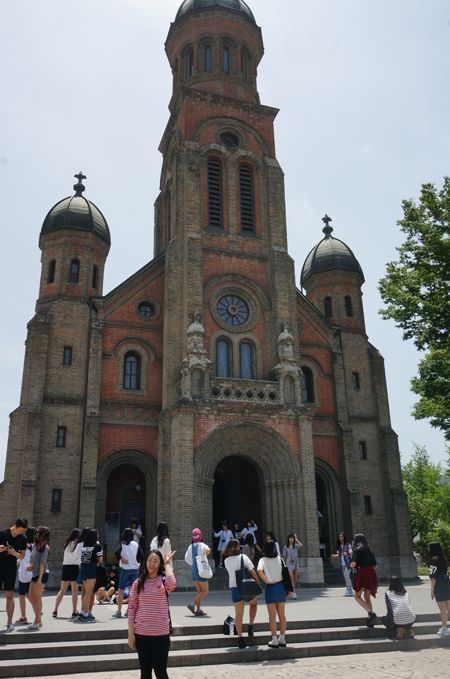
So travelers can save time as they travel through the major locations — the Hanok Village, a cluster of traditional Korean houses; Gyeonggijeon, a shrine worshiping King Taejo, the founder of the Joseon Kingdom (1392-1910); Jeondong Cathedral, a hundred-year-old catholic church and the Nambu Market.
“I put a Jeonju visit on my to-do list ever since I found interesting blog posts about that place,” said Choi Ji-ae who also recently travelled to the city.
Choi was also intrigued by the rising reputation of the Jeonju International Film Festival. “With the chance to watch rare movies that are not screened elsewhere, Jeonju is a worthwhile visit for film buffs,” she said.
Kim Jae-eun, 23, who just returned from her trip to Jeonju, said it was one of her best foodie tours in life.
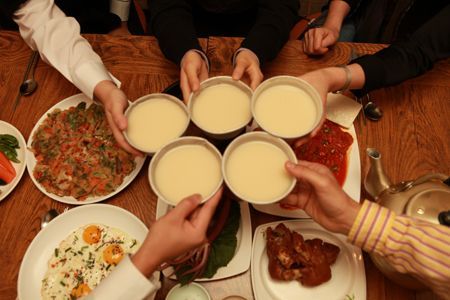
“I’ve spent my whole time enjoying different kinds of foods, ranging from street foods such as grilled skews to traditional Korean cuisine like bibimbap and kongnamul gukbab (bean sprout soup with rice),” she said. The bean sprout soup, known for its effectiveness in relieving hangovers averagely cost 6,000 won ($6) and can be seen everywhere in the city. Along with bibimbap and baekban (rice with many kinds of side dishes and soup), it is regarded as one of the representative foods of Jeonju.
.jpg?w=728)
Visitors walk the street of Jeonju, North Jeolla Province during the 15th Jeonju International Film Festival, which was held from May 1 to 10 this year. / Courtesy of Jeonju International Film Festival Organizing Committee
Most travelers visiting Jeonju prefer to spend a night at the traditional house in the Hanok Village for its unique experience.
“As I visited there during the JIFF period, it was very hard to rent a room in the village. But it was a very special experience for me,” Choi added. “For apartment dwellers like myself, it was interesting to sleep in a room with hanji (handmade traditional paper) doors,” she said.
There are currently about 70 hanok guest houses in the Hanok Village, and the average cost is between 60,000 to 70,000 won ($60 to $70) per night.
Now Jeonju has become one of the top tourist destinations in Korea along with Jeju Island and Seoraksan National Park in Gangwon Province, but it still has a long way to go to achieve its goal of attracting 8 million tourists annually.
“When spring comes and the cherry blossom blooms, people living in Jeonju undergo many discomforts,” said a woman in her 50s at the Nambu Market near the Hanok Village on Monday.
.jpg?w=728)
An aerial view of the Hanok Village / Courtesy of Jeonju City Government
“The merchants doing business with tourists may enjoy such a situation as they are able to deal with more people, but we don’t like it. We have to experience too much traffic jam because of the lack of parking facilities, and the whole bus experience becomes less enjoyable, too. Citizens come to suffer too much,” she said. “I would like to urge the city government to expand more parking spaces. We need a better solution for both visitors and residents.”
The recent tourist boom to this city reached its peak during the golden week holidays comprised of the Labor Day holiday on May 1, Children’s day on May 5 and Buddha’s birthday on May 6. Travelers who visited the city during this period had to go through inconveniences due to the lack of hotel rooms and traffic congestion.
“We acknowledge every inconvenience from visitors. We are planning to secure more accommodations by the end of this year,” said an official from Jeonju City.
Koreans have long referred to the southwestern province as the “village of the arts.” The province is known as the most “Korean” of all the country’s tourist spots. Such a distinction is the result of factors inherent in the region — first, its status as the birthplace of the Joseon Kingdom (1392-1910).
The Yi royal family originated from this city, a center of the province for centuries. It is still the administrative and cultural hub of North Jeolla and houses the Jeonbuk provincial administration.
The 600-year-old Joseon Kingdom left behind a profound legacy in Korean arts and craftsmanship still found in modern Korea, particularly in the province. It is arguably the home to the best Korean traditions such as food, music and architecture.
The province’s long history as the country’s main granary has led to a rich culinary culture, as found in the example of Jeonju “bibimbap” or rice mixed with vegetables. It has been gaining recognition worldwide as a signature Korean dish.
The Hanok Village, where some 800 traditional houses are gathered around Pungnam-dong and Gyo-dong area of the city, is at the center of Jeonju’s tourist boom.
The village began to form in the 1930s, which became another expression of nationalism against the brutal Japanese colonial rule (1910-1945). After independence from Japan, the village was designated as a restricted development district to preserve traditional culture in 1977, but no one expected that the decision would trigger massive opposition from residents — due to the anti-development policy, prices of land at the traditional village plummeted thus prompting the local residents to leave the place.
In response, city authorities embarked on redesigning the village in 1999 to attract more outsiders — the city opened exhibition spaces, public parking lots and public parks through purchasing several districts of the village and induced the residents to renovate their shabby houses by providing them subsidies.
The result was more than expected. According to data from the Jeonju City Government, the number of people who visited the Hanok Village last year exceeded 5 million. This is almost up about 17 times in comparison with the 310,000 visitors in 2002, when the survey was first conducted.
With a population of 650,000, the medium-sized city has also been diligently promoting itself to the world. In 2000, the city inaugurated JIFF, inviting 184 films from 21 countries. The 15-year-old JIFF, which was held from May 1 to 10 this year, drew some 70,000 visitors.
In 2012, Jeonju also acquired the right to use the UNESCO title by being listed as UNESCO City of Gastronomy for its excellent cuisine.