When fools rushed in

Large-scale artworks are seen on the slopes of Alpensia Resort in PyeongChang, Gangwon Province, ahead of the PyeongChang Biennale later this month. / Yonhap
The upcoming PyeongChang Biennale, apparently prepared in haste, is the latest in a growing list of biannual art festivals held across Korea. Regrettably, quantity has come at the cost of quality.
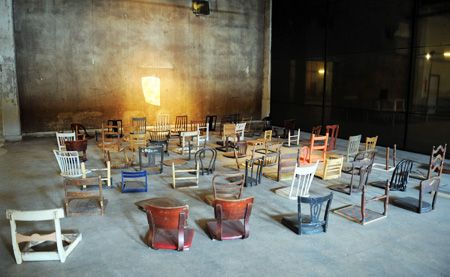
The photo shows the works of sculptor Jo Sook-jin displayed at the “Chairs, Walk’’ exhibit, during the Cheongju International Craft Biennale in 2011. / Korea Times file
Many biennales being rendered irrelevant
By Kwon Mee-yoo
Are there too many art festivals with no unique aim? This has become a relevant question with Korea seemingly adding a biennale, or biannual art festival, year after year.
The 18-year-old Gwangju Biennale is the oldest event and remains the most relevant one. PyeongChang Biennale (PCB), which debuts later this month, is the newest addition that will be born astride an identity crisis.
The slopes of PyeongChang’s massive Alpensia Resort have been decorated with large-scale, site-specific artwork as organizers scurry to apply on the finishing touches before the festival kicks off on July 20.
It would be an achievement if the PCB turns out to be adequate in quality. Organizers were given just two months to prepare the event, conceived out of the blue by municipal authorities who are desperate for new ideas to promote the 2018 Winter Olympics hosted in PyeongChang.
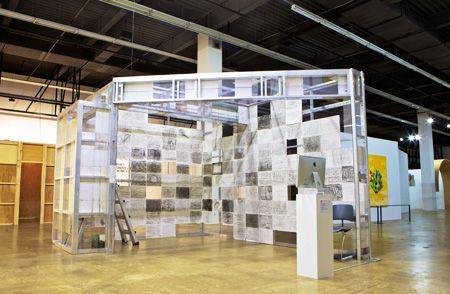
Suh Do-ho’s “Rubbing Project’’ on display at 2012 Gwangju Biennale, which was widely considered a letdown. / Korea Times
Obviously, the benefit of holding an art festival every two years is that you normally get to prepare that event for at least two years. It bears further watching whether the PCB shows the promise of providing an alternative choice compared to other biennales when it would be a challenge for it just to avoid being sloppy.
This country has already more biennales than other nations. There are about 10 of these events including the PCB, but the average person might find it hard to remember any of them other than Gwangju.
The Busan Biennale, Mediacity Seoul, Gyeonggi International Ceramic Biennale, Daegu Photo Biennale and Project Daejeon are some of the festivals added to the lineup in recent years.
Organized by the Gangwon Art & Culture Foundation, the PCB will be held at Alpensia Resort and ANGVA Expo Center from July 20 to Aug. 31 and will feature the work of 130 artists under the theme of “Earth Harmony.”
Regional officials plan to purchase the artworks displayed at the biennale to create an “art” bank, which will be used to expose the works of the artists during the 2018 Winter Games.
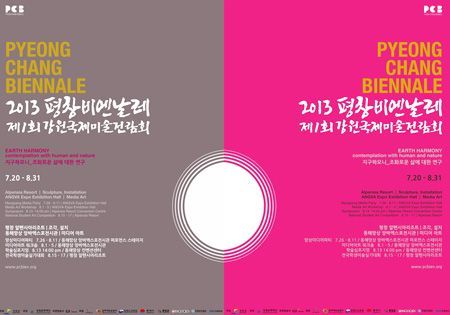
The PyeongChang Biennale, which kicks off on July 20, seems to be in danger of becoming a half-baked event. / Korea Times
While other biennales have aspired to be international events, the PCB will heavily rely on Korean entries. There will be just 10 foreign artists displaying their work in PyeongChang, according to organizers, who were able to name only two of them, both from Australia.
PCB organizers claim that the predominant presence of Korean artists was by design. Not that they had much options when the provincial council didn’t approve the 2.5 billion won budget until April and the organizing committee wasn’t launched until May.
“We do not want to follow in the footsteps of existing biennales that rely on big-name artists, who demand much larger paychecks. The PCB will be an event focusing on providing new and young artists an opportunity to shine,” said a PCB official. Well, that’s one way to put it.
As bringing in prominent artists was out of the question, PCB’s organizers decided to rely on an open contest to pick the works to be represented at the festival, an unusual move considering they have been prating ad nauseam about giving the event a distinctive character.
Meanwhile, the biennale’s website has yet to launch an English page, which remains “under construction” just a little more than a week ahead of opening day.
The PCB aims to attract some 2 million visitors during the 43-day run, mostly from summer vacationers. It’s hard to say that goal is realistic, considering that the Gwangju Biennale managed just 460,000 visitors last year. The Busan Biennale, the country’s second-biggest biannual art festival, drew 320,000 visitors last year.
Even the better established biennales seem to be dealing with identity crisis as it becomes increasingly difficult to provide anything better when there are so many art festivals to compete with.
Last year’s Gwangju Biennale is widely regarded a failure. The event was designed by six curators from different countries, including Korea’s Kim Sun-jung. The aim was to incorporate the diversity of the international art scene, but there was a paucity of works worthy of remembering.
Public interest seems to be waning as well. The 460,000 visitors at the Gwangju Biennale fell short of a 500,000 target. And only 210,000 of them paid for their tickets as organizers frantically sprayed free invitations to push up the attendance numbers.
The Busan Biennale is showing more effort to be different. Organizers held a workshop last month joined by artists and academics to discuss the future of the biennale and the direction it must take.
Choi Tae-man, a Kookmin University professor and a former artistic director of the biennale, talked about creating an art festival that had more relevance with the regional characteristics of Busan.
“It does not mean that the biennale should include more local artists or emphasize the story of Busan, but well-devised storytelling could liven up,” he said, stressing the need for biennales to be more “site-specific.”