Seochon: Not your typical neighborhood

/ Korea Times photo by Shim Hyun-chul
Seochon residents open up traditional 'hanok' homes for weekend travelers
By Kwon Mee-yoo
There was a colorful mixture of people gathered at the Gyeongbokgung Station Sunday for a tour of Seochon, a “hanok” neighborhood near Gyeongbok Palace that represents one of Seoul’s largest clusters of traditional Korean homes.
Some were middle-aged or older, part of a generation with the collective memory to appreciate one of the few remaining testaments to the city being a 600-year-old metropolis.
Others were bubbly youngsters dressed to be seen. There were even local residents, who already knew the neighborhood and its people inside and out, but decided it would be fun to tag along anyway.
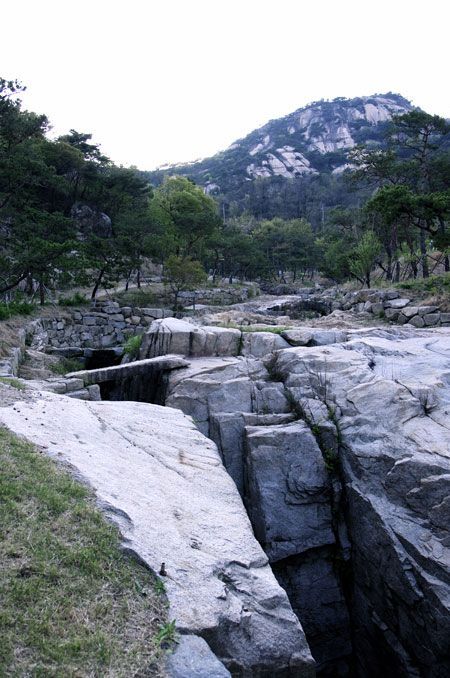
A view of Suseongdong Valley located at the foot of Mt. Inwang. / Photos by Park Sung-pyo, Korea Times
The tour was part of the Open House Seochon project, which runs through this weekend, making some of the area’s famous houses and art studios accessible to visitors, aimed at improving the understanding as the neighborhood struggles to withstand the ruthless process of urban development.
The name Seochon originated from the Joseon Kingdom (1392-1910). “Seo” means west and “chon” neighborhood, a simple name for an area that accounted for the western part of Hanyang, the name of Seoul during Joseon times.
Guiding the tour was Seol Jae-woo, a 32-year-old Seochon resident, who began the explanations with the subway station itself.
The station, he explained, borrowed the design of the former Japanese General Government Building, used as the National Museum of Korea, before it was destroyed under the Kim Young-sam government.
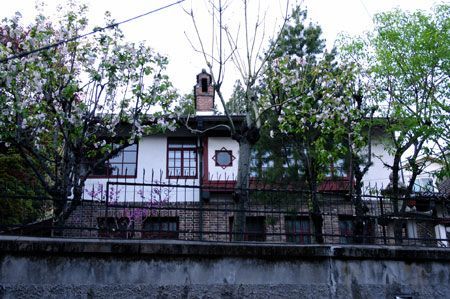
The late painter Park No-su’s house, which will be transformed into an art museum.
“There are 12 artifacts kept in this subway station, such as the replica of the famous sundial that used to be in front of the museum, which is now transferred to a new building in Yongsan,” Seol said.
He then led the group to a labyrinth of alleys in the neighborhood, which stretches from the western gate of the palace to Mt. Inwang. Seo said the number of hanok in Seochon has been declining sharply, an inevitable outcome in a city where developers simply wield too much clout.
“When I was young, hanok was the common type of home for families with average incomes, while richer folks were moving to townhouses or apartments. This is a different situation now as only people with high incomes can manage to live in hanok, now equipped with state-of-the-art elements. Hanok in Changseong-dong are the most expensive in Seochon,” he said.
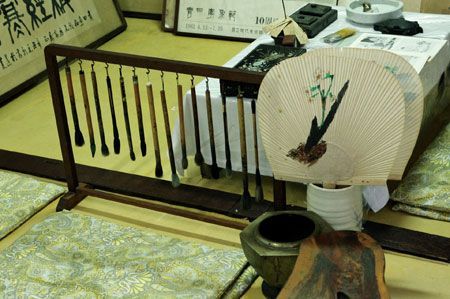
Brushes used by modern Korean painter Yi Sang-bom.
While Seochon is increasingly becoming a leisure district, influenced by the concentration of high-end restaurants and cafes in nearby Samcheong, Seol kept the tour focused on old buildings.
The house and atelier of the late painter Yi Sang-bom (1897-1972), nestled in a backstreet of Nuha-dong, was one of the highlights of the tour. The house seems ordinary at first sight, but the influence of the painter, who was one of the biggest names in the country’s 1950s art scene, is evident with a closer look.
The house of another late painter, Park No-su, who was mentored by Yi, is also memorable. It was built originally as an outbuilding to the mansion of Yun Deok-young, a pro-Japanese Korean official of the colonial era. The mansion, used as the U.N. Commission for the Unification and Rehabilitation of Korea (UNCURK) after the war, was burned down in 1966, leaving behind its architectural sidekick.
Mainly Photograph’s Gallery
“This building has unique architectural characteristics that combine the styles of Korea, Japan and Europe. It was donated to the ward office of Jongno after Park’s death and is now being remodeled into an art museum, which is expected to open this summer,” Seol said.
The final destination of the tour is Suseongdong Valley, located at the foot of Mt. Inwang. The valley was covered under an apartment building for a long time, but was uncovered after the building was torn down in 2011.
The scenery is now beginning to resemble its old beauty, famously captured by Joseon era landscape painter Jeong Seon (1676-1759).
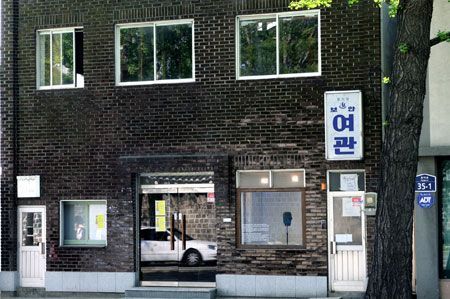
Boan Inn
“Many say Seochon is becoming a tourist destination and that isn’t a bad thing. However, I worry excessive commercialization might ruin this neighborhood,” Seol said.
While Open House Seochon was a one-off event, Seol, who can also speak English, said he is willing to provide weekly tours of the area.
Robert J. Fouser, a Seoul National University professor of Korean language education, was impressed by the tour.
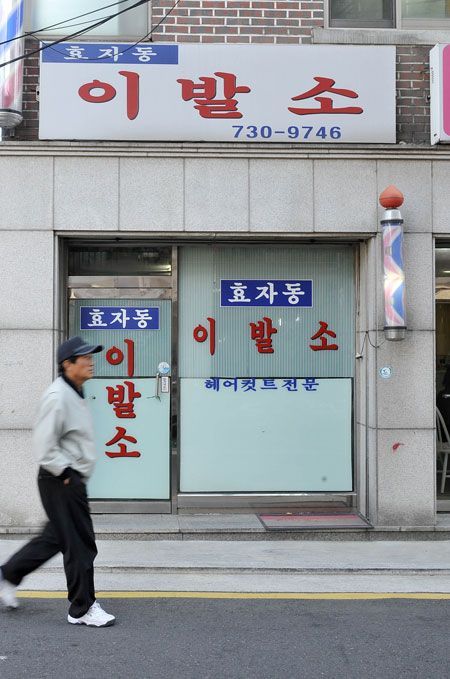
A barbershop in the streets of Hyoja-dong.
“Seol was born and raised here so he has many memories here. I know well about the history, so we can help each other,” he said.
Fouser recently moved to a renovated hanok in Seochon and participated in Open House Seochon, opening his house.
Kang Seul-gi, an office worker who attended Sunday’s program, said she rediscovered her favorite neighborhood.
“It was like travelling to a foreign city,” she said. “I like Seochon because I can get a feel for humanity here. I’ve been visiting this area alone, so I was excited when I saw about the open house program on Twitter.”
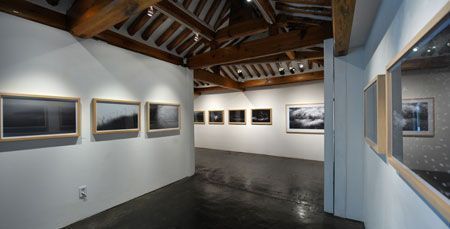
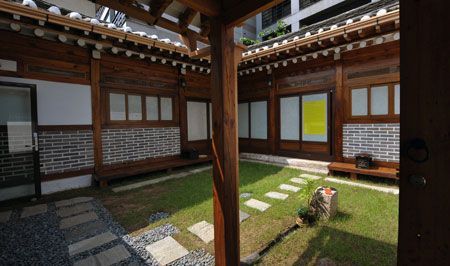
The interior and courtyard of Ryugaheon.
She said she was the envy of friends who told her stories about their cities and is glad she now has something to tell her friends about Seoul when they visit the capital.
Open House Seochon was organized by architectural journalist Lim Jin-young. Lim said she fell in love with the neighborhood where she can walk with a view of Mt. Inwang when she moved here some six years ago.
“The key to Open House Seochon was to focus on people living here, where they live and the stories they have,” Lim said.
“Opening one’s house or studio to the public is a nice way to share one’s space, taste and perspective and the open house project could provide such opportunities.”
She created an open platform for voluntary participation based on individuality. “The main goal of Open House Seochon was to reinforce community here and the next was to share it with people with same taste.”
She mentioned the possibility of a second Open House Seochon. “It is not my own project and I cannot force locals to continue the program. If they liked this year’s event and want to offer more next time, Open House Seochon will continue.”
This weekend program includes screenings at independent movie theater Ogin Cinema Saturday and Sunday. Graphic design studio Workroom will open its studio Saturday from 3 p.m. to 4 p.m.
Architect Kim Ju-won’s will open at 5 p.m. Saturday and Hwang Doo-jin’s house and studio will open 2-4 p.m. on Sunday. Some programs require reservation due to limit of space.
For more information about the program, visit ohseochon.com.