49th Translation Awards Poetry Grand Prize winners Yang Eun-mi and Ed Bok Lee
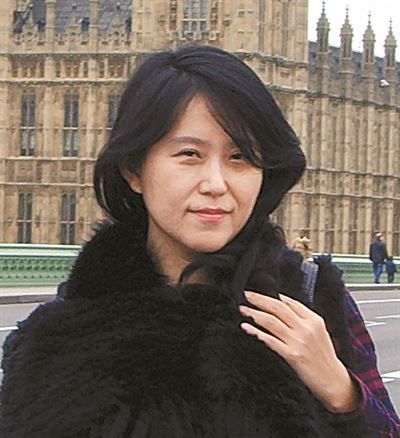
Yang Eun-mi
Yang Eun-mi is a poet who earned her master's degree in creative writing from the University of Edinburgh where she won the Grierson Verse Prize. She is currently working on her doctoral thesis regarding problems in Korean-English translation, how global readers react to English editions of Korean literature, and most of all fundamental factors that might be hinder Korean literature from globalizing.
Ed Bok Lee is a poet who authored poem collections "Whorled" and forthcoming "Mitochondrial Night." Lee, raised in South Korea and the United States, earned his master's degree from Brown University.
Yang and Lee met in 2014 when they were both in residency at the Toji Cultural Center in Wonju, Gangwon Province, and decided to collaborate as co-translators of contemporary Korean poetry. "There aren't enough contemporary Korean poets translated into English. As a poet of Korean descent who is fluent in English, I wanted to contribute to this in some way," Lee said.
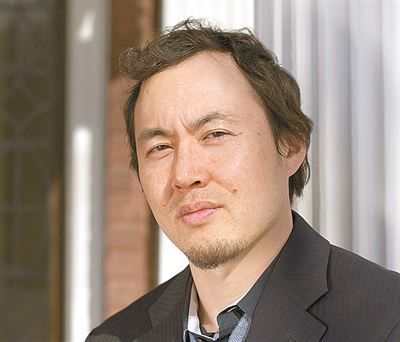
Ed Bok Lee
"As for an advantage, I think it's very rare to find a single person who is equally fluent at a native speaker's level in both Korean and English, and also is equally proficient as a poet in both Korean and English, and is also equally steeped in both Korean and Western cultural and literary references. In my opinion, mastery of all these dimensions is typically more crucial in poetry than in prose, for reasons I detail below. Translating as a team allows us to minimize weaknesses that any single translator will almost inevitably have. It also allows for debate, which I always think is healthy in trying to determine the very best option for each line."
The duo translated Kim Ki-taek's poems including "Death of a Thousand Years" since Kim's poems were interesting to them on many levels.
Lee said up to 50 percent of the impact of any poem articulated in English lives in the music, or sonic richness.
"Kim's strangely spiritual poems are fairly narrative-based and deceptively straightforward. Thus, the most difficult thing in translating Kim's poems was to recreate and clothe them alliteratively in a rhythm of native English that could distill and sonically articulate the essence of the poet's sensibility. Linguistic rhythms in Korean and English are very different, so to get this just right was like weighing salt by their individual grains and molecules," Lee said.
Lee quoted the Nobel Prize-winning poet and translator Octavio Paz's phrase "Only poets can adequately translate poems," to define a good translation.
"In order to translate a poem, one must recreate the poem into a newly unique literary object. This new creation must exist in another language, rhythm, and cultural and often literary frame of reference, while, of course, retaining the core integrity of the original. It's an impossible task. Fortunately, that is where poetry shines bright: in articulating the inarticulable," Lee said.
Yang is interested in the best compromising point between English and Korea, especially in terms of involving a culture of thinking, feeling and writing ― a whole organic system of expression.
"The subtle and abstract nature of the Korean language should be technically approached to English, whose nature is rather practical, direct and even businesslike. As a translator myself, I'm still seeking the ways these two languages could ideally meet halfway, not as a yielding point, but in order to reach a win-win fruitful outcome," Yang said.