49th Translation Awards Judges' Report
By Brother Anthony, Jung Ha-yun and Min Eun-kyung

Brother Anthony, professor emeritus at Sogang University / Korea Times file
In recent years our expectations as judges for the Modern Korean Literature Translation Awards have been elevated due to the rising quality of the submitted works. We are happy to report that this year's entries once again did not disappoint. Especially notable were the high proficiency of English demonstrated by the contestants and their discerning taste in serious contemporary Korean literature.
The overall excellence in the readability of the translations demanded close comparison of the entries with their original Korean works, which made the final decisions in both the poetry and fiction/drama categories quite difficult.
Accuracy in literary translation refers to fidelity not only in meaning but in aesthetics, from narrative craft and style to imagery and lyricism. This requires in the translator, in addition to linguistic proficiency, a willingness for deep artistic engagement with the original work and for experimentation in language.
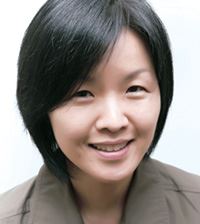
Jung Ha-yun, professor at Ewha Womans University
In poetry this year, the applicants took on works by diverse poets, from Lee Hae-in and Huh Su-kyung to Hwang Byung-sng and Park Jun. While the poems of less conventional voices like Hwang and Park posed bigger challenges for the translators in terms of form, the more familiar works demanded a more polished lyrical rendering in English.
In the end, the entry that stood out for us was the translation of poems by Kim Ki-taek, which demonstrated coherence in the interpretation of Kim's works and convincing control of the poetic language while not veering too far from the understated tone and voice of the original. We should note that while the entry contained its share of mistranslations and misreadings, we concluded that its merits were more significant than its mistakes. We do hope the Grand Prize will encourage the translator to revise and polish the manuscript for future publication.
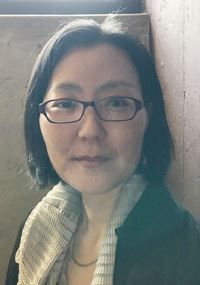
Min Eun-kyung , professor at Seoul National University
The fiction/drama category posed a more heated debate among the judges as in previous years. The textual density of a modern short story presents an exhausting series of obstacles for the beginning translator and its thematic complexity requires contemplation and courage as well.
Among this year's entries, the translations of two stories, “The Other Side” and “A Covering Hand,” both by Kim Ae-ran, were our final considerations. Both were transferred into English in engaging and expressive prose, which allowed for the narrative strength of Kim's stories to shine, and both managed to achieve this while staying faithful to the original text in meaning and style. At the same time, both shared similar shortcomings, in which the transfer into English of some of the Korean sentences seemed incomplete and would sound too unfamiliar, or at times incomprehensible to an English readership.
After much comparison and deliberation, we decided on the translation of “A Covering Hand” as the winner of the Grand Prize, for its overall narrative strength and interpretive consistency. This story of a single mother raising a racially mixed teenage son offers a compelling portrayal of everyday life in small-town Korea with villagers aging in poverty and juveniles tempted by danger and violence. The translation successfully takes on the universal themes of family, nurturing, and cultural differences explored in the original text.
This year's Commendation Prize goes to the translation of “The Other Side,” which, in addition to the merits mentioned above, exhibited poetic flair in several passages that exquisitely captured the lyricism and resonance in Kim's use of language.
Our congratulations go to the Grand Prize and Commendation Prize winners. We also wish to acknowledge all the translators who submitted high-quality entries and encourage everybody to continue to revise and improve their translations.
We hope the Korean authors and poets whose work they have chosen to translate will respond positively when asked for permission to publish the completed translations, together with their publishers. It is often more difficult to find a publisher than it is to translate. But that is changing today, with an increasing number of young translators entering the field armed with enthusiasm and energy. These translators, eager readers of literature not only in Korean and English but from around the world, are true citizens of the world. Thank you for your good work in the service of world literature.