Kim saves 100 lives with tissue donation
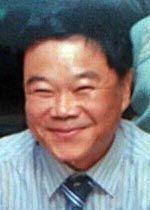
The late Kim Yong-jong
By Nam Hyun-woo
A 66-year-old donated body tissues to some 100 patients after he died on Nov. 23, just a month after he signed up with the Korea Foundation for Human Tissue Donation (KFTD).
The man, Kim Yong-jong, suffered a cerebral infarction in 2014 and has been showing signs of progress in his condition after taking medication. On Nov. 23, however, he was found unconscious at his home. Kim later passed away at a hospital in Busan.
According to the bereaved family, his wife and two daughters, Kim did not tell them that he had signed up as a donor. The family found his donation card while they were sorting through his belongings.
“Under the circumstance of my husband’s death, I was confused after finding the donation card,” said Lee Jung-hae, Kim’s wife. “I first objected to the donation, but my daughters said I should respect their father’s last wish.”
After their father donated his tissues, the two daughters also signed up as donors. “The two daughters said they were very proud of their father and they signed up as donors to follow him,” a KFTD official said.
“There are many cases where bereaved family members objects to donation even though the deceased had agreed to this,” she said. “In order to make viable tissue donations, the bereaved family has to give their approval within 24 hours of the donor’s death. Kim’s case is a very rare one and his family must have had a hard time. The foundation extends its deep gratitude for their making such a difficult decision.”
Human tissue donation refers to the donation of bone, cartilage, fascia, skin, membranes, ligaments, tendons and many other body parts after a donor’s death. The donated body parts can be used to help some 100 patients who suffer from serious burns, bone cancer and other diseases.
Parts of bones can be transplanted in bone cancer cases and skin can be used for the emergency treatment of those who suffer from serious burns. The skin can be transplanted permanently or temporarily before reconstructive surgery.
At KFTD, a donor’s bones and skins are processed and preserved at a tissue bank until they are required hospitals. Currently, Kim’s tissues are being processed.
As of 2015, the number of those who have signed up as tissue donors in Korea stood at 302,368, 25 percent of the 1,232,131 who have signed up as organ donors, according to the food and drug ministry.
“Just one person’s tissue donation gives a chance to save the lives of more than 100 people,” the KFTD official said.