WeWork co-founder shares expansion story in Seoul

WeWork office in Gangnam, southern Seoul. / Courtesy of WeWork
By Yun Suh-young
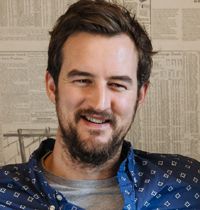
WeWork co-founder and Chief Creative Officer Miguel McKelvey / Courtesy of WeWork
Four months into opening the first branch of co-working space WeWork in Gangnam, southern Seoul, the workspace pioneer is already seeing substantial success, its 1,000 membership limit already surpassing 800 members. Early next year, it will open a second Seoul office north of the Han River at Daeshin Finance Center in downtown Seoul.
To speak about its achievements, its next Seoul location and future plans, WeWork Co-founder and Chief Creative Officer (CCO) Miguel McKelvey visited Seoul Tuesday.
"Last time I was here was in July getting ready for the opening so it's amazing to be here now and see it open," he said at a meeting with reporters.
The company, which six years ago had only two locations in New York, now has over 100 locations in 33 cities in 12 countries, staffed by 1,800 employees.
“Our growth has been very fast but in every place we've gone, we've achieved great success,” he said. “In just the last year we've doubled our members, buildings, employees, cities, countries and revenue so we've become financially strong as well."
It was earlier this year that the co-working space decided to expand in Asia.
"We decided that Asia was incredibly important to our growth and future so we started working earlier this year opening in Hong Kong, Shanghai and Seoul and our opening has been very strong ― most of our buildings have been sold very quickly," he said.
"This is important for us as a business to show the size of our market potential but also because we believe we can make a great difference in Asia and in many of the cities where we can help bring entrepreneurs and startups and small businesses together.
"When I was here last time, I met with Mayor Park (Won-soon) and we talked about how important innovation, entrepreneurship and startups are to the future of Seoul and we're very excited to help support that, to be part of that evolution."
The Euljiro office will be the largest WeWork branch in Asia, accommodating 3,000 members.
"We're also continuing to invest in Seoul. Euljiro will be one of the largest locations in the world, actually our second-largest location in the world. We believe Seoul will be a great market for us and we're super excited to continue to grow," he said.
Regarding their decision to create the second-largest branch in Seoul, McKelvey said there was no precedent of this kind here which they saw as an opportunity. And they wanted to pioneer the creation of a new culture.
"At least when we think about what our opportunity is, it goes beyond business. We think we can play a small part in the evolution of culture," McKelvey told The Korea Times.
"When we first started coming here, there was so much entrepreneurial energy, but it didn't feel like what we offer ― which is a safe community for entrepreneurs, startups and businesspeople ― existed. There was the accelerator side, the tech-focused side, but there wasn't a broader, open community so we thought coming here could help empower those people," he said.
"So it's a mix between a business opportunity but also cultural advancement in a way _ which sounds very broad and ambitious ― but it's sort of our bigger picture to be able to do that."
By providing a co-working space, WeWork isn't just serving as an office-renter; it's creating a new office culture and environment. And it has the results to prove it. WeWork Seoul's member companies Radish, Shakr and Creative Partners who were present along with McKelvey Tuesday shared their experiences about being at the location and were full of compliments. They ranged from low prices, location, facilities, flexibility of moving in and out, to building a network through the WeWork community.
"Looking back six years ago, one of the things we see as most amazing is that many people have become best friends through WeWork and that's something we hope for all of our WeWork communities," said McKelvey.
"We hope that they find business success but we think the social aspects are important too so we hope to bring you together in multiple levels. It's a dream come true to think that opportunities flow from personal connections. I'm glad that you shared that about this place."
Regarding competition, McKelvey said he doesn’t think about it much.
"We believe in the strength of our business and the offering that we make to our members. We believe our international network, the service level that we're able to provide and the membership and community will always prove to be better than other offerings. We've witnessed our competitors end up not impacting our business at all," he said.
"We're not competing against other people who have similar ideas but we're competing against ideas of work in general. There are still traditional office spaces that are not friendly to human beings that are not designed for connection and collaboration."
WeWork recently launched its new business model WeLive, co-living apartments that are rented out in a similar way to WeWork. They currently have two locations at the moment, in New York and Washington, D.C., but have plans to expand.
"There will be many projects added in 2017. I don't know if they will make it to Seoul in the next year or two but certainly every major city is a good market for WeLive," said McKelvey. "We believe the ability to create a network for residential space is just as powerful as creating workspace."