Chronic bowel pain? 'Stool transplants' might give you new hope
By Ko Dong-hwan
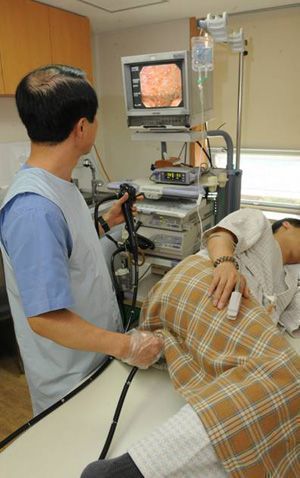
Colonoscopy / Korea Times file
A major Seoul hospital has performed Korea’s first fecal microbiota transplants, also known as stool transplants, giving new hope to people suffering bowel discomfort.
Yonsei University Health System in Seodaemun-gu recently launched a team of experts from the departments of gastroenterology, laboratory medicine and infectious diseases dedicated to the treatment, according to the Hankook Ilbo on Monday.
The transplants will only be available to patients with clostridium difficile infection, caused by the spore-forming bacterium clostridium difficile, which can lead to watery diarrhea, fever, nausea and abdominal pain.
“The method has proven highly effective in practices in the U.S. and Europe,” Prof. Park, of the hospital’s gastroenterology department, said. “After our substantial treatment records are accumulated, the method could later become an alternative treatment for infectious enteropathy patients suffering from ulcerative colitis or irritable bowel syndrome.”
The transplant has been hailed in North America and Europe as the first therapy option for clostridium difficile infection.
Researchers from the Massachusetts Institute of Technology established the first stool bank in the U.S. in 2012. It provides “frozen, ready-to-administer” stool samples to treat clostridium difficile.