Can humans live for 120 years?

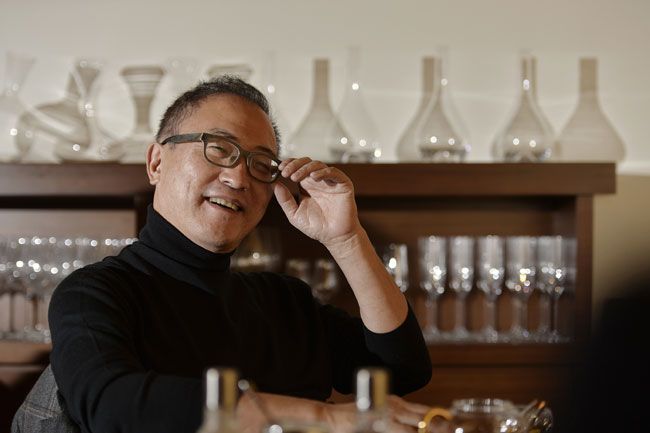
Cha Kwang-yul / Korea Times photo by Shim Hyun-chul
'Stem cells will add decades to the average human lifespan'
By Jung Min-ho, Kim Eil-chul
Over the past century, humankind has made great progress in improving the quality of life and eliminating diseases. Thanks to these improvements, today the life expectancy has increased. In Korea, for example, the average male lifespan has increased to 78.5 years from 51.1 years in 1960.
However, the progress has slowed in all developed countries in the recent decades, which has led many experts to believe there may be a limit to how long the human lifespan can be extended.
But Cha Kwang-yul, 62, the founder and chairman of CHA Health Systems, disagrees. He believes advances in stem cell research will not just extend but also improve the lives of many people.
“Skeptics wouldn’t believe what I believe unless they see it. And they will see it,” he said in an interview. “What we are trying to do here is to understand the specific mechanism of human cell. As we discover more facts about its immunity and recyclability as well as how it works, we get closer to achieving the dream ― a longer and healthier life for everyone.”
Last month, researchers from the CHA University Stem Cell Institute successfully produced embryonic stem cells using adult cells and the eggs whose nuclei were extracted. On Oct. 30, the results of their study were published in the journal Cell Stem Cell.
In cooperation with Harvard Medical School Professor Yi Zhang, they boosted the chances of producing embryonic stem cells by almost three times from last year (from 2.6 percent to 7.1 percent).
Cha is confident that the success rate will continue to rise. More than 20 clinical tests are under way at the institute, he said.
If everything goes well, stem cell technology will provide treatment for many diseases, which are considered incurable for now, such as Parkinson’s disease.
Embryonic stem cells, which are derived from an embryo, can differentiate into multiple cell types in the body.
“If the patient receives other people’s organs, he or she also needs drugs to avoid immune rejection in organ transplantation. On the other hand, if the patient has his or her own stem cell injected, there is no such risk,” Cha said.
“The stem cell field will open a whole new chapter of medicine.”
Cha is one of the most respected Korean pioneers in the field of regenerative medicine and is a successful entrepreneur.
The 1977 graduate of Yonsei University College of Medicine has lived life on his own terms and has accomplished many things.
He is the founder and president of dozens of medical, educational and research institutions here and abroad, including Hollywood Presbyterian Medical Center in Los Angeles and Tokyo Cell Clinic in Japan.
As a researcher, Cha has been recognized by many domestic and international organizations, including the American Society for Reproductive Medicine, for his contributions to the development of the stem cell and infertility fields.
Cha said his next goal is to create the world’s best biomedical group that will help people live longer and healthier lives. He said setting up institutions and branch offices in various countries, such Singapore and Hong Kong, is part of the grand plan.
“I’m certain that biomedicine is our future,” Cha said.
“At some point, I started to feel the value of my work. And I thought this is something I could do for my country and the world. I’m not sure if I will be able to achieve all the things I have in mind before I die. I might be able to achieve one or two; maybe none. I’m just going to try my best and go as far as I can. That is the way how I have always lived my life.”
‘Korea is a difficult country to do stem cell research’
When stem cell scientist Hwang Woo-suk admitted to faking his cloning discoveries a decade ago, he took the nation’s expectations from the promising field down with him.
Because of the scandal, the Korean government and the public lost trust in stem cell scientists, but more importantly, in their capabilities.
Soon, funding for stem cell research was cut, and the government strengthened related laws to prevent unethical practices found during the investigations in Hwang’s case.
“One of the things that we can no longer do here is using fresh eggs for research. Inevitably, many of our important experiments have been conducted in Los Angeles,” Cha said. “We are still standing on our own feet, and there is no government support.”
Cha believes it is wrong for the government to ignore the significant investments in stem cell research being made around the world.
In 2012, Japanese stem cell scientist Shinya Yamanaka won the Nobel Prize for Physiology or Medicine for discovering that mature cells can be converted into stem cells. Since then, many people have come to realize the significant prospects of the field.
Over the years, California and Japan have invested billions of dollars into stem cell research, and the competition for industry leadership is only expected to get fiercer.
Cha said he is even willing to give up his patent in exchange for government sponsorship of his research.
“There is something extraordinary that can be done for the country and the whole world. Its values should not be ignored,” he said.
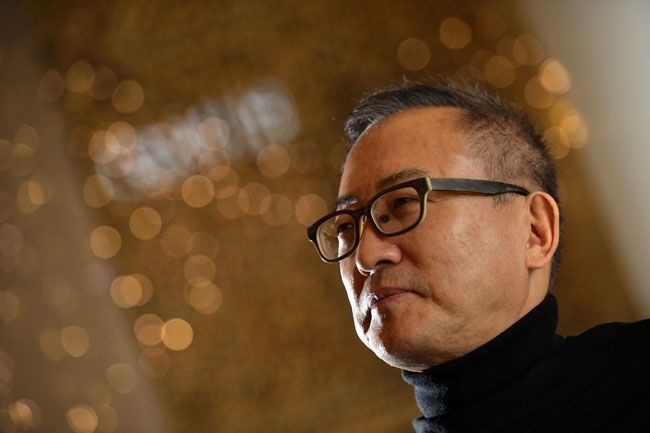
Exporting the ‘Chaum manual’
It is hard to describe the Chaum center in one or two words.
CHA Health Systems established Chaum in southern Seoul five years ago to offer various healthcare services, ranging from medical screening to food therapies. According to Cha, Chaum is the “healthcare system of the future.”
Equipped with top-notch screening facilities, skincare clinics, spas, pools, gyms and a five-star restaurant, the center provides customized services based on each customer’s needs. It also has physicians who provide medical support and guidance.
Since its opening, Chaum has drawn many prominent customers here and abroad, including the prime minister of Kazakhstan, royal families from Saudi Arabia and United Arab Emirates and Chinese and Canadian business tycoons.
About 40 percent of its customers are non-Koreans, Cha noted.
“Hospitals are for sick people, but Chaum is for both sick and healthy people who want to be healthier. In fact, it is one-of-a-kind center for everyone,” Cha said.
But not all of the center’s visitors are customers. Some are more interested in learning how Chaum works as business.
“Some people offer us business deals,” Cha said.
“I want to make protocols for health management and sell them. I believe establishing such a system will be a far more valuable export product than simply licensing hospital names.”
In addition to building health facilities, Cha plans to train health management specialists in various fields, from physical to food therapies.
“Ultimately, I want to make something like a ‘Chaum manual’ and export it to the world. This is one of my other goals,” he said.