Raison d'etre of models

By Victoria Kim
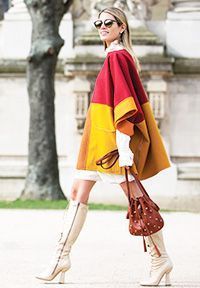
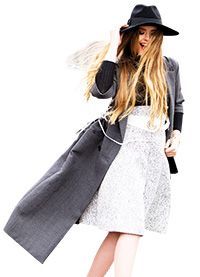
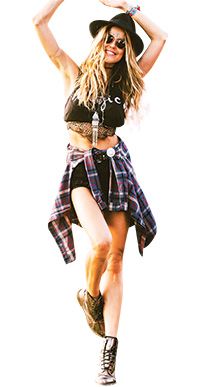
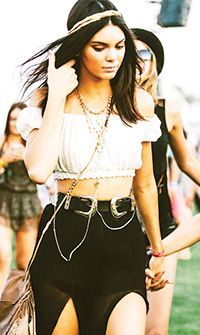
Korea's first fashion models were Ha Young-ae, Jo Mi-ryung, and Kang Gui-hee who debuted in No Rah No’s fashion show in 1956 in Seoul. Their occupation was housewife, actress, and Miss Korea, respectively. Ha Young-ae was the one who appeared on the show for the longest time until 1964.
Few of the first generation of Korea’s fashion models ― Jo Hye-ran, Han Sung-hee, Song Young-shim, and Kim Hye-ran ― who were the first to receive walking and charming educational programs.
In 1992, Lee So-ra opened a new era of the model industry by winning the "Super Model Competition," and fashion modeling became accepted as an official occupation. Lee So-ra continued her career not only as a fashion model but also as a celebrity. She became a role model for the younger generations, paving the way for the next generation of fashion models ― the occupation which had been, until then, shared by actresses, comedians, and anchors.
As time passed, the ex-super model premium languished. Instead, rising models in global collections gained attention in the market.
Park Ji-hye became an issue ― she stood in 48 fashion shows in the four major fashion cities of Milan, New York, London and Paris ever since her first appearance in the Alexander Wang collection.
Recently, Kang So-young appeared in Chanel’s 2013 collection and Park Su-ju was picked as one of 10 remarkable models. Others such as Kim Sung-hee received praise from Mark Jacobs and Philip Lim.
Nowadays, it seems that the demand for fashion models has increased. One of my close designer friends who is relatively renowned, asked me for advice in creating a pop up store, and his main concern was inviting top fashion models classified in the "A" rank which refers to the mainstream models with experiences in overseas collections. Two to three years ago, his main guests were movie stars, singers, and actors or actresses.
Now it had all changed. Also the pay for models appearing at local events has caught up with that of well-known celebrities.
At the Seoul Collection held at the DDP in Seoul, young people following famous models out of fandom and street photographers taking photos of them could be easily spotted. Due to the appearance of a few models, I had been blocked on my way to a show. People suddenly surrounded them and completely blocked my way.
So why is there a sudden rise in demand for fashion models rather than celebrities?
First, for the designer labels, there is no better option than fashion models to best present their concepts. The patterns, fit, and length look perfect in proportionate models rather than celebrities. Creative designers, especially those with high name value, prefer professional models.
Second, more models debuted through various model audition programs on cable TV. Fashion model competition programs have expanded opportunities for aspiring young models to fulfill their dreams and debut without going through an institution.
Third, the recurring appearance of celebrities in commercials has diminished their impact on consumers. The distinctiveness of products decreased with the use of the same celebrity in different advertisements.
Fourth, fashion models exist as fashion’s heritage.
A recent fashion trend is focused on street fashion and models' lifestyle off the runway. Fashion no longer has to be pretty or gorgeous ― rather it needs to be attractive. Retailers know this and carefully select models because the character goes beyond the symbolic figure.
At this year's F/W Seoul Fashion Week, there were more emerging designers' collections than the previous year. Of course, there were many fans backstage to see the rising models.
The role of fashion models has expanded, but the core reason for their existence ― for the couture ― has not changed. A model cannot survive with just a tall figure and the love for attention because in the end, without the understanding of the original purpose of existence, fame cannot last long.