Color me coordinated

© UPI Korea
By Todd Sample
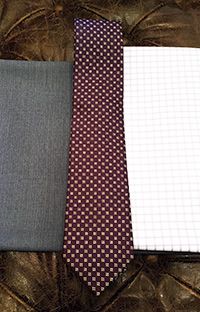
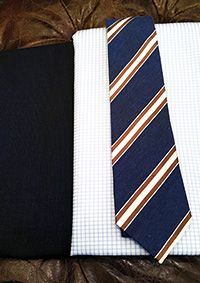
While past Todd's Wardrobe columns have focused on what to wear, this one aims to provide a better understanding of how to wear our clothes, paying particular attention to color. As the wardrobe of the vast majority of male employees in Korea constitutes dark blue, dark grey, or black, with little variation, some insight on how to integrate brighter tones and more active patterns into their daily look couldn't hurt.
In addition to wearing suits and shirts which fit properly, if there is a goal men should strive to achieve when choosing their business attire, being visually stimulating should be at the top of the list.
Heading out for the day in nothing but drab solids means you won't be making much of an aesthetic impression on people you meet. Instead, adding just the right amount of color and pattern to your look will result in you radiating positive energy and confidence. This is especially true as the warm weather of late spring and early summer approaches.
Once again, the three standard colors for business suits are navy, grey and black. As we don't want to omit the business part of business attire, instead of going with a dark grey suit, selecting a brighter tone of grey for the hotter months is the wiser choice. The same goes for blue. Although dark navy works well in the fall and winter, for spring and summer, opt for a medium navy or even lighter blue-grey tone.
Since blue is a neutral color that almost anyone can pull off with ease, it can be considered as the ideal blank canvas upon which to add shirt and tie colors which really pop. Other shades of blue, as well as brown, green, red, purple and let's not forget pink, can all turn a standard blue suit into something stunning.
One of the most often overlooked suit colors for spring and summer in Korea is tan, which can be matched with so many different shirt colors to create a lively look from May to late August. You can't go wrong by pairing a solid tan suit with a sky blue or brown check pattern, a green or classic blue stripe, or even a crisp white shirt with a contrasting tie and pocket square. It goes without saying that wearers of a tan suit should forego black shoes and opt instead for a light- or medium brown oxford or monk-strap or even a loafer.
As many people associate the warmer months with having fun in the sun, it shouldn't hurt to take the same approach with our clothing. While a muted chalk stripe is suitable for fall and winter, sharply contrasting pinstripe fabrics are ideal for spring and summer. A navy blue suit with a white pinstripe is a fantastic warm weather look. Pair it with a solid baby blue shirt with a white collar and cuffs and a brown necktie and just wait for the compliments to come pouring in.
Many men wonder if there is a secret in regard to successfully combining colors into their daily look. In fact, it's less of a secret than the knowledge of what colors look good on you. For certain, our skin tone and hair color, in fact, do play a role.
The key is to start with a base color, which in most cases, represents the suit color, as it accounts for the largest proportion of fabric you wear. When determining which colors to pair with the suit, it never hurts to have a color wheel nearby. For example, any two colors which oppose each other on the color wheel are complementary and thus can be worn together. The same can be said for colors which are next to each other on the color wheel.
In order to become more confident with color selection in your wardrobe, it's a good idea to start with subtle, slightly contrasting tones before moving into those which contrast sharply. Like wearing too much cologne, however, trying to pair bold colors with each other may actually result in you repelling the people you are trying to impress.