Jungsik, marking a new era of hansik

Crispy red snapper
By Yun Suh-young
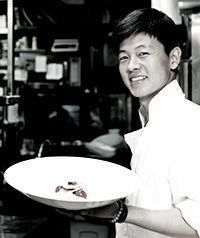
The newest trend in the Korean culinary scene is to have the word "modern" or "new" somewhere in the restaurant's slogan when defining the type of food they serve.
More of these "modern" or "contemporary" Korean restaurants, usually characterized as fine dining, are increasingly appearing across the country, spreading rapidly centering in the metropolitan region.
As much as the words speak for themselves, these restaurants reinterpret Korean dishes with a creative touch, either in the type of ingredients they use or the artistry in presentation. Modern tableware and interior decor differentiate these restaurants.
One of the frontrunners of the trend is Jungsik which first nestled in Seoul's Sinsa-dong in 2009. After its successful debut, owner chef Yim Jung-sik courageously opened a global branch in Tribeca, New York, in 2011. Two years after opening, the New York restaurant received a Michelin one star, and three years later, grabbed a second star.
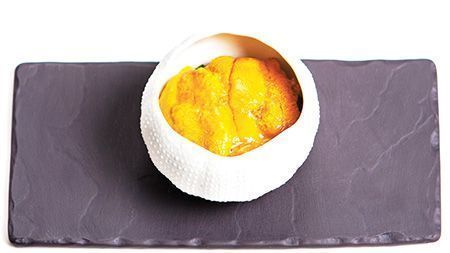
Sea urchin rice
The Seoul branch, which recently relocated to the wealthy district of Cheongdam-dong, was listed as Asia's 10th best restaurant in "The S. Pellegrino Best Restaurant in Asia" awards held in March, up from 20th last year. This year, it also received the best Korean restaurant award.
Jungsik defines its cuisine as "new Korean fine dining" where traditional ingredients are served in ultra-modern, soigné presentations.
W conducted an e-mail interview with Jungsik's executive chef Yim Jung-sik who is currently in New York on a business trip.
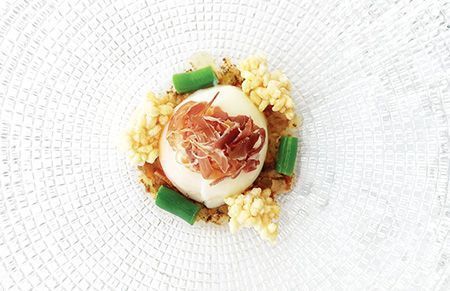
Truffle egg
[ Q&A ]
Jungsik has received a couple of noticeable awards this year. What are Jungsik's strengths?
I think Jungsik's own unique character coupled with the food and service leveling up to global standards has got us good results.
Your restaurant received phenomenal interest after it was selected as one of Asia's 50 best restaurants. Did the number of customers actually increase every time the rating ascended?
The number of customers remains the same. I find it peculiar that there are more reservations but at the same time more cancellations and even no-shows on that day.
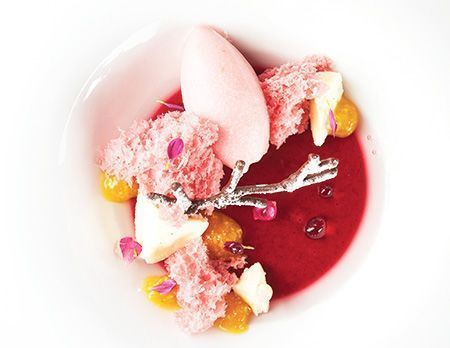
Raspberry wine panna cotta
What do you think is the strength of Korean cuisine?
Diversity makes Korean food attractive.
What kind of efforts do you think are needed to globalize Korean food?
I think the meaning of globalization equates to becoming more popular. In that sense, Korean food is making positive advances.
It's not easy to grab a Michelin star with Korean food overseas. What do you think captivated the palates of New Yorkers?
I think it was delectable food that meets with the concept and character of the restaurant.
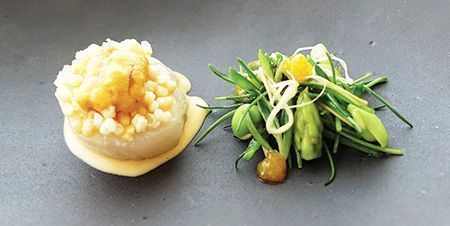
Scallop dish
Do you have a favorite food?
It changes by the season. These days I'm into "gomtang" (beef-bone soup) and "Pyeongyang naengmyeon" (Pyeongyang-style cold noodles). They make me want to go back to Korea.
I heard you're difficult to get in touch with due to your frequent business trips. How often do you visit New York and what do you do there?
I visit New York five to six times a year. When I come here, I upgrade the menu and sort things out with management and the staff as the restaurant's owner. Other than that, I drink expensive wine that isn't available in Korea and work out.
Is there a leading culinary trend in New York, or even globally, at the moment?
There's a trend called "fast casual." This is more of chef-made casual food which originates from fast food. Chef-made burgers are an example. Korean food is also a trend.
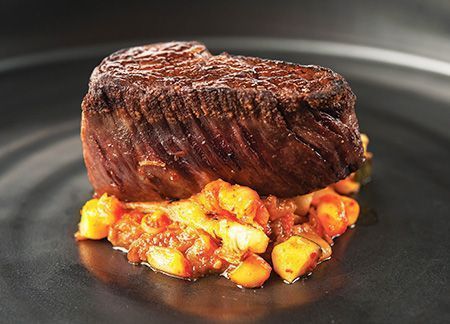
Fillet mignon with kimchi
How did you become a chef?
I got myself into cooking when I was doing mandatory military service in Korea.
Why did you select Korean cuisine of all the categories?
I aimed to become globally competitive since opening the restaurant. I thought Korean food would work in the global market if I ran a fine dining restaurant.
There is some criticism that the food at Jungsik is too fusion to be considered Korean. What do you say to that?
That's right. I don't consider my restaurant as a place that cooks Korean food. The food at our restaurant can't be explained other than as "Jungsik-style."
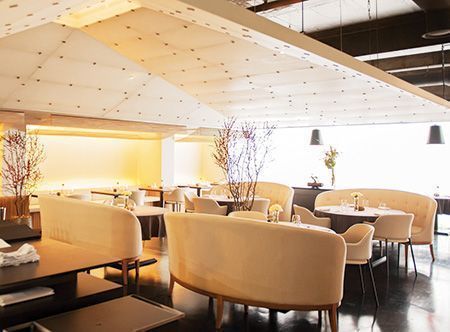
Interior of Jungsik in Cheongdam-dong
Is the menu for both the Korean and New York branches the same?
The menu is almost the same. There are only slight changes in the menu depending on the availability of ingredients.
What's the most popular dish at Jungsik? How do the preferences of Koreans and New Yorkers differ?
In Korea, our dessert "jangdok" and "sea urchin rice" are most popular. In New York, the "sea urchin rice" and "royal bibimbap" are popular. I think the latter is often-sought due to the rich aroma of truffles and the soft and sticky foie gras.
What's your source of inspiration?
I'm inspired by everything. Sometimes I set a dish in advance and then try to find inspiration. These days, I'm fascinated by caviar. I'm continuously brainstorming to come up with the best caviar dishes. My inspiration comes largely from "focusing." I think this applies to all fields.