Jacket That Suits You
By Todd Sample
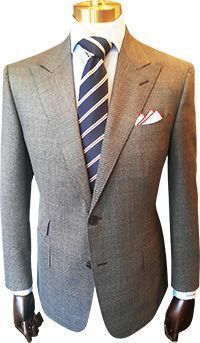
Two-button jacket

Six-on-two double-breasted jacket
The style of a suit jacket says a lot about the person who's wearing it.
A single breasted two-button jacket in a solid color with a notch lapel makes a statement that the individual wearing it is down-to-earth, sensible and trustworthy. In contrast, the image of a man sporting a navy double-breasted jacket with a wide peak lapel and pinstripes infers charisma, power and confidence.
The variations on the design of a suit jacket go far beyond the number of buttons on the front.
Since we're on the topic of buttons, however, the standard number for single-breasted jackets is either two or three, although one-button suits and even those with four buttons can be found.
A two-button suit jacket is by far most common look and a classic style which is well suited for most body types, especially shorter frames as the design serves to lengthen the torso in a balanced way.
It is important to keep in mind that when wearing a two-button suit jacket, only the top button should be fastened.
As to which lapel style to choose for a single-breasted two-button jacket, a notch lapel is more along traditional lines, whereas a peak lapel can add a bit of pizzazz to the overall look.
The popularity of three-button suits comes and goes, but if worn properly can become a timeless look.
When shopping for a suit with a three-button jacket, try to find one in which the lapel of the jacket is not pressed flat to the jacket so that the top button is visible, but instead rolls naturally so that there's just a subtle hint of the third button. On a jacket with a rolling lapel, which has its origins in the Neapolitan tailoring tradition, only the middle button should be fastened.
In regard to fit, one-button suit jackets are generally appropriate for men with very slim body types. As to where such a look should be worn, one-button suit jackets are probably more suitable for a night out at a club than at a business meeting.
The popularity of the film "Kingsman: the Secret Service" has brought double-breasted suits back into the limelight and for good reason. The look is one that more men should try to incorporate into their wardrobes.
Button-wise, there are several options for a double-breasted jacket, with the six-on-two (six buttons in total with only two being fastened) being the most common.
As there is more fabric on a double-breasted jacket, it is recommended that the suit be made of patterned fabric as opposed to a solid. This is especially true for men with a larger frame.
As for the back side of the suit jacket, there are several variations in the number of vents one can choose. A double-vented jacket with one vent on each side of the jacket, created as a way of avoiding discomfort and wrinkles while riding a horse, is a classic style which results in the jacket draping nicely down the frame. A single vent is a look favored more by older, more traditional types, while a ventless jacket should be limited to tuxedos.
Moving to the sleeves of the jacket, one style that more gentlemen are seeking, especially when having a suit tailored, is surgeon's cuffs.
Most suits bought off the rack come with the buttons simply sewn onto the sleeve with stitching made to look like a button hole in order to enable sleeve length alterations to be done more easily. Surgeon's cuffs, however, are real button holes on the sleeve which allow the wearer to open one or two to show others that the jacket is indeed tailored and not off the peg.
Suit jacket style variations continue with the design of the pockets.
Most often seen are so-called flap-pockets where the flap or lid of the pocket can either be worn out of the pocket or tucked in. A ticket pocket, a smaller pocket located above the right side jacket pocket, is also a style variation preferred by the dandier gents among us. On a casual suit jacket, perhaps one made from cotton and worn in the summer months, a flapless square- or cup-shaped patch pocket- is a less formal style which works very well.