Coffee at its finest
By Kim Bo-eun
What is better than a hot cup of coffee on a chilly autumn morning?
For some, regular coffee is enough for their daily dose of caffeine. For others, the pursuit is for richer aromas and deeper flavors, even if it means paying a premium.
Among the premium coffees, “specialty coffee” is gaining appreciation among more discerning palates.
While there is no set definition for the term, it generally refers to coffee that best brings out the unique taste of the roasted green bean. Along with the great taste and quality, specialty coffee also comes with ethical benefits. By identifying its origins, from the country to the specific plot of land to farmer, it establishes a connection between the producer and consumer in their disparate socio-economic environments.
A host of cafés now offer the higher quality alternative not only in the capital, but also in cities across the country. Here are some that could be considered the pioneers of specialty coffee in Korea.

Coffee Myungga's La Finca shop in Daegu
Coffee Myungga


The La Finca shop
Ahn Myung-kyu, owner of Coffee Myungga, was among the first to introduce specialty coffee in the country. After studying coffee making in Japan in his early 20s, he started his shop by Kyungpook National University in Daegu, some 300 kilometers southeast from the capital. This was back in the 1990s, when coffee meant the instant mix of coffee powder, non-dairy creamer and sugar in dark, smoky shops called “dabang.” Obviously, there was no interest in quality coffee that cost several times that of the mainstream coffee back then.
However, a pool of loyal customers formed after Ahn opened the shop in Daegu’s main commercial district of Dongseong-ro. This happened as he started traveling to coffee farms around the world to directly import the green beans instead of having to buy them through agencies based in Japan. Direct imports enabled Ahn to cut the retail cycle from a full year to four months.
“Good coffee is made from fresh, quality beans. Importing directly from the farms is what really elevated the taste of our coffee and attracted customers,” said Choi Yun-jeong of Coffee Myungga’s management support team.
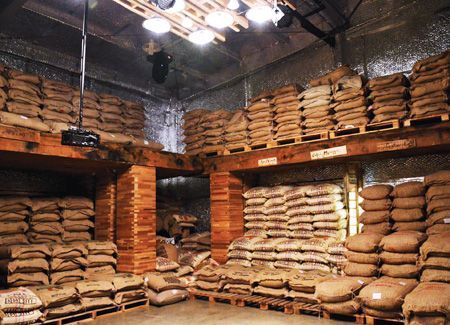
The green bean storehouse at Coffee Myungga’s La Finca shop in Daegu
The coffee shop now has 38 shops in and around Daegu and an exclusive contract with three farms – Guatemala’s El Injerto, El Salvador’s Café Pacas and Columbia’s San Alberto.
Ahn was away on a tour to overseas coffee farms during this reporter’s visit to Coffee Myungga’s La Finca shop. He spends much of his time abroad at the farms, and this is essentially what specialty coffee is all about.
“It’s about making true, lasting relationships with the farmers,” Choi said.
The playground Coffee Myungga built for children at the El Injerto farm in Guatemala is part of such efforts, and the company says it will continue its endeavors to improve the lives of producers.
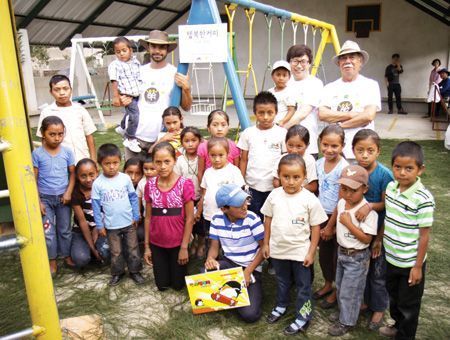
Children at the playground at Guatemala's El Injerto farm
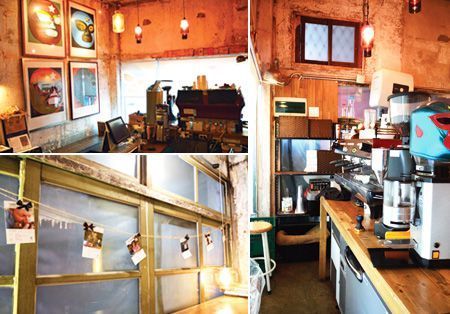
Coffee Libre’s Yeonnam-dong shop
Coffee Libre

Coffee Libre’s signature oriental medicine cabinet where it places its roasted bean packs

When you walk by the alleyway in Yeonnamdong, Seoul, where Coffee Libre sits, you will often see people lining up at its entrance for a cup. This is probably because the 20-squaremeter shop can only accommodate a handful of customers, but also because they have come to recognize the taste of its coffee.
Here, customers can get Cup of Excellence (top-grade) coffee at 4,000 won – cheaper than the Americano at major coffee franchises. A number of factors enable this, one of them being that owner Seu Pil-hoon shaved interior costs. The tiny place is rather shabby with odd-looking pieces of furniture, but the shop itself is not so important, he says, because Coffee Libre is where you come to get a greattasting
cup of coffee and/or beans. Its success led to the opening of three more shops in the past few years.
Espresso-based coffees as well as 50 kinds of aeropressed single-origin coffees are offered at the shop. Asked about his favorite cup, Seu says it’s India’s Araku coffee.
He says he developed a greater affection for it as Coffee Libre is funding tuition and meals for schoolgirls there.
As such, “coffee with a face” is what Coffee Libre pursues, and at its Yeonnam-dong shop hang cards that show the faces of farmers and details about their farms.
“It is Coffee Libre’s mission to become a messenger between the producers and
consumers of coffee,” Seu said.
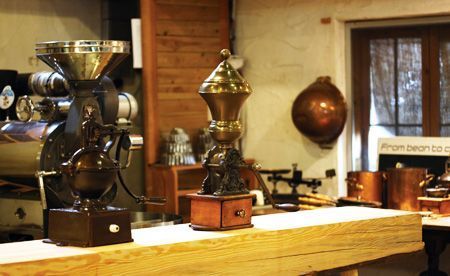
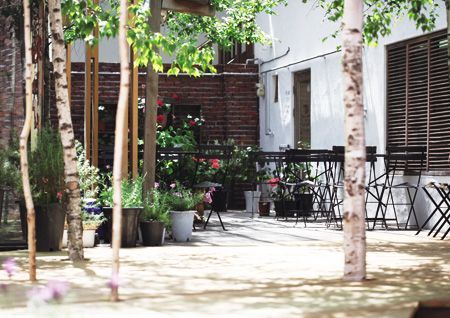
Terarosa Coffee’s roasting factory and shop in Gangneung
Terarosa Coffee
Terarosa Coffee in Gangneung, a city along Korea’s east cost, is a big name in specialty coffee. With eight shops running across the country, this reporter was able to visit one in vicinity – Gwanghwamun.
The spacious shop was filled with office workers on a Friday morning. The majority were sipping coffee from elegant tea cups with saucers, an uncommon sight at regular coffee shops.
It turned out that single origin coffees from Africa and Latin America were served in tea cups and other blended espresso-based coffees in regular mugs. The delicate bone china allegedly allows drinkers to best enjoy their coffee. The Ethiopia Yirgacheffe this reporter tried was clean and had a distinct citrus flavor.
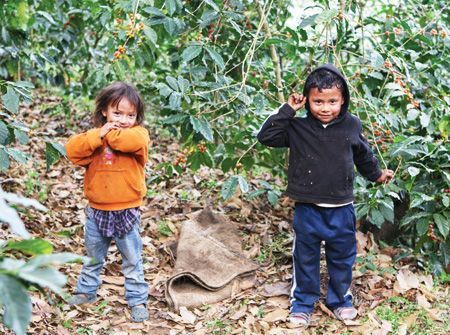
Children at El Salvador’s Malacara B farm, where Terarosa Coffee is planning to build a playground
Initially, Kim Yong-duek, owner of Terarosa Coffee, ran a restaurant. Coffee was one of the items on the menu and Kim found himself wondering how he could provide better coffee to his customers. One thing led to another, and by 2002, he had a roasting factory and shop in Gangneung.
Kim, who studied architecture, put as much effort into designing the shops as into the coffee. He designed the interior and key furniture items such as tables, and brought in chairs and other goods from Europe. The coffee was good, and the shops, with their cozy but sophisticated brick and wood furnishings, kept customers returning.
Terarosa Coffee is also engaging in projects to elevate living standards of its coffee producers. Last month it invited Rick Peyser, author of “Brewing Change,” a book outlining the poverty of coffee farmers in Central and South Americas, to give lectures to raise awareness of the issue here. In addition, the company’s employees are raising funds to build a playground on El Salvador’s Malacara B farm.
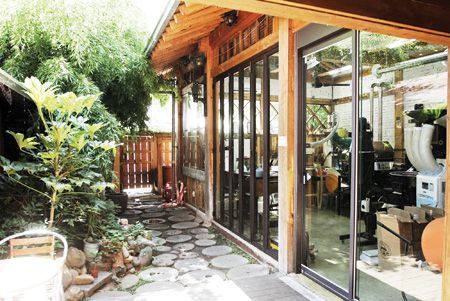
The roasting area at Momos Coffee
Momos Coffee

Coffee beans are roasted at the shop
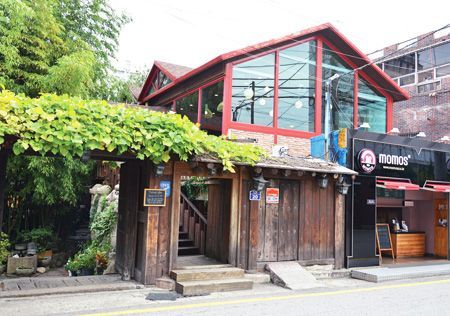
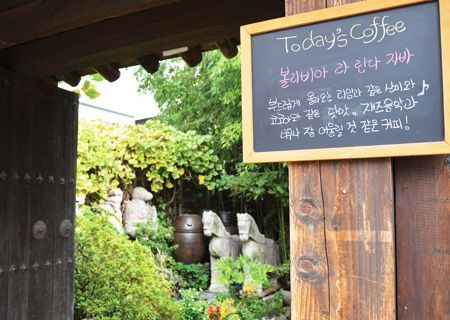
Momos Coffee was a slightly confusing shop at first glance. It had a small take-out booth on one side and an old traditional-style main entrance that led into a small garden and indoor seating areas as well as a roasting space and bakery.
Although located on the outskirts of the city, the café was a full house on a Thursday afternoon.
It started in 2007 as a take-out booth of 13 square meters that sold regular coffee. It is now a 460 square-meter specialty coffee shop teeming with customers. The rather funny-looking shop was the result of a series of expansions that took over a space
originally occupied by a restaurant.
At its shop, it roasts the beans it brings in from farms in Central and South America as well as Africa. To show their support for the producers there, Momos Coffee is sending donations to cherry pickers in Costa Rica.
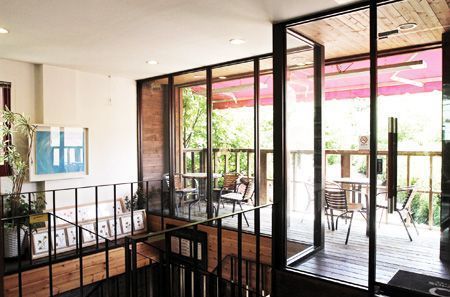
Momos Coffee’s café
An average of 900 customers visit on weekdays and 1,200 to 1,300 on the weekends but unlike the coffee shops above, it says it won’t expand further for quality control reasons.
“Back in 2009, hardly anyone knew about specialty coffee here, but we thought it had potential because we figured people would eventually appreciate great-tasting coffee,” Jeon Joo-yeon of Momos Coffee said.