Fibromyalgia ― the pain across the body

By Lee Sung-hun
Some readers may have experienced tenderness and pain all over the body, and sought a diagnosis, only to go through extensive procedures such as blood tests and x-rays that showed no particular illness. Often the same people suffer from digestive issues, insomnia, or fatigue at the same time. Such people may have fibromyalgia.
Unfortunately, the cause of fibromyalgia is yet to be identified, and as patients pass most of the common medical tests without a red flag it is hard to diagnose. It is estimated that 2 percent of the Korean population suffers from this disorder. When you consider that about 1 percent of the population has rheumatoid arthritis, you can appreciate how many of your friends and family may be suffering. It affects females five times more than males, and is especially common among those aged between 30 and 50.
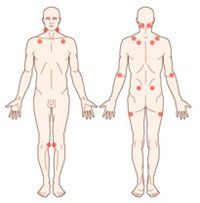
The symptoms of fibromyalgia are diverse. Typically, the patients complain of chronic body-wide pain, fatigue and sleep problems. To borrow patients’ expressions, “the whole body, from top to bottom, is tender and sore” and aches persist between the shoulder blades and just below the neck. Many patients also feel stiff when waking up in the morning. According to the American College of Rheumatology, fibromyalgia is diagnosed when you have at least three months of widespread pain, and pain and tenderness (particularly in response to tactile pressure) in at least 11 of the 18 areas shown in the diagram.
Some also complain of fatigue, and despite a good night’s sleep, some patients wake up still feeling exhausted. Many say they cannot fall asleep or stay asleep. Other symptoms include irritable bowel syndrome, depressed mood, anxiety, headaches, parched lips, dry eyes, severe menstrual pains and postmenstrual syndrome, frequent urination, a tingling sensation in the hands and feet, and cold hands and feet.
Fibromyalgia is easily confused with chronic fatigue syndrome (CFS), or myofascial pain syndrome (MPS), or rheumatoid arthritis.
In comparison to fibromyalgia whose main symptom is the pain, CFS’s major symptom is fatigue, sometimes with a slight fever. With CFS patients, the pain is hardly body-wide, and the pain is not a non-induced one but tenderness on pressure. However, in general, fibromyalgia and CFS display such similar symptoms that it is difficult to distinguish between the two.
MPS, commonly known as muscle pain, is damage to soft tissues due to sudden movement that causes irritable pain-trigger points on the fascia ¡© a layer of fibrous tissues surrounding muscles. MPS is similar to fibromyalgia in that it has specific pain-trigger points sensitive to pressure, but it is mainly concentrated around the shoulder and neck, without fever, and affects males and females alike.
Rheumatoid arthritis is characterized by the inflammation of the joints and the surrounding tissues, which become swollen, feverish, painful, and stiff. It is more common among females, much like fibromyalgia, and affects mostly fingers, and knee and elbow joints.
Patients with fibromyalgia tend to prefer staying at home and do not move, as movements trigger pain across the body. However, in doing so, their muscle strength weakens and they become more susceptible to the pain, and weaken their ligaments and tendons. Also, staying at home does more harm than good to their emotional health, which can cause or worsen depression and sleep disorders.
Exercise is a key element in treating patients with fibromyalgia. No matter what kind of exercise the patient prefers, it is important to maintain a workout load that the patient can regularly and persistently take. Exercise can alleviate most of the fibromyalgia related symptoms including body-wide pain, fatigue, and insomnia. It strengthens muscles and improves flexibility while reducing stress and allowing the patient to maintain a more positive daily life.
It should be noted that much like physiotherapy, exercise should start with something easy and not strenuous and gradually the time and load can increase. If you do not feel up to the physical strain, then even a five-minute walk a day is still a good start. You can increase the time by a minute or more each week, till you walk about 20 to 30 minutes a day. Everyday activities such as walking up and down the stairs and doing house chores can also help in reducing pain.
Stretching exercises can help maintain flexibility by gently forcing the joints to stretch to their maximum range of motion. Endurance or cardiovascular exercises such as walking, bicycle-riding, and swimming improve cardio-respiratory fitness, muscle strength and overall body condition. Strengthening exercises helps with strengthening the muscles and tendons that support the joints.
As such, almost any kind of exercise can help alleviating fibromyalgia — yoga and tai chi are also known to be effective. Such exercises are great in that they not only help the physical aspects of fibromyalgia, but also are very emotionally calming activities that help the psychological aspects of it.
In Oriental medicine, the body-wide pain is addressed with herbal medicine that strengthens the ligaments and tendons around joints that have weakened. At the same time, posture correction treatment is administered to prevent excessive load on the joints. If the patient is too exhausted, or doesn’t have the stamina to even start exercising, herbal medicine that replenishes qi is prescribed to help them.
The writer practices Korean Oriental medicine at the UN Oriental Medical Clinic in Hannam-dong, Seoul. He can be reached at sung_hun@naver.com.