Joint replacement
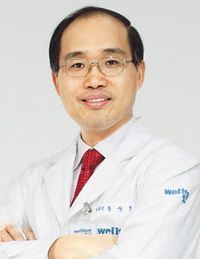
By Song Sang-ho
A few days ago, a woman suffering from arthritis came to the hospital with her daughter. The daughter brought her after seeing her suffer in pain. Her legs were extremely bent outward and it seemed that she felt pain while walking. As a medical expert, I could say she had advanced arthritis but she kept complaining that seeing a doctor was unnecessary since she was okay. I managed to persuade her to just have an X-ray. The X-ray showed that she had end-stage arthritis. After a lengthy consultation, she decided to undergo surgery.
I have seen many patients accompanied by their children saying they were forced to see me by their children though they do not feel pain. However, there were many cases where those patients turned out to have advanced arthritis. In particular, I see a lot of such patients in the winter when joint pain gets worse.
According to statistics released by the National Health Insurance Service in 2011, the number of patients who undergo joint replacement surgery starts to increase from October when it starts to get cold, reaching a peak in December and January. Twice as many total hip arthroplasty (THA) and total knee arthroplasty (TKA) were performed in December 2011 as in September of the same year.
In winter, blood circulation weakens, which increases knee pain and sometimes leads to joint replacement surgery. In fact, the pain can be greatly alleviated only with physical therapy or drugs in the early- and mid- stages of arthritis but for those with advanced arthritis, joint replacement surgery is the most effective treatment. Patients with femoral neck fracture due to a fall also undergo the surgery.
Patients getting joint replacement surgery are first satisfied with the fact that they no longer have difficulty in performing everyday activities. They can stand up, walk and climb stairs, which they cannot do well because of pain before the surgery. Female patients are also satisfied with the surgery as their bowed legs begin to straighten. In particular, following the surgery patients say that they find the biggest satisfaction in their pain-free life. Furthermore, they can sit cross-legged without difficulty and come to walk in natural fashion instead of limping.
Recently, advances in joint replacement surgery allow quicker recovery and reduce side effects, increasing the satisfaction of patients. The most notable surgery is Minimally Invasive Muscle-Tendon Surgery. Minimally invasive surgery (MIS) minimizes the section of muscles and tendons by dissecting 8 to 10 centimeters instead of 15 to 20 centimeters as previous surgeries do. The minimized incision makes the surgery less invasive to muscles and tendons around the joint.
Since a procedure has a direct effect on post-operative recovery and prognosis, patients should have enough consultation with the doctor. In the case of MIS, patients can walk just four hours after the surgery. Early rehabilitation improves physical activity and prevents adhesion. Furthermore, it also prevents side effects of thrombosis in the lower extremities from staying in bed too long after surgery and complications occurring in the heart, liver and digestive system.
Bearing the pain of arthritis does not solve the problem. By letting the pain go on, the problem can become worse. Some patients even develop depression due to arthritis as they just put up with the pain without being treated and later find difficulty in daily activities. Therefore, I recommend that early intervention is the best. It is also understandable that parents do not want to worry their children with their illness. Nonetheless, I hope that they do not bear the excruciating pain too long. When you are happy, your children will be happy, too, and live a more energetic and healthy life.
This winter is bitterly cold. During a long and cold winter season, we miss parents’ warm hugs. That may be the reason why I like to make ward rounds. It warms up my heart to see patients leave the ward holding the hands of their grandsons. Parents’ hugs can heat us up no matter how cold the winter is. Filled with children always thinking of their parents and grandsons concerning their grandparents, the ward always enjoys a warm spring.
The writer is the president of Wellton Bone & Joint Hospital.