K-traditional design finds new life in fashion, goods, store interiors
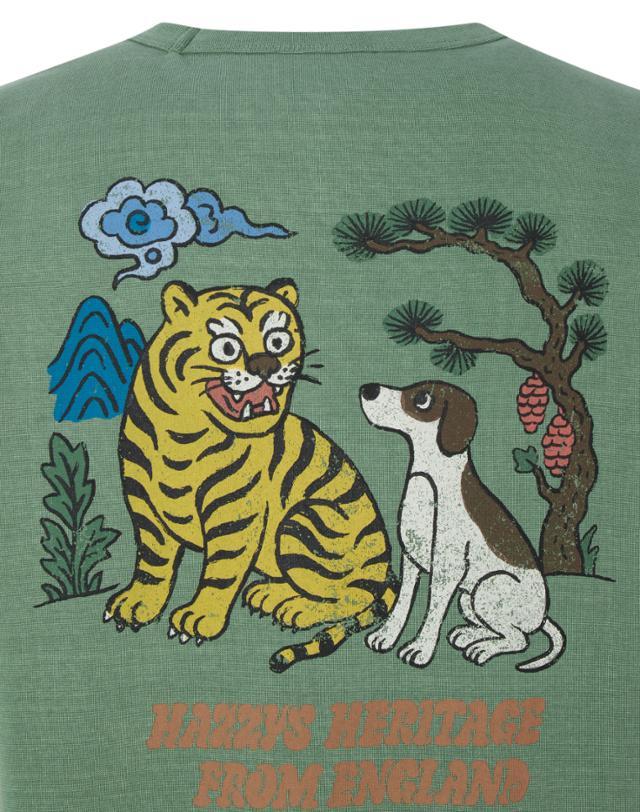
The “Horok” collection from LF’s casual brand Hazzys / Courtesy of LF
Korean traditional design motifs are gaining new life across industries, from fashion and merchandise to store architecture, as global interest in Korean culture continues to rise through K-beauty and K-pop.
Fashion company LF launched the “Horok” collection under its casual brand Hazzys on Monday, blending Korean aesthetics with a modern twist. The collection features reinterpretations of traditional motifs such as tigers, chaekgado (bookshelf paintings) and pine trees. Earthy colors like khaki and beige, now trending in global fashion, were also incorporated.
“As K-content such as ‘KPop Demon Hunters’ gains worldwide popularity, global consumers are very interested in directly experiencing Korean culture, fashion and lifestyle," an LF official said.
Collaborations with the National Museum of Korea
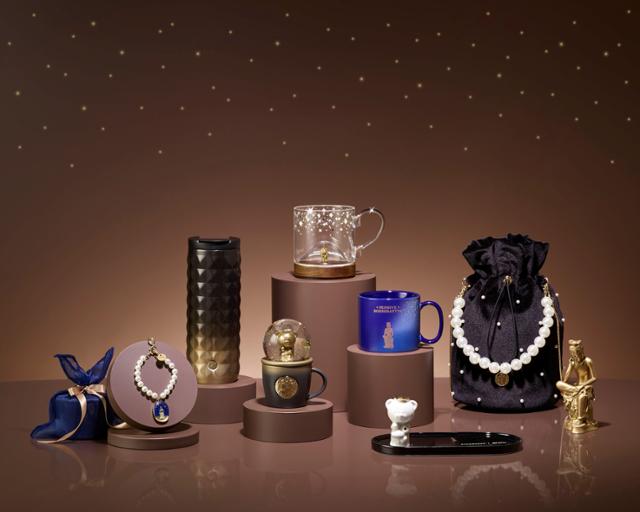
Starbucks Korea launched mugs and other merchandise inspired by the National Museum of Korea’s “Room of Quiet Contemplation.” Courtesy of Starbucks Korea
Starbucks Korea has also embraced traditional design. It became the first coffee company to collaborate with the National Museum Cultural Foundation’s brand “MU:DS,” releasing several product lines inspired by Korean heritage.
In January, Starbucks launched a collection titled “Joseon Meets Coffee,” featuring designs of a Joseon-era scholar enjoying tea in a garden. The products included tumblers, table mats and espresso cups inspired by the famed artist Yi Han-cheol's "Scholar’s House Surrounded by Plum Blossoms" at the National Museum of Korea.
In August, Starbucks released seven additional products with the theme “Time of Reflection with the Stars,” drawing inspiration from the museum’s Room of Quiet Contemplation, which displays two gilt-bronze Maitreya statues from the Three Kingdoms period, both national treasures. The collection includes mugs and small figurines.
Snack maker Orion also joined hands with the foundation to launch the “Bichobi National Museum Edition,” a chocolate sandwich cookie line featuring eight cultural heritage designs on both outer and inner packaging. These include depictions of tigers and magpies, a gilt-bronze Maitreya statue, celadon incense burners and Irwolobongdo, a traditional painting of the sun, moon, and five mountain peaks.
Traditional patterns enhance modern interiors
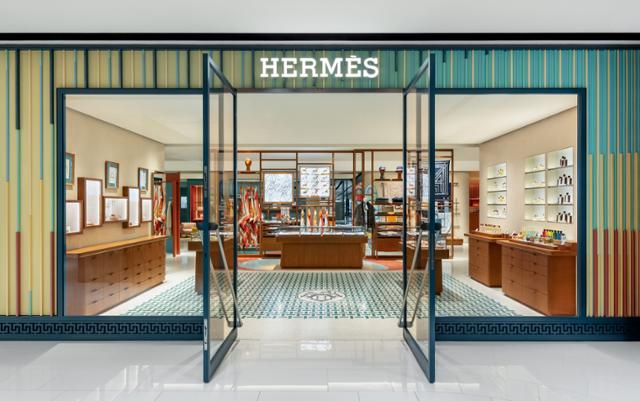
The newly renovated Hermès store on the first floor of Hanwha Galleria Luxury Hall in Seoul features vibrant patterns inspired by dancheong (colorful decorative motifs found on Korean wooden architecture). Courtesy of Hanwha Galleria
Korean traditional design elements are also being integrated into architectural and interior spaces.
French luxury brand Hermès recently expanded and renovated its store at Hanwha Galleria Luxury Hall in Seoul, almost doubling its floor space and applying patterns inspired by dancheong — colorful decorative motifs found on Korean wooden architecture like temple and palace buildings — to the building’s exterior.
Meanwhile, Japanese toy company Medicom Toy opened the first Korean exhibition of its “Bearbrick” collectible figure at The Hyundai Seoul in Yeouido on Oct. 1. The exhibition space was designed as a modern reinterpretation of a Korean traditional garden. The showcase included works by Son Dae-hyun, Korea’s first master craftsman of lacquerware inlaid with mother-of-pearl and Seoul’s Intangible Cultural Property No. 1, who incorporated his signature chrysanthemum and vine patterns onto the Bearbrick figure, highlighting the elegance of Korean craftsmanship.
This article from the Hankook Ilbo, the sister publication of The Korea Times, is translated by a generative AI system and edited by The Korea Times.