Translators - unsung heroes behind globalization of Korean literature

Still underpaid despite growing popularity of translated fiction
By Kwak Yeon-soo
After the #NameTheTranslators hashtag went viral 10 years ago, English-language publishers have begun making an effort to intentionally credit translators on the front covers of novels. Before the social media campaign, one had to flick through a few pages of books to find out who the translator was.
Sora Kim-Russell, a Korean-American literary translator who has translated over a dozen books, including four by author Hwang Sok-yong, recently observed that her latest work, “Mater 2-10,” was the first translation of that author's work to feature her name on the cover.
The established translator explained that there has been a notable shift in the level of respect given to translators compared to a decade ago. To make strides, translators have become activists in their field and have requested fair contracts, fair pay and proper recognition.
“While respect and recognition have improved, the pay has not. That is one area that is still lacking. It's still impossible to survive as a literary translator. For many of us, we've seen our pay drop. A lot of us survive on grants (offered by publishers or translation-related organizations), but the amount that is paid out on grants has dropped,” Kim-Russell said during a recent interview with The Korea Times.
Youngjae Josephine Bae, a literary translator who co-translated her first book-length fiction, “Mater 2-10,” with Kim-Russell, agreed that there is a different kind of respect toward translators following Hang Kang and Deborah Smith's Man Booker Prize win in 2016. However, they believe they are still underpaid.
“Korean society in general became more conscious about the Man Booker prize and they started to talk about it every season,” Bae said during a recent interview with The Korea Times.
Despite winning the 2019 Literature Translation Institute of Korea (LTI Korea) award for aspiring translators and the 2021 Korea Times Modern Korean Literature Translation award, Bae revealed that she takes on part-time jobs to supplement her income.
“I have to work on something else. I also translate non-fiction and history books. I also do some outsource work from a research foundation, translating research papers,” she said.
Kim-Russell expressed her concerns about the reality faced by some talented translators, adding that the output could be greater if they can work full-time on literary translations.
The translators interviewed did not reveal how much they earned per work, since such information is considered confidential.
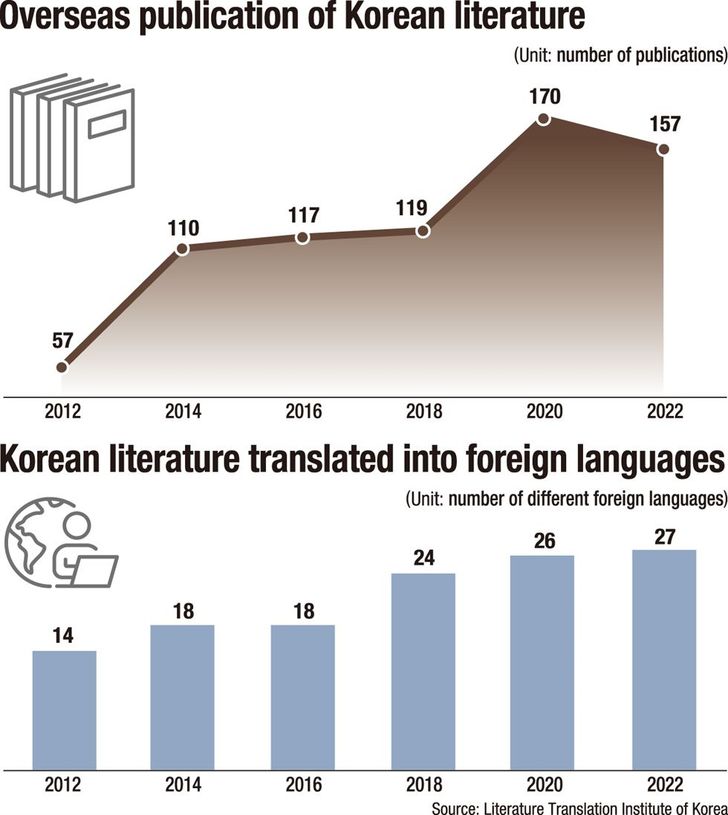
In fact, Korean literature has been gaining momentum over the past few years as foreign publishers look for stories from different cultures. The rising popularity of K-pop, films and dramas has also brought fresh attention to Korean literature. While there was a decline in 2022, the overseas publication of Korean literary works has generally increased in the last decade. These works have been translated into an expanding range of languages over time.
“I see a lot more translations being talked about. There's so much Korean literature out there right now compared to when I started out,” Kim-Russell said.
She elaborated further on the growing presence of “heritage speakers” like herself working as literary translators, in addition to Korean nationals and people without a heritage connection to the country.
“It's exciting to see new translators in the field. It's growing more diverse in all directions and in wonderful ways,” she added.
Bae echoed the sentiment, saying, “I have seen more variety in recent years. Before then, we stuck to the classics by well-known authors. Now we are seeing up-and-coming authors who write on various genres, including sci-fi and mystery thrillers. I think that's a very positive change,” she said.
Kim-Russell, the translator of the 2017 Shirley Jackson Award-winning novel, “The Hole,” by Pyun Hye-young and 2019 Man Booker Prize-nominated novel, “At Dusk,” by Hwang, revealed that she did not receive a pay raise despite her achievements.
“One of the big changes is that you get people coming to you, asking you to translate things. And you get to say no to projects. But I didn't get a bump in pay,” she said.
The co-translators of “Mater 2-10” stressed the importance of keeping the author's style and adding empathy to the text.
“'Mater 2-10' is a family saga that spans four generations. It also deals with labor movements, workers striking against employers and police cracking down on that. We do find these themes in other countries as well,” Kim-Russell said.
“When we are thinking of the English readership, we need to remember that it is very broad and diverse. They are people from all different kinds of backgrounds, so I try not to limit myself by worrying about who the reader is or could be. I believe these themes touch people (around the world).”