'Sam Soon-ee': Victims of urbanization remembered

A nanny, a female bus conductor called “bus girl,” and a sweatshop worker were called collectively “sam soon-ee.” Nannies were called “shik (food) soon-ee,” female bus conductors (bus girl), “cha (vehicle) soon-ee,” and sweatshop workers, “gong (manufacturing) soon-ee.” They were called this partly because back in the 1950s, Soon-ee was one of the most common names in Korea. Korea Times file
Author pays tribute to nannies, 'bus girls,' sweatshop workers
By Kang Hyun-kyung
Starting the 1950s in the wake of the Korean War (1950-53), there was a rare employment boom for women which continued until the 1980s.
The story, however, is not as encouraging as it sounds.
The bloody war had left some 100,000 orphans. With the shortages of orphanages, some girls were sent to families as maids and did various chores in return for food and a place to stay.
The post-war urbanization in the 1960s, meanwhile, triggered massive labor migration from rural areas to big cities, creating three types of jobs for less educated young women ― nannies, bus conductors called “bus girls,” and
.
These young women had humble beginnings. Born to poor farmer families, they chose to migrate to Seoul or other big cities for work after completing elementary or middle school.
Jung Chan-il, author of “Sam Soon-ee: Names Created by Society, Forgotten by History,” observes the nannies, bus girls and sweatshop workers who were the victims of urbanization, living in the shadow of the miraculous economic growth Korea achieved during the industrialization period from the 1960s to the 1980s.
“They were called sam soon-ee, meaning three soon-ees,” he says. “Stay-at-home nannies were called shik (food) soon-ee because they were responsible for cooking and various other home chores for host families. Bus conductors were assistants to drivers and they collected bus fares from passengers and these women were called cha (vehicle) soon-ee. People called young sweatshop workers, gong soon-ee, as gong is a short name form for manufacturing jobs. Hence, the three soon-ees.”
In the 1950s, Soon-ee was one of the most common names for girls.
A journalist-turned-author, Jung says “sam soon-ee” is a derogatory, abusive term as it belittles the people who played a key role in the “Miracle on the Han River.”
About 10 years ago, the author said he began to wonder when those three jobs started disappearing. Books, literary works or other open source resources shedding light on the young workers were hard to find, he said.
Jung went to a public library to find academic journals and magazines that were published in the past few decades.
There were plenty of research papers about sweatshop workers but finding documents about nannies and bus girls was particularly challenging, he said.
“After spending some time searching in vain for documents or literary records about them, I chose to compile their stories on my own,” he said.
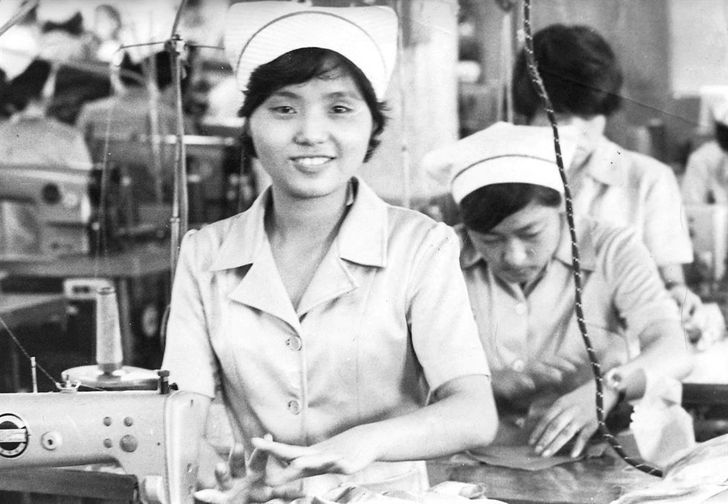
A sweatshop worker / Korea Times file
“Sam Soon-ee” is based on the author's years of research and interviews with nine elderly women who worked either as nannies or sweatshop workers.
Despite their pivotal role during the industrialization period, the author said the ladies were unwilling to share their full stories because they deemed it an experience they didn't feel proud of.
“It's no surprise that they were reluctant to share their stories,” he said. “The girls lived apart from their families as they migrated to urban areas for work. Many bus girls and sweatshop workers lived in dormitories owned by their companies. Back then, Korea was much more male-dominated and hierarchical than it is today. In a patriarchal society, poorly educated young girls from humble beginnings had nowhere to go, except the blue-collar jobs for unskilled workers. They were the marginalized and treated inhumanly without due respect.”
Through his book, Jung pays a tribute to the forgotten heroes, albeit belatedly, for their sacrifices.
Many of the young workers were breadwinners. Their parents were poor and struggling to feed their children. In a Confucian society that preferred sons over daughters, the girls were expected to shoulder part of their poor parents' burden to feed other family members. In those days, farm girls were expected to find jobs in urban areas once they completed elementary school to relieve their parents' financial burden and help their male siblings go on to university.
According to data cited in “Sam Soon-ee,” about 80 percent of bus girls in the 1970s were aged between 18 and 22, and 77 percent of them were born in rural areas.
“Employers preferred girls from rural areas over girls raised in urban areas because they believed the former were obedient, rarely cheated employers out of the bus fares they collected and didn't complain much about their tough working conditions,” the book read.
Middle school graduates accounted for 14 percent of all bus girls in the 1970s.
The young workers endured various abusive practices in their workplace. They had long working hours without proper rest and suffered inhumane treatment. Oftentimes they fell victim to beatings or sexual violence.
Their salaries, however, didn't reflect their toil and long working hours.
In 1975, an average bus girl received a 22,347 won monthly salary. The average monthly living expenses for a five-member household at that time was 78,054 won.
Many young workers were very frugal and managed to save a certain portion of their income even after sending up to 60 percent to their parents. Their male siblings were able to continue to study and go on to college thanks to their sacrificing sisters.
“Sam Soon-ee” observes the rise and fall of the three jobs.
In the 1970s, being a nanny was no longer appealing to less educated young women in terms of monetary compensation.
They chose to become bus girls, seeing it as a stepping stone to their next career.
The Korean economy at that time grew enough to feed the people and famine was no longer a policy issue in the mid-1970s.
Hiring nannies became challenging for many urban households due to rising salaries together with the rapid fall in supply of the workforce.
For some families, hiring nannies created an unexpected problem. Full-time housewives from wealthy families had plenty of free time as their nannies took care of most chores and they filled that time with other men. Some housewives' extramarital affairs were reported in the media, causing a stir.
The three jobs largely disappeared as economic growth and universal education for girls started to become the norm.