When in a shrinking society, do as BTS does
Author warns of brutal competition
By Kang Aa-young
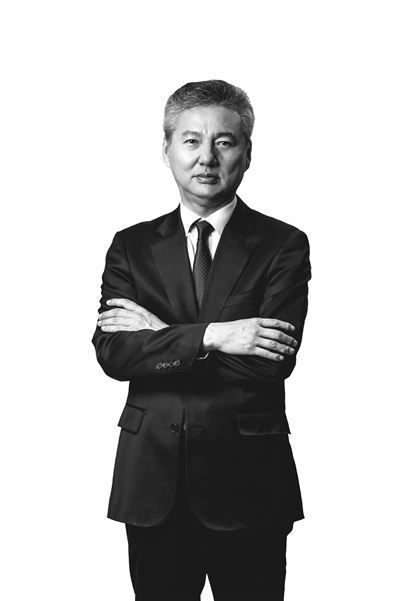
Hong Sung-guk
Like other global economies, Hong Sung-guk, author of the new book “Shrinking Society: Dump The Illusion of Miraculous Economic Growth,” said Korea has undergone a shift since 2008 when the financial crisis hit all across the globe.
Hong, former CEO of Mirae Asset Daewoo, said in the past, the economic pie had continued to grow and it reached its peak in the late 20th century.
“To have an idea of what a shrinking society exactly means and how it is different from the past, let's suppose there is a pizza and eight people are eating it,” he said in an interview with The Korea Times.
“In the past, the size of the pizza had continued to increase as the economy grew every year. So each person was able to eat a bigger portion year after year. But today, the size of the pizza never grows and eight people are eating the same portions of pizza every year. If someone wants to eat a larger portion of it, they must fight with others for it and they can get a bigger portion of pizza at the expense of others. This is happening because the pizza, which is the economy, is not growing.”
Hong said the superstar K-pop group BTS is the top dog of the shrinking economic pie.
“People are longing for a chic, elegant leader as they are wrestling with their everyday lives in the worsening economy,” he said. “BTS is the exact model for a chic, elegant leader. When you look at their lyrics, you'll see a big difference from other K-pop singers. BTS is a game changer. In the past, singers branded themselves as rebels or fighters who resist the existing order or try to destroy it. BTS lifted song lyrics to the next level and was able to pull together a global fandom with this capability.”
The author views the global financial crisis in 2008, which began in Wall Street, as a turning point from which the entire world is seeing a shrinking economy.
He observes some of the characteristics of a shrinking society are oversupply of goods caused partly by population decline and partly by a rapid increase of productivity, an unprecedented level of debt and the widening income disparity.
“In the past, people were optimistic about the future. Even though they were faced with certain challenges at different times of their lives, people in general didn't lose hope,” he said. “But at a certain moment in the past, people became pessimistic about the future.”
In Korea, annual economic growth has hovered in the 3 percent range.
The author said policymakers were clumsy to respond to the shift from the expanding to the shrinking economic pie and their poor understanding of economic reality has made things worse. “Their mindset is still locked in the era of the expansionist society,” he said.
He called for a revolutionary change in policy remedies to cope with the shrinking society.
Hong said Korea's engines for economic growth, such as shipbuilding, steel, chemical engineering and cars, came to lose their competitive edge because of China. China has pushed for an industry strategy that aimed to emulate Korea's. Korean businesses suffered from oversupply of commodities after Chinese manufacturers began to produce the products and thus facilitated global competition, he said.
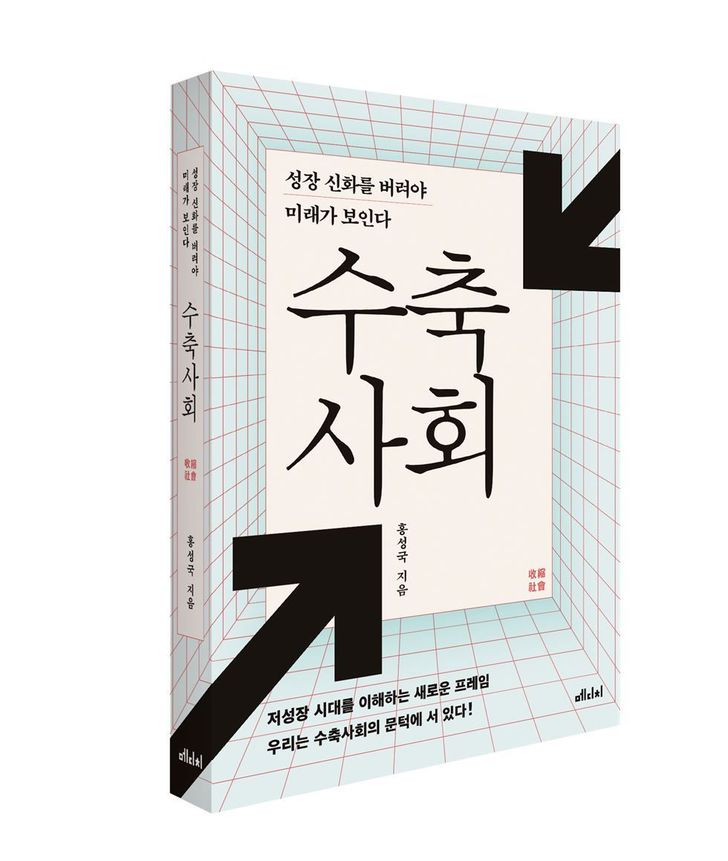
“Shrinking Society: Dump The Illusion of Miraculous Economic Growth” by Hong Sung-guk
In the book, the author reveals his fundamental pessimism about the Chinese economy. “Will socialist capitalism be feasible? In a socialist society, the state is supposed to intervene in every sector, from politics to business,” he wrote. “Contrary to this, in a market economy, the private sector has autonomy and actors in the sector make their own decisions. The role of the state is minimal and it intervenes only in areas like welfare. Hence the dilemma for China. Once democracy and capitalism are in place, there will be no place for the Communist Party. So the term of socialist capitalism is in itself contradictory.”
In the period of the shrinking economic pie, Hong says the United States and China are equally important for the South Korean economy and criticizes divisive political leaders who try to curry favor with one or the other.
He said conservatives tend to side with the United States, whereas liberals try to stay close to China because of their main agenda ― unification of the two Koreas.
“Corporate leaders try to keep a balance between the two countries, but some are closer to China because of business opportunities in China and Southeast Asian countries which are under the Chinese influence,” he said. “Such a dichotomy is suicidal for the country. The United States and China are equally important for Korea. If public opinion is divided between pro-China and pro-U.S. forces, chances are highly likely that Korea will be victimized in a heavy global competition in a time of the U.S.-China rivalry.”