How music upgrades flavor, taste of cookies

Haitai Confectionery's “Matdongsan” / Korea Times file
New book says artistic quotient helps confectionery business grow
By Kang Hyun-kyung
Turn on the music, and cookie dough will feel the groove.
Thirteen pieces of a wide range of music from Korean folk songs to classical music are being played one after another for 20 hours a day while cookie dough is fermented at a confectionary factory in the midwestern city of Cheongju.
“Music therapy” was used by Haitai Confectionery when it produces its decades-old hit cookie “Matdongsan,” which was created back in 1975.
According to CEO Youn Young-dal, the music's sound waves helps facilitate yeast activity inside the cookie dough and this has played a part in making Matdongsan a favorite sweet treat for Koreans for decades.
In the book, “Cookies Are Hearts,” released earlier this week, Youn said the recipe for the hit cookie was based on the traditional Korean cookie yakgwa.
“Just like yakgwa, cookie dough is fried and then its surface is coated with honey or syrup,” the book states. “Over half a century has passed since the cookie was introduced but it still captivates Koreans.”
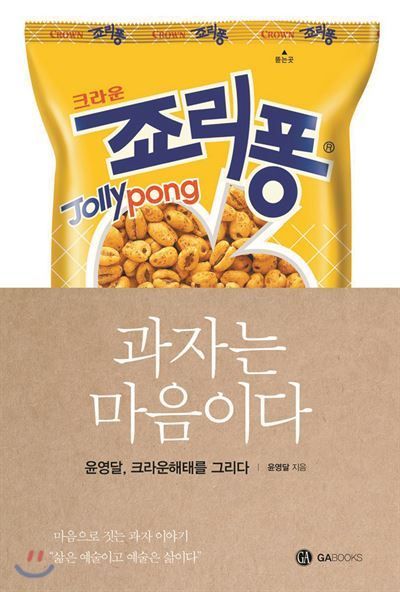
“Cookies Are Hearts” by Youn Young-dal
According to Youn, the unique fermentation process holds the key behind the long-lasting popularity of Matdongsan.
He said Matdongsan was one of the confectionery's exemplary cookies featuring “artistic quotient” (AQ) based corporate management.
Youn claims he was the world's first corporate leader to introduce an artistic quotient to business management. He said he personally experienced the power of the arts in healing a wounded soul in the late 1990s when his business went through its toughest challenge in the wake of the Asian Financial Crisis.
He was extremely stressed out at that time because his business was in peril. His wounded soul, however, was healed miraculously while listening to music played on the traditional musical instrument, “daegeum,” a long bamboo transverse flute.
Since the eye-opening experience, Youn has become a patron of the arts. He has also used music and other arts when manufacturing some of his company's cookie brands.
He said his experiment turned out to be a success, noting that AQ-based corporate management helped his business grow.
Citing a sales increase of its biscuit Couque Dasse, which was released in 1986, after an S-shaped chocolate line was added to the cover of the biscuit, he said AQ-based management works.
“That small, tiny change has created a big sales increase. Since then Couque Dasse has become one of the symbolic biscuits representing Haitai Confectionery's AQ management,” he writes.
The “Cookies Are Hearts” covers the rise of Haitai to becoming the nation's largest confectionery from a small mom and pop store based in Seoul near Seoul Station. His parents founded Young-il Dang confectionery before the Korean War.
Youn said the 1950-53 Korean War was a turning point for his parents' confectionary business.
His parents were forced to shut down their business when the communist forces marched on Seoul. After they relocated to Suwon City, they started again from scratch.
His father made cookies in a make-shift tent set up near the U.S. military base there and his mother sold them to the soldiers.
“My father and mother were business partners,” he said. “Word about my father's cookies began to spread among U.S. soldiers as some liked them very much. Some soldiers paid with flour and butter, instead of cash.”
The quality flour and butter from the U.S. military camp helped his father make delicious cookies. Some soldiers taught his father how to make cookies by sharing their experiences with American cookies and biscuits. Some soldiers even explained to his father the sweet treats they'd like to try.
Quality ingredients and “knowhow transfer” from some of the U.S. soldiers helped his father make better cookies.
Youn observed the Korean public's perception about sweet treats has changed a lot over the past decades.
In the past, cookies were popular because they not only satisfied people's taste buds but also served as a cheap source of calories for a long time.
But eating sweet treats has become “a sin” as the public has been educated regarding their health risks.
Today, cookies, biscuits and other sweet products are portrayed as a source of concern as the notion of sweet indulgence has changed.
The shift in consumers' perception toward sweet treats poses a challenge for confectionary makers such as Haitai.
But Youn tries to be optimistic about the future of his business by putting forth the idea of healthy cookies.
Youn observes people's desire for sweet things is something inevitable as for many, cookies and biscuits are simply irresistible.
He says their longing for sweet products dates back thousands of years because, along with carbohydrates, they are a cheap source of calories which are needed for human activity. “Human beings are attached to sweet treats and longing for cookies and biscuits is similar to a basic instinct,” he writes.