'Shamanism is part of genetic code for Korean masterpieces'
Book unravels driver behind great Korean paintings
By Kang Hyun-kyung
Unlike some Westerners' perception that Koreans are dull and accustomed to doing long hours of tedious work without complaint, Koreans are fun-loving people who know how to add excitement and enthusiasm to their lives.
Choi Kwang-jin, author of the book “Koreans' Sense and Sensibility of Art Revealed in Paintings,” says the state of euphoria _ a critical element in the making of several Korean artistic masterpieces _ originated in the practice of shamanism which has been part of this society since ancient times.
According to him, such Korean traits have prompted some to excel in their fields of art and creative works as seen in ancient murals drawn during the Goguryeo Kingdom in the oldest days and modern artworks as demonstrated by globally renowned video artist Paik Nam-june.
Koreans, however, have gradually lost their artistic identity as sweeping modernization took place at the expense of “Koreanness,” the art critic laments.
“Fun and excitement which lead to a state of euphoria has long been the source of inspiration for many Korean artists,” he said. “Artists reach the mental state while experiencing rituals as shamans connect living people to those in the afterlife. They are therapists as they heal the wounds of people and thus help them move forward despite torment and adversity.”
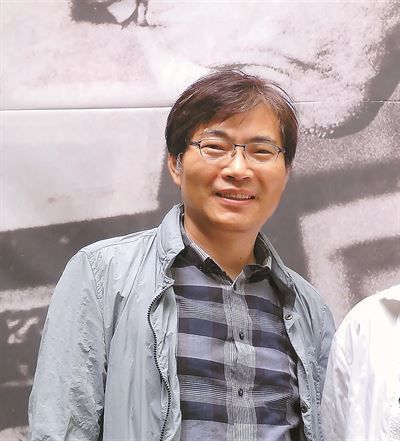
Choi Kwang-jin, author of the book “Koreans' Sense and Sensibility of Art Revealed in Paintings” / Courtesy of Choi Kwang-jin
Choi said the impact of shamanism on Korean art is profound and many masterpieces are the results of artists who were driven by the unstoppable energy they experienced during encounters with shamanism.
The shamanism he refers to differs from the one people experience today. “I mean shamanism as a cultural element that has been part of this society since ancient times, not as a religion or superstition as is common today,” he said.
According to him, a spiritual state where one can feel ultimate satisfaction propels Korean artists to pull together many great works which otherwise they would never have produced.
He said the late Paik was one of the modern Korean artists who was able to maximize his artistic talent to produce his groundbreaking art after being inspired by shamanism.
“Paik was raised in shamanistic culture,” the art critic said. “His father was involved in trading and traveled overseas a lot. To help his father's business go smoothly, his mom invited a shaman every October for the annual ritual practice of gut. Paik had spent his childhood years experiencing the ritual, which lasted all night long, up close and personal.”
Choi said Paik's art is rooted in his childhood experiences of shamanism, and for this reason the critic calls the late artist “an international shaman in art.”
“Like a shaman who connects the living with the dead through ritual practices, Paik used video art to bridge modern and old days, as well as the East and the West.”
The same unstoppable energy also encouraged artists to produce their masterpieces, Choi said.
Oil painter Lee Jung-seob (1916-1956) produced “Brown Ox” in 1954 when he lived in despair and hopelessness as he was forced to live separately from his wife and three children due to poverty.
Park Saeng-kwang (1904-1985) was able to make a leap forward in his painting after an accidental encounter with shaman Kim Keum-hwa.
“Shamans are not supposed to pursue money and fame. They are therapists as they share and relieve the pain of suffering. So gut is a form of general art and it is also part religion and festival,” Kim was quoted as saying.
The shaman was decisive in turning Park into an artist who produced masterpieces in his sunset years.
Choi has launched a campaign to restore the positive energy in Korean arts, saying the publication of his book is a starting point.
He takes his job seriously.
“I think we need to launch a kind of campaign to restore our artistic sense that has been passed down from one generation to the next for centuries because it's a starting point to have our own independent cultural movement,” he said.
Choi said his new book offers a guided tour to Korean art, noting his target readers are Westerners rather than Koreans. To help foreign readers, he compares Korean artists and their works to Western painters in every chapter.
He said an English edition of his new book will be published soon.