Author offers tips for happy life after retirement
New book asks if you are happy
By Kang Hyun-kyung
Back in 2002, Oh Jong-nam, then commissioner of Statistics Korea, wondered why Koreans no longer threw parties to celebrate their 60th birthdays, a tradition called “hwangab” to commemorate their longevity.
“I realized the disappearance of the 60th birthday celebration was linked to Koreans' extended life expectancy,” Oh, 66, said in a recent Korea Times interview.
In 1960, Koreans' life expectancy was 52. In 2001, over four decades later, the figure surged to 76.
“Korea's life expectancy would go up further to 90 or so for people my age,” Oh said. “This means that average Koreans have to live 30 years or so without incomes, considering many people retire from their work in their late 50s.”
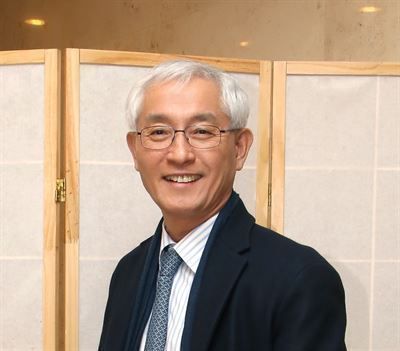
Oh Jong-nam, former commissioner of Statistics Korea, has released a new book _ “Are You Happy?” In this collection of his published columns, Oh says that due to extended life expectancy, Koreans on average will live three decades without income and thus should be mentally prepared for their lives after retirement./ Courtesy of Oh Jong-nam
Depending on people and their wealth, Oh, the author of the newly released book “Are You Happy?,” says living without income for three decades could be a disaster.
In his third book, a collection of his published columns, he says people can still be happy if they change their minds.
To lead a happy life after retirement, the author recommends: Don't be too ambitious. Enjoy where you are.
The question about happiness had haunted him occasionally, even after he left Statistics Korea in 2004 for another mission in Washington, D.C. He served as Executive Director at the International Monetary Fund (IMF). While living in Washington for two years, he met plenty of “gireogi moms,” or Korean women who were separated from their spouses for their children's education in the United States.
This inspired Oh to explore what happy families are and how people can lead happy lives after retirement once their children have grown.
“In general, happiness refers to the mental state one feels when they achieve what they have longed for,” he said. “So here we have two factors that are linked to happiness _ one is how much you achieve, and the other is one's desire of what they are longing for. Considering that happiness comes when one fulfills their expectations, I think one can reach the goal if they lower their expectations.”
In this sense, he claims the antonym of happiness is discontent, not unhappiness.
Oh defies the popular belief that money is a source of happiness.
He says money is necessary so one can meet their basic human needs. However, once those needs are met, he said money is no longer critical to making people happy.
“So I basically agree with economist Richard Easterlin on his findings about happiness,” Oh said. “But my happiness theory is more than his in that I put forth the solution in addition to analysis.”
In the 2004 article “The Economics of Happiness,” Easterlin reviewed several sources of happiness, including health, marriage and money, to find what makes people feel happy. Regarding money, the economist said it is not a direct source of happiness. He said Americans' average income per person more than doubled between 1972 and 2000, but there were no meaningful differences in terms of happiness in the years 2000 and 1976.
Happiness has emerged as a buzzword in Korea as the nation encounters some paradoxical situations. Korea's per capita income has risen to almost $30,000, a dramatic increase considering what it was in 1962 when the first phase of the five-year economic development plan was implemented. Korea's per capita income at that time was less than $100. The figure rose 10 times by 1977.
The nation has since become wealthier, and unlike the 1960s, starvation is no longer an issue.
Prosperity, however, has come with a dark shadow.
South Korea tops the suicide rate among Organization for Economic Cooperation and Development (OECD) countries. Amid the affluence, poverty of the elderly has emerged as a social problem.
This gloomy aspect sparked suspicion about Korea among some developing countries, including Malaysia, which once tried to emulate Korea as their economic growth model.
“There was a Malaysian intellectual who raised skepticism about Korea as a model for developing countries in his keynote speech at the University Leadership and Governance Conference in August 2017,” Oh said. “Speaking on the topic of decolonizing knowledge, the wise man said that although Korea has achieved miraculous economic growth, it also has the highest suicide rate.”
Oh says social problems such as a high suicide rate and poverty among seniors are the unintended consequences of Korea's decades of single-minded pursuit of economic growth at the expense of people. “We have long used the term 'human resources.' Having no natural resources, we had to rely on human capital to make progress,” he said. “We now realize that such a notion is flawed because the term reflects the use of humans as tools, not in letting them find a purpose.”