Recent Books
How to become a celebrity
.jpg)
Lee Hyun-sook; Intelligence Channels: 256 pp., 13,500 won
Being a celebrity is not a job - it is a word that refers to famous people. Nonetheless, according to many occupation preference surveys of elementary school students, celebrity often tops the list.
Veteran screenwriter Lee Hyun-sook talks about the nuts and bolts of how to become a famous personality and what it really takes to stay in the limelight.
The book covers specific ways of making an eye-catching portfolio, making a good impression on interviewers, and even major entertainment management companies’ appearance preferences in their search for “talent.”
“Only one percent of all wannabes end up becoming a celebrity. It is that hard,” she wrote.
The current KBS’ Entertainment Weekly writer quoted many stars such as Jang Geun-suk, Kim Nam-joo and Shin Hyun-jun to add vividness to her story.
Referring to tough screen-out procedures and the competitiveness in the industry, the author wrote that having a specific action plan and the right attitude are the most important qualities.
Jung MIN-HO
The Current Meaning of Joseon Tongsinsa Road
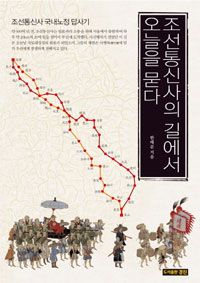
Han Tae-moon; Kyung Jin Publishing Company: 400 pp., 22,000 won
This book attempts to shed new light on Joseon Tongshinsa, the diplomatic delegations of the Joseon Kingdom (1392-1910) to Japan for cultural exchanges, which were sent irregularly over four centuries before being stopped in the early 19th century.
Han combs through a wealth of historical records to create a vivid account of how the delegations _ which included diplomats, artists, cooks, interpreters, doctors and soldiers _ prepared for their trips touring different Korean regions before reaching the port of Busan, where their ship for Japan awaited.
The author argues that the delegation’s preparation in Korea was as historically significant as their activities in Japan because it developed as a channel of cultural exchange between the provinces. Joseon sent its first Tongsinsa to Japan in 1429 and its final one in 1811, with about ten trips between those years. The delegations, consisting of about 300 to 500 individuals, stayed in Japan for about six to 12 months
BAEK BYUNG-YEUL