Recent books-Life
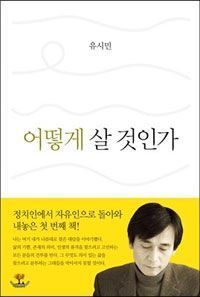
How to Live
Rhyu Si-min; Aporia: 344 pp., 15,000 won
On the heels of his surprising retirement from politics, former Minister of Health and Welfare Rhyu Si-min released a new book, “How to Live.”
“Who am I? What am I? How should I live and die? What are the secrets of having a happy and fulfilling life? And what do we need for it? These are inevitable questions not only for young people but also for those who are may be on the last page of their lives,” Rhyu wrote.
Such questions might have already been oversold in many forms. However, his background, as a student leader of an anti-government movement under strongman Chun Doo-hwan’s dictatorial administration in the 1980s and an iconic progressive, make the questions still interesting and worth thinking about.
Answering philosopher Albert Camus’ questions, “Why not just commit suicide?” Rhyu explores the meaning of life, death and connections between the two. The atheist’s attempt to find answers to these questions does not end up religiously, providing logical and philosophical stimulus to the readers.
Sentences are short and clear, but the book seems rather emotional than rational with personal stories and confessions about his 53-year whirlwind life.
JUNG MIN-HO
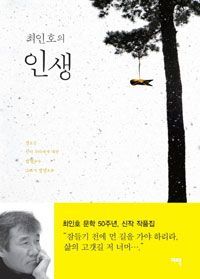
Life
Choi In-ho; Yeobaek: 288 pp., 14,000 won
In his new book, Choi In-ho looks back on the past five decades he spent as a writer, how he remembers some of the interesting people he met, and most importantly, how these memories are shaped by his current struggle against cancer.
The 58-year-old, known for his critically-acclaimed novels "Another Man’s Room,’’ "Deep Blue Night’’ and "Tower of Ants,’’ has been writing fewer books since being diagnosed with cancer in 2008. The first part of "Life’’ is a collection of short essays he wrote for a Catholic magazine after his first surgery in May last year and expresses his sadness, anger and desperation to continue his literary work.
The second part shows Choi’s talent for fiction, consisting of imaginary interviews of people he met during his career as a writer, such as the late Stephen Kim Sou-hwan, the former Archbishop of Seoul.
Kim Tong-hyung
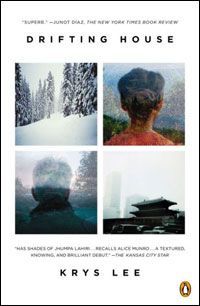
Drifting House
Krys Lee; Penguin, 224 pp., 18,000 won
Seoul-based author Krys Lee straddles the peninsula and the United States in her acclaimed collection of short stories, “Drifting House,” to probe identity issues associated with the Korean diaspora.
Recently released here in paperback, “House” follows a cast of characters that travel through tiny apartments and Koreatown strip malls as they struggle to reconcile a painful past with the rewards of the country’s rapid economic development.
In “A Temporary Marriage,” the protagonist, who arrives in California on a “K-fiance” visa, struggles to live with a stranger she is supposed to marry. “The Goose Father” explores the loneliness of a Korean man who sends money to his family in Boston, where his children are studying. The collection also delves into the experience of North Koreans living in the United States and escaping from the Stalinist land. Lee has a knack for building tension with a short space and for portraying a slice of the Korean experience rarely touched in English.
KIM YOUNG-JIN