Recent books
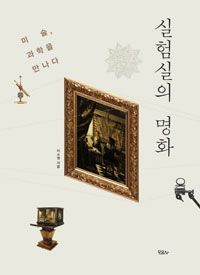
Paintings in Laboratory
Lee So-young; Mojosa: 284 pp., 16,800 won
Science and art have one thing in common — they all start from observation. They also interpret the world we live in, though in different ways. It’s telling that famous scientists such as Leonardo da Vinci and Galileo Galilei also displayed a talent for painting.
In this book, art historian Lee So-young explores the connection between science and art, taking a close look at the lives of scientists who had a passion for art. Lee also illustrates how they employed their scientific knowledge in the methods and styles of expression.
Vincent van Gogh’s paintings were particularly popular among scientists for a different reason including psychopathologists, who tried to use it in interpreting the master artist’s mental state. His paintings are particularly popular among astronomers who also try to trace when and where Van Gogh painted by researching the skies portrayed in his paintings.
Spanish pathologist Santiago Ramon y Cajal won the Nobel Prize in Physiology or Medicine in 1906 in recognition of his work on the structure of the nervous system, and Lee tells the story of how Cajal’s landmark study was inspired by a simple sketch.
Kwon Mee-yoo
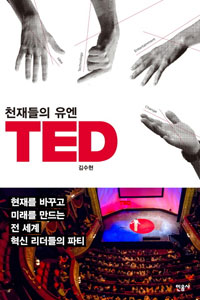
TED, the UN of the Geniuses
Kim Soo-hyun; Minumsa: 252pp., 13,500 won
By offering a free online platform for global opinion leaders, the TED (Technology, Entertainment and Design) Conference has established itself as an influential force in promoting new ideas and encouraging innovation.
Every speaker at the conference is allocated 18 minutes to address the audience. The list of previous high-profile speakers includes former U.S. President Bill Clinton and British author Alain de Botton. In this book, Kim Soo-hyun, a journalist at SBS television, provides a simplified summary of the history of the conference, how it evolved, and the key points of some of the memorable speeches delivered there. While TED Conferences are keenly watched by Koreans learning English, Kim advises readers to show more interest in the discussions that take place.
Baek Byung-yeul
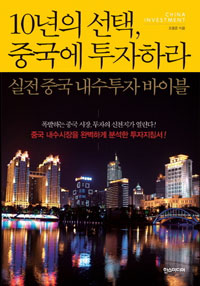
China Investment
Cho Yong-joon; Hans Media: 337 pp., 17,000 won
China’s future seems rosier than ever. It surpassed the United States in annual trade volume last year and the world’s second largest economy is poised to outstrip Europe in car production this year for the first time.
This book is for investors who are still cautious about jumping on the invest-in-China bandwagon.
The author says it still is not late to invest in the potential-rich nation, citing the enormous domestic market that is about to thrive in many sectors, from healthcare to casinos.
He explores how the Chinese economic system is intertwined with the political one and provides tips for making worthwhile investments in that complicated country.
He repeatedly says if there is one certainty for the next 10 years in terms of economic growth, it is China’s domestic market. Just like all other investment books, however, it does not provide definitive answers for making money.
Jung Min-ho