17-year-old preaches diversity
Ban writes fairytales of 6 nations
By Chung Ah-young
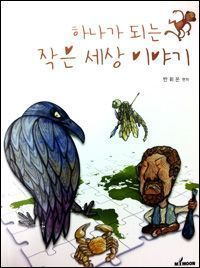
The book titled “Tales of a Small World” consisting of 16 fairytales from six countries is designed to help children attending a newly opened multicultural educational institution Jiguchon International School.
.jpg)
Ban Hwi-eun
Ban Hwi-eun, 17, was one of two Asian students in her class in Australia when she was seven. At first, she felt like an outsider as she was outwardly different from the majority of her classmates.
But she remembers she was never bullied, estranged or treated unfairly by her peers or teachers. Rather her school cared more about helping her learn the language and hang out with her friends.
After moving from one country to another and back to Korea, her experience is becoming an asset on how to see this society going multicultural.
Ban joined a multicultural volunteer group called Global Sarang Nanum or G4W to help immigrant workers and biracial children when she was 11.
She has recently released a book titled “Tales of a Small World,” which consists of 16 fairytales from six countries — China, Ghana, Sri Lanka, Vietnam, the Philippines and Mongolia. Written in Korean and English, the book is designed for children attending a newly opened multicultural educational institution Jiguchon International School. Located in Oryu-dong, Seoul, the school was launched two years ago to offer education for multiracial children who could not adjust to other schools.
“I want to help them understand each other’s culture through fairytales,” she said in an interview with The Korea Times.
Ban, an 11th grader attending the Asia Pacific International School in Seoul, interviewed foreign workers, migrant wives and other foreign residents living in Korea to collect stories about their homelands. Then she translated them into English.
She said her experiences in the United States, Canada and Australia have inspired her to better help those in need. The school policies are important to teach students about cultural diversity, she said.
“There might have been implicit discrimination or bias toward me back then but they never explicitly expressed it at school. The school policy forbade it and rather taught cultural diversity through curriculums and regular events,” she said.
“For example, it had some programs teaching the diversity of cultures such as an international week or a carnival in which students share their countries’ cultures such as foods and a project to study different cultures.
“I think Korea is now in a transitional period which is important to decide the nation’s fate on how to embrace them.”
While engaging in volunteer activities, she met numerous biracial children who had suffered trauma. Ban pointed out that bullying or ostracism is the most serious problem facing biracial children — not because of their behavior but their different skin color. But what is worse is that some teachers and school officials don’t stop this. “Their peers’ ostracism coupled with a lack of attention from teachers and school officials is worsening their situation. School policies embracing different cultures are needed in Korea,” she said.
She has helped the volunteer group for more than six years now and is seeing some change in the social atmosphere.
“The interest — whether it’s positive or negative — in multicultural families is getting higher. I hope distorted perceptions toward them can be removed,” she said.
She also said the government should come up with measures for multicultural families in a way not to give reverse discrimination against Koreans. “Now it’s more urgent to expose their growing presence in Korean society through the media or other channels to raise awareness about them,” she said.