'Les Miserables' effect
.jpg?w=728)
Hugo's classic carries contemporary resonation

A five-volume series of “Les Miserables” by Minumsa
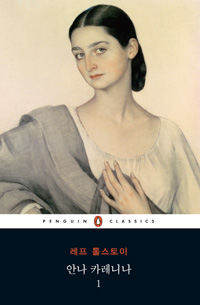
“Anna Karenina” by Penguin Classics Korea
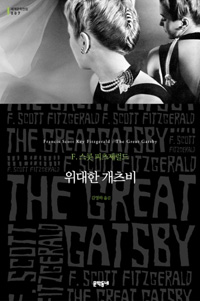
“The Great Gatsby” by Munhakdongne
By Chung Ah-young
Apparently, sitting through a 158-minute movie isn’t enough. The immense popularity of the film, “Les Miserables,” which has so far drawn nearly five million viewers here, is boosting the sales of Victor Hugo’s original book.
Publishers hope that the international acclaim following the film’s impressive trophy haul at the Golden Globes Awards and a slew of nominations ahead of the Oscars is expected to further fuel the popularity of the paperback.
Literary classics have been adapted to the screen galore but it’s hard to recall if there ever was a time when a movie drove up the sales of its print edition this dramatically.
Minumsa, a major Korean publisher, said it sold more than 100,000 copies of its five-volume version of“Les Miserables” in the past two months, which can be seen as a surprising tally given the current situation of the book market. Penguin Classics Korea said it had sold more than 50,000 of its copies of the book since the domestic release of the film.
Adapted from the eponymous Broadway musical, the film starring Anne Hathaway, Hugh Jackman and Russell Crowe is proving one of the biggest things to happen to the book market in recent years.
So why are Koreans so passionately reacting to “Les Miserables,” both the movie and book? Is it the bad economy, which has widened the rich-poor gap into a massive gulf and brought social instability, which enabled the tale of Jean Valjean, Fantine and Cossette hit the heart?
Or is it simply that most Koreans have never read Hugo’s lengthy original and remember only the children’s version of the tale they saw in picture books and cartoons, and were surprised by the complexity of the plot and depth of characters that were better represented in the movie?
“I thought almost three hours would be long enough and even boring but I was overwhelmed by the film and decided to read the original to find out what was behind the movie,” said Lee Sung-hoon, an office worker.
He said he only knew the simple storyline of the tale although he hadn’t read it. But after seeing the movie, he found out its gravity was beyond his imagination.
“Various characters around Jean Valjean and its social background gave me a kind of shock to rethink the tale,” he said.
Written by French author Victor Hugo in 1862, “Les Miserables” was first fully translated from French to Korean by Chung Ki-soo, a veteran French scholar in 1962. Before his translation for Minumsa, the work was published only in an abridged version or a retranslation from the Japanese version.
Minumsa said that even if you saw the movie or musical, you cannot say you understand “Les Miserables.” “The adaptations cannot express the literary symbols and gimmicks hidden in the perfect grand narratives. Without reading the original, you just know a surface part of the original like a child’s version,” an official of the publisher said asking for anonymity.
She said the publisher didn’t expect such big sales of the original because they are in five volumes. “The original is very lengthy. Although the movie is some three hours long, it cannot depict every scene and every character on the screen in the same way with the original. After seeing the movie, people want to know the whole story and details the film can’t portray. The classics are our steady sellers but it’s true that the film’s success opens the book to a new audience who might have otherwise not read it,” she said.
The publisher said that such a trend actually began with “Pride and Prejudice” by Jane Austen, which was adapted into a new big screen edition in 2005. But Les Miserables is unusual in creating such a buzz.
She finds the explosive popularity lies not only in the timeless message of the classics but also on the similarity of the social situation between present-day Korea and France 150 years ago. “People might find some relief from the work as Korean society is undergoing a severe social divide between the rich and poor. People want to relieve their frustrations from Les Miserables,” she said.
Park Jeong-sun, 36, who read the original, said that the film could not have succeeded here if it had been made some years ago. “Now people’s pent-up anxiety over politics and the economy are reaching a peak. I think that individual Koreans are not that happy in this unequal society. In this sense, a story of a miserable man 150 years ago seems like our own story,” she said.
Not only Minumsa, but other publishers are jumping onto the bandwagon to use film tie-in marketing as they see the current “Les Miserables” effect as sustainable for the time being. With “Anna Karenina” starring Keira Knightley and Jude Law and “The Great Gatsby” starring Leonardo DiCaprio and Tobey Maguire waiting to be released in March and May respectively, the publishers are getting keen on their tie-in marketing.
So far, Minumsa has sold 160,000 copies of “The Great Gatsby” by F. Scott Fitzgerald and 60,000 copies of “Anna Karenina” by Leo Tolstoy, the sales of which are expected to rise after the pending movie releases. Minumsa will re-jacket them to incorporate photos of the film’s poster and join the promotion in which people can exchange their film ticket for the book through a promotional event.
Munhakdongne which also began publishing the world literature series in 2009 will cooperate with the film distributors to use the movie tie-in works of “Anna Karenina” and “The Great Gatsby.” Penguin Classics Korea will also use the three-volume “Anna Karenina” as a gift for those who see the movie.
It remains to be seen how long the “Les Miserables” effect will continue in Korea. Hugo would certainly wish forever: “So long as there shall exist, by reason of law and custom, a social condemnation, which, in the face of civilization, artificially creates hells on earth, and complicates a destiny that is divine, with human fatality; so long as the three problems of the age the degradation of man by poverty, the ruin of women by starvation, and the dwarfing of childhood by physical and spiritual night _ are not solved; so long as, in certain regions, social asphyxia shall be possible; in other words, and from a yet more extended point of view, so long as ignorance and misery remain on earth, books like this cannot be useless,” Hugo wrote in his lengthy preface of “Les Miserables.”