Book forecasts trends 2013
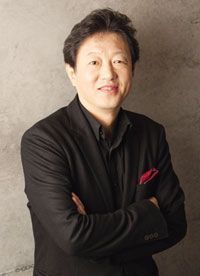
Kim Rando, author of “Trend Korea 2013”
By Chung Ah-young
For Koreans, this year might be remembered as a murky, cruel time due to prolonged economic woes and social uncertainty. Crimes are getting more heinous and consumers are tightening their belts. Amid confusion and insecurity, a dark year usually generates unique social phenomenon, pushing people to find their shelters to avoid the harsh reality.
“Trend Korea 2012” depicted the trends that would change the way people ate,
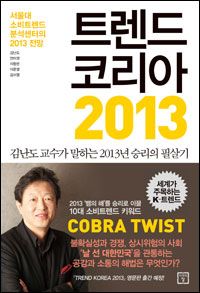
“Trend Korea 2013” by Kim Rando et al.; Miraebook Publishing: 399 pp., 16,000 won
spent, played and lived this year and many of the predictions were proven true.
Now “Trend Korea 2013” written by Kim Rando, a professor at Seoul National University (SNU), and his compatriots, predefines the next year’s trends in two words — COBRA TWIST.
COBRA TWIST is the acronym for 10 trends — City of hysteria; OTL ... Nonsense; Bravo, Scandimom; Redefined ownership; Alone with lounging; Taste your life out; Whenever U want; It’s detox time; Surviving a burn-out society; and Trouble is welcomed.
Widely known as a mentor for adolescents in his million selling book “It Hurts Because It’s Youth,” the author has returned to his profession as a professor and head of SNU’s Consumer Trend Research Institute.
He forecast that next year will be relatively calm from social and cultural aspects as no big events such as the Olympics, the World Cup or expos are planned. Under the economic recession without big cultural and social events, consumers and corporations tend to follow their free will, the book says.
According to the Chinese Zodiac, the year 2013 is the Year of the Snake, which is conventionally deemed as an evil creature. “COBRA TWIST” is also a sort of wrestling hold and martial arts technique, which begins with a wrestler facing their opponent’s side. Kim has selected these words hoping that readers can get the appropriate information about confronting harsh reality as this technique is used to save the wrestler from defeat.
“People hope the New Year will be better than the last and that positive changes will come along. But unfortunately, the prospect for 2013 is not that rosy as the economic figures still remain gloomy,” the book says.
The economic outlook will be as dark as that of the previous year. This social uncertainty drives people into hysteria (City of hysteria). In this state, they lose their sense of solidarity with communities such as a family, school and company by keeping their distance from others and remaining alert to the outside. “Compared to the past, there are various devices and systems to protect the lives of the individuals but the sense of insecurity people feel is getting bigger,” the book says. “Human relations are getting weak and our society is following in the footsteps of that of Japan. In that society, we cannot even know about the death of a neighbor living next door.”
In this situation, nonsense appeals to people as imagination and emotion prevail rather than logics and common sense. In the economic downturn, people respond to fun marketing with lighthearted wit and humor (OTL .. Nonsense!). OTL is Internet slang that means frustration depicting the shape of a man kneeling down. The trend is reflected in the comedy program “Gag Concert” which recreates this nonsense as a humor code. “In this nonsense-dominated society, the popularity of Psy was inevitable,” the author says. Meaningless repeats mixed with a strong techno beat permeate Korean singer Psy’s “Gangnam Style” which has addicted the world. “Rhythm rather than meaning, and emotion and addiction rather than rationality are the core of the success of the song,” the book says.
Kim also writes that Korean mothers begin to change their childcare philosophy from “tiger moms” to Scandinavian moms (Bravo, Scandimom). “It’s a good sign for Korean moms who were long obsessed with strict rules and competitive goals to accomplish. They are now beginning to change educational philosophy for the happiness of their children rather than their own satisfaction,” the book states. Also, this trend of Scandinavian lifestyles will make them care about environmental issues and rational decisions in consumption.
In the book, consumers won’t insist on ownership (Redefined ownership), choosing rational and cooperative consumption rather than purchasing due to the development of technology and access to the Internet. The trend will create social values through “rentalism,” “sharism,” and “donorism.”
People cocoon in their shelters alone and enjoy their own pleasures (Alone with lounging). They spend on themselves as the number of single households increases as the result of the avoidance of marriage, divorce and long-distance families.
They indulge in savory pleasure to satisfy their desires (Taste your life out). In the Internet era, anyone can be a chef and share their own recipes with others.
As the rules and standards are threatened under a soaring crime rate, society is turning into chaos that makes people more spontaueous (Whenever U want). They spend what they want regardless of the seasons. The mall-goers enjoy shopping beyond weather and season. They show active and unique patterns of consumption free from social standards.
To resolve their stress and frustration, people want to mentally and physically detoxify themselves (It’s detox time). The purification of the psyche, a mental detox, is helpful to alleviate stress and anxiety. They are also eager to burn up their energy looking for alternative shelters (Surviving burn-out society). Many youngsters call Friday night “bulgeum,” which means “burning Friday night.” The energy drinks containing large amount of caffeine are popular and coffee shops and fast food chains are opening 24 hours.
People are willing to endure the troublesome inconvenience if they can earn what they want (Trouble is welcomed). They wait in a long queue to taste famous food while “glamping” (glamorous camping) is becoming popular.
Looking into the 10 definitions, there are three tendencies — Korean society will grow competitive and hysterical; in it individuals will struggle to cope with changes; and the emergence of consumers who express themselves more actively.
The book will be also published in English in January.